Taking your dog on a summer road trip sounds exciting — until you realize your SUV does not cool evenly.
The front seats might feel comfortable, but the cargo area where your dog’s crate sits can feel completely different. Many SUV owners notice the same problem: the driver is enjoying cold AC, while their dog in the back is still surrounded by warm, trapped air.
The reason is simple. Factory AC vents are designed mainly for passengers sitting closer to the dashboard. Large SUVs, three-row vehicles, and cargo areas are much farther away from the main airflow source.
So how do you keep a dog crate cool in an SUV?
The answer is not simply adding more air movement. The goal is getting your vehicle’s existing cooled airflow to reach the place where your dog actually rides.
Why SUV Cargo Areas Get Hot
SUVs are perfect for families and pets because they offer plenty of room. However, that extra space also creates a cooling challenge.
The rear cargo area is usually the weakest airflow zone inside the vehicle.
Here are the main reasons:
The Distance From Front AC Vents
Most vehicles push the strongest airflow toward the front cabin. By the time air travels toward the third row or cargo area, the strength naturally decreases.
This becomes even more noticeable in larger SUVs where a dog crate may sit several feet behind the front seats.
Heat Builds Up Around Rear Windows
Cargo areas often have large glass surfaces that absorb sunlight throughout the day. During summer trips, the temperature difference between the front seats and rear storage area can become obvious.
Dog Crates Limit Natural Air Movement
A crate keeps your dog safe while driving, but the enclosed design can also reduce airflow around your pet.
Many owners discover this problem after a long highway drive. The AC is running, but their dog is still panting more than expected.
That is usually a sign that the rear area needs a better airflow solution.
Why Portable Fans Are Not Always Enough for Dog Crates
A small dog cooling fan for car travel is one of the most common solutions.
Clip-on fans are affordable, easy to install, and useful in certain situations. For short trips or mild weather, they can create a comfortable breeze around your dog.
However, there is one limitation:
A portable fan moves air. It does not create colder air.
If the SUV cargo area is already hot, a fan simply circulates that warmer cabin air around the crate.
For example, placing a fan inside a hot vehicle may make your dog feel some airflow, but the surrounding temperature remains unchanged.
For larger SUVs, dog crates, and long summer road trips, the bigger challenge is not just movement — it is delivering actual climate-controlled airflow from the vehicle’s AC system to the rear.
How To Deliver AC Air To Dog Crates
A better approach is connecting the rear airflow problem with the vehicle’s existing AC system.
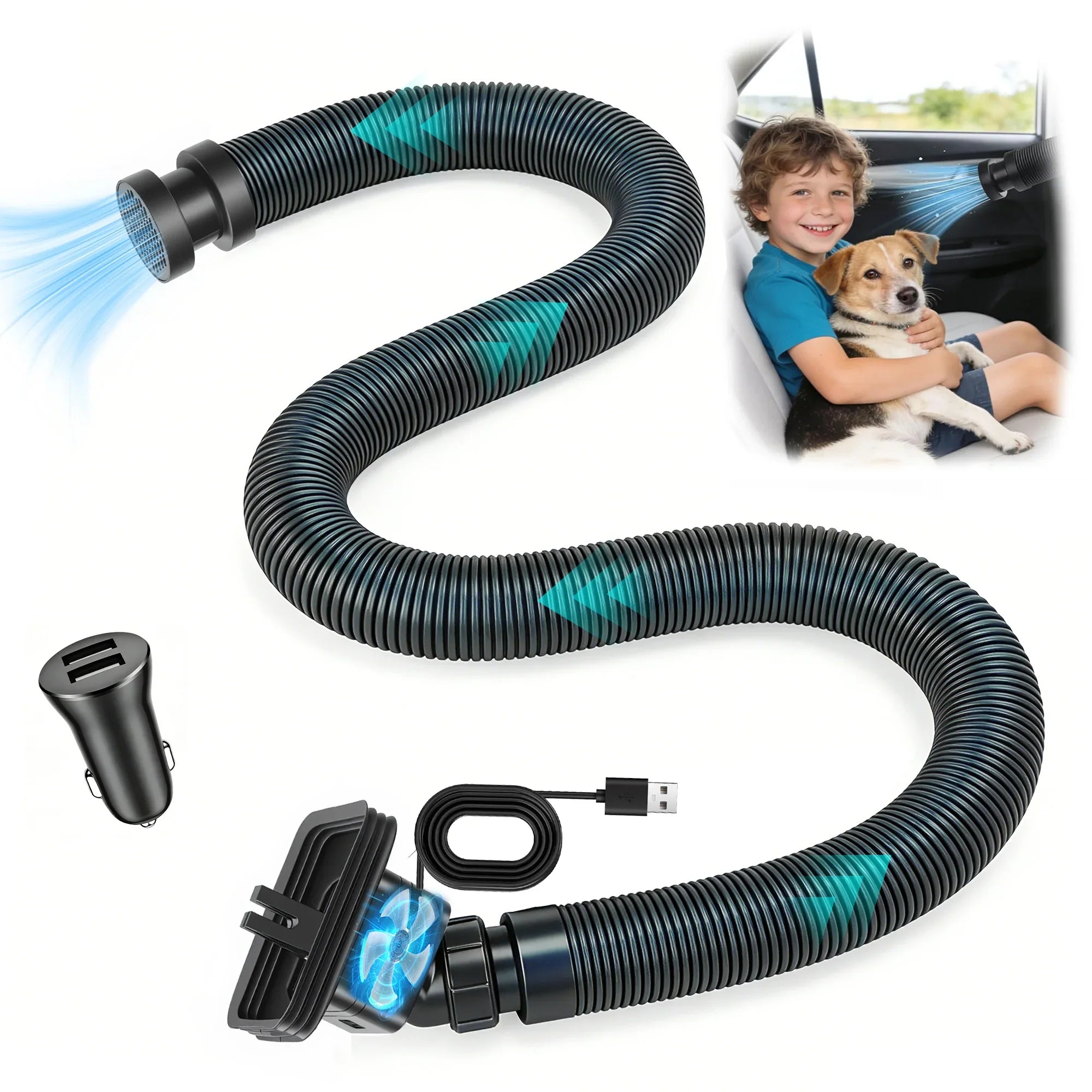
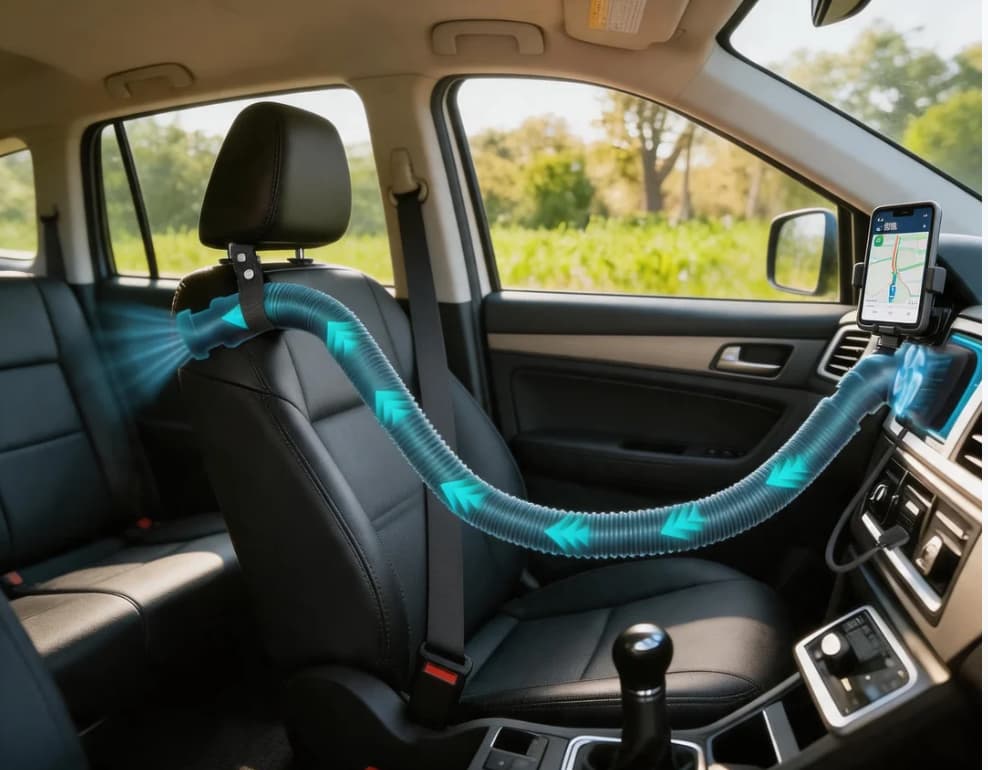
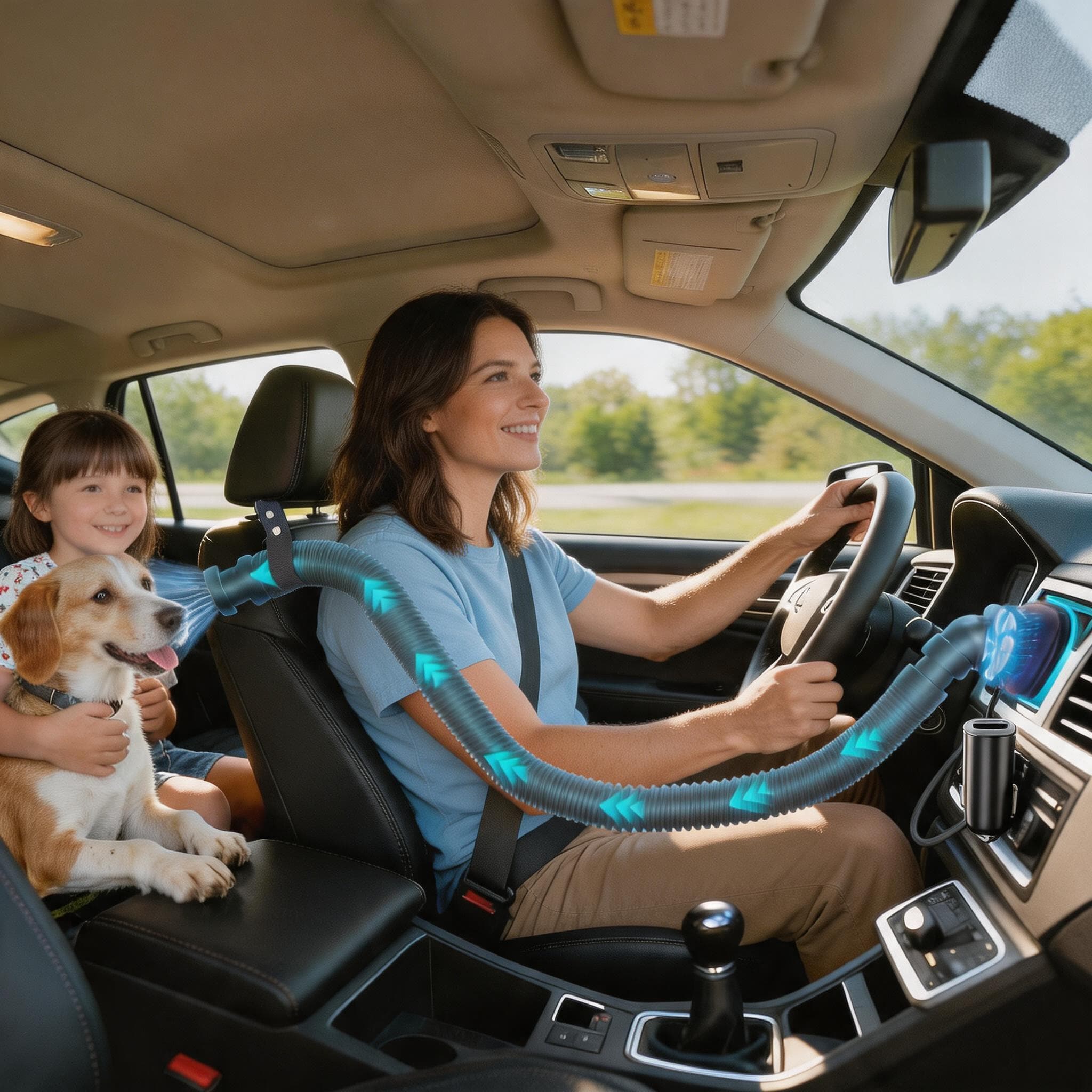
A fan-powered car AC vent extender creates a direct airflow path from the dashboard vent to the rear seating area or cargo space.
Instead of relying only on factory airflow pressure, the built-in airflow boosting fan helps move air through the extended hose, making it more suitable for longer vehicles.
Here is why this design works better for SUV dog crates:
Built-In Airflow Boosting Fan
Unlike passive vent tubes that depend completely on the vehicle’s original airflow strength, this system uses a built-in USB-powered fan to help push air through the hose.
It helps deliver stronger airflow toward rear seats, third-row passengers, and dog crates located farther away from the dashboard.
The system works with both cooling and heating airflow, making it useful for hot summer trips and cold winter mornings.
A complimentary cigarette lighter USB adapter is included, so vehicles without built-in USB ports can still power the fan easily.
Silicone Sealed Design Helps Reduce Air Leakage
One common problem with basic vent extenders is air loss at the connection point.
Even if the hose reaches the back, some airflow can escape before it travels through the tube if the front connection is not sealed properly.
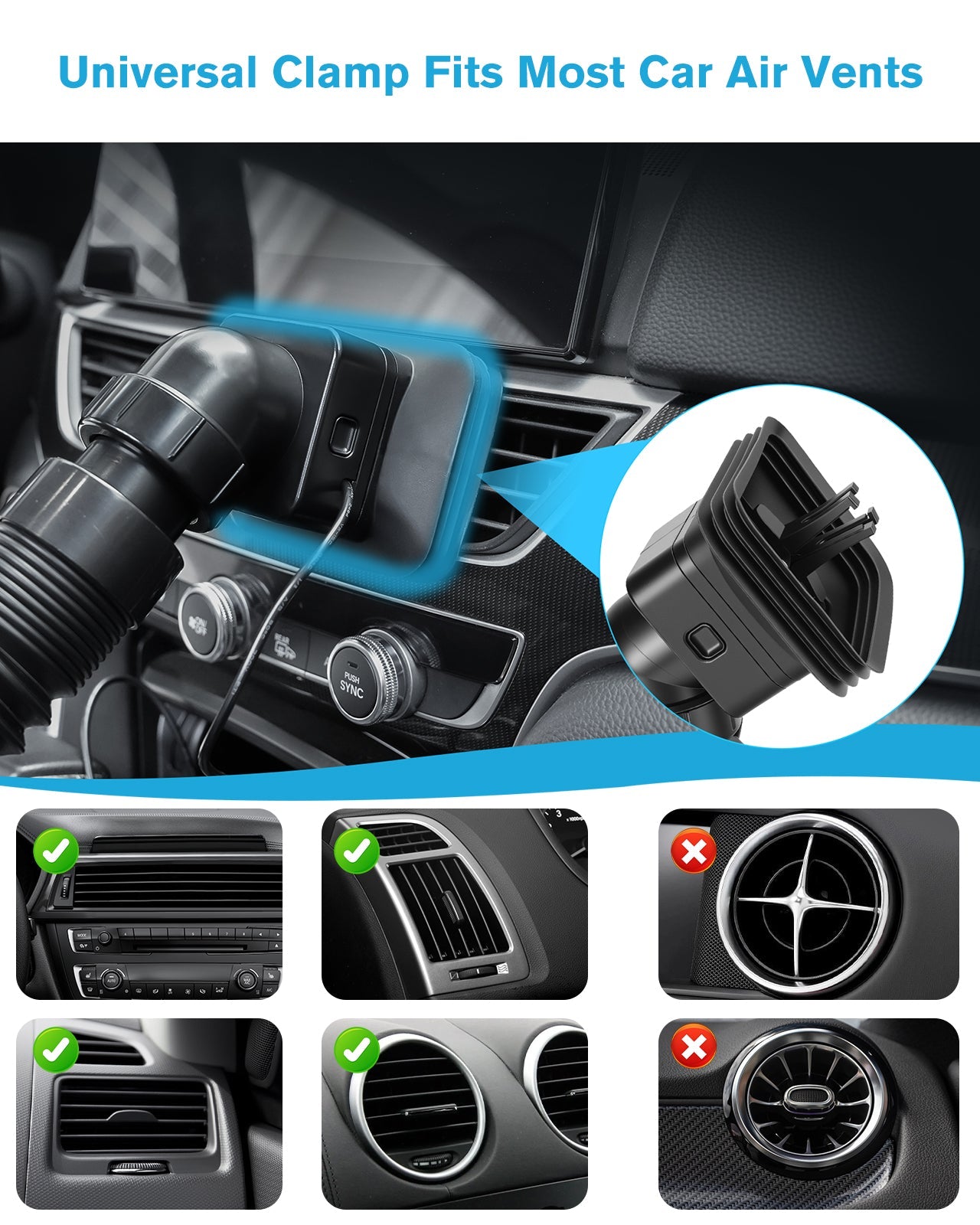
This extender uses a soft silicone gasket design that creates a tighter connection with the dashboard vent.
The result?
More of the vehicle’s cooled or heated airflow is directed into the hose instead of leaking around the vent connection.
Reinforced Clip Keeps the System Stable
A cooling setup only works if it stays in place.
Cheap vent attachments may loosen after repeated driving, especially on rough roads or long highway trips.
The reinforced adjustable clamp is designed to grip standard vehicle vents securely while keeping the extender stable during everyday driving.
This helps prevent the hose from shifting, falling, or disconnecting when the vehicle moves.
Best Setup for Large SUVs and Dog Crates
Large SUVs benefit the most from a longer airflow system because the distance between the dashboard and cargo area is much greater.
The adjustable 2–6.6 ft hose allows you to customize the setup depending on your vehicle layout.
SUV Cargo Dog Crate Setup
For a dog crate stored in the rear cargo area:
Attach the intake unit to a strong front dashboard vent.
Route the flexible hose along the side of the center console or vehicle interior.
Extend the hose toward the cargo area and position the outlet near the crate opening.
The lightweight corrugated tube reaches farther areas without adding unnecessary weight or taking up much space.
After your trip, the hose can be compressed and stored easily in a cargo bag or storage compartment.
Third-Row SUV Setup
Three-row SUVs often have the same problem: passengers sitting in the back receive much weaker airflow.
The extender can be routed toward the third row to provide more balanced comfort for passengers and pets.
The flexible design allows the outlet position to be adjusted without blocking passenger space.
Rear-Facing Child Seat Setup
Parents with infant car seats often notice another issue: thick safety seat padding can trap heat.
The front AC may feel cold, but the airflow does not always reach the child sitting behind the front seats.
By positioning the outlet near the rear seat area, cool or warm airflow can be directed around the child seat without creating a harsh direct blast.
Dual Mounting Options Keep Airflow Secure
One important detail for families and pet owners is where the rear nozzle is installed.
This system offers two mounting options:
Headrest Mounting
Attach the outlet near the front seat headrest for rear passengers or pets sitting on the back seat.
Grab Handle Mounting
Use the overhead grab handle location when you need airflow positioned above a child seat or larger cargo area.
These mounting options help keep the hose away from children and pets, reducing the chance of pulling, chewing, or accidental movement.
Safe Cooling Tips For Dogs During Road Trips
A good cooling setup is only part of safe pet travel.
Follow these tips:
Never Leave Your Dog Alone in a Parked Vehicle
Even with cooling accessories, parked vehicles can become dangerous quickly during hot weather.
Avoid Direct Airflow Into Your Dog’s Face
Position the nozzle toward the crate area rather than directly into your dog’s eyes or nose.
Keep Water Available
Bring a travel bowl and offer water during longer stops.
Check Your Setup Before Driving
Before every trip:
- Confirm the vent clip is secure
- Make sure the hose is not sharply bent
- Check the USB connection
- Ensure luggage is not blocking airflow
Final Thoughts: The Best Way To Cool a Dog Crate in an SUV
Keeping a dog comfortable during summer travel is not about adding a random fan and hoping it helps.
The real challenge is getting reliable airflow to the area where your dog actually rides.
For small vehicles and short trips, a portable fan may be enough.
But for SUV owners with rear cargo crates, third-row seating, camping trips, and long-distance travel, a powered AC vent extender provides a more complete solution.
With a built-in airflow boosting fan, sealed vent connection, reinforced clip, adjustable 2–6.6 ft hose, and flexible mounting options, it helps bring more comfortable airflow to the back of your vehicle in every season.
Your dog deserves more than a hot cargo area.
Make every road trip cooler, safer, and more comfortable.
FAQ
Can dogs get AC air in SUV trunks?
Yes. A car AC vent extender can route airflow from the front dashboard vents to the rear cargo area where many SUV dog crates are stored.
Because cargo areas are usually far away from factory vents, an extended airflow system helps deliver more consistent cooling compared with relying only on natural cabin circulation.
How do I cool my dog crate in an SUV?
The most effective setup is connecting an AC vent extender to your vehicle’s front vent and routing the hose toward the dog crate.
For large SUVs, choose a system with enough hose length, stable mounting, and proper sealing to reduce airflow loss.
Will a 6.6 ft AC vent extender reach my SUV dog crate?
In many SUVs and minivans, a 2–6.6 ft adjustable hose provides enough length to reach rear seating areas and cargo compartments. The best placement depends on your vehicle’s interior layout.
Is a fan or AC extender better for dog crates?
A portable fan can create airflow around your dog, but an AC vent extender helps deliver your vehicle’s existing cooled or heated airflow directly toward the rear.
For large SUVs, dog crates, and long road trips, an AC extender is usually the better choice.
Does this car AC vent extender need a USB port?
The built-in airflow boosting fan uses USB power. The package includes a complimentary cigarette lighter USB adapter, allowing easy installation even in vehicles without a built-in USB port.