You bought a rear seat air hose because your SUV’s third row was always too hot.
Then summer arrived.
Your front seats feel perfectly cool, but your kids are sweating in their car seats, and your dog is panting in the cargo area. The frustrating part? The AC is working — the cold air just never seems to reach the back.
This is the problem many drivers discover after trying basic passive vent tubes. They look simple, but long hoses often lose airflow before the air reaches the rear seats.
So what actually works better: a standard passive AC tube or a car AC vent extender with fan?
The answer depends on your vehicle size, where passengers sit, and how far you need the airflow to travel.
How a Passive AC Vent Extender Works
A passive vent tube has a simple design. It connects to your vehicle’s existing air vent and uses the factory AC pressure to push air through the hose.
For smaller vehicles and short distances, this approach can work.
For example, if you only need to move air from the dashboard to a nearby rear passenger, a basic non-powered vent tube may provide enough airflow.
The problem starts when the hose gets longer.
Every extra foot of tubing creates more resistance. Sharp bends, loose connections, and poor sealing can reduce the amount of air that reaches the outlet.
Many SUV owners experience this when trying to cool a rear cargo dog crate. The hose is connected correctly, but the airflow at the end feels much weaker than expected.
The issue is not always your vehicle’s AC system. The problem is the distance the air needs to travel.
Why A Fan-Powered AC Vent Extender Performs Differently
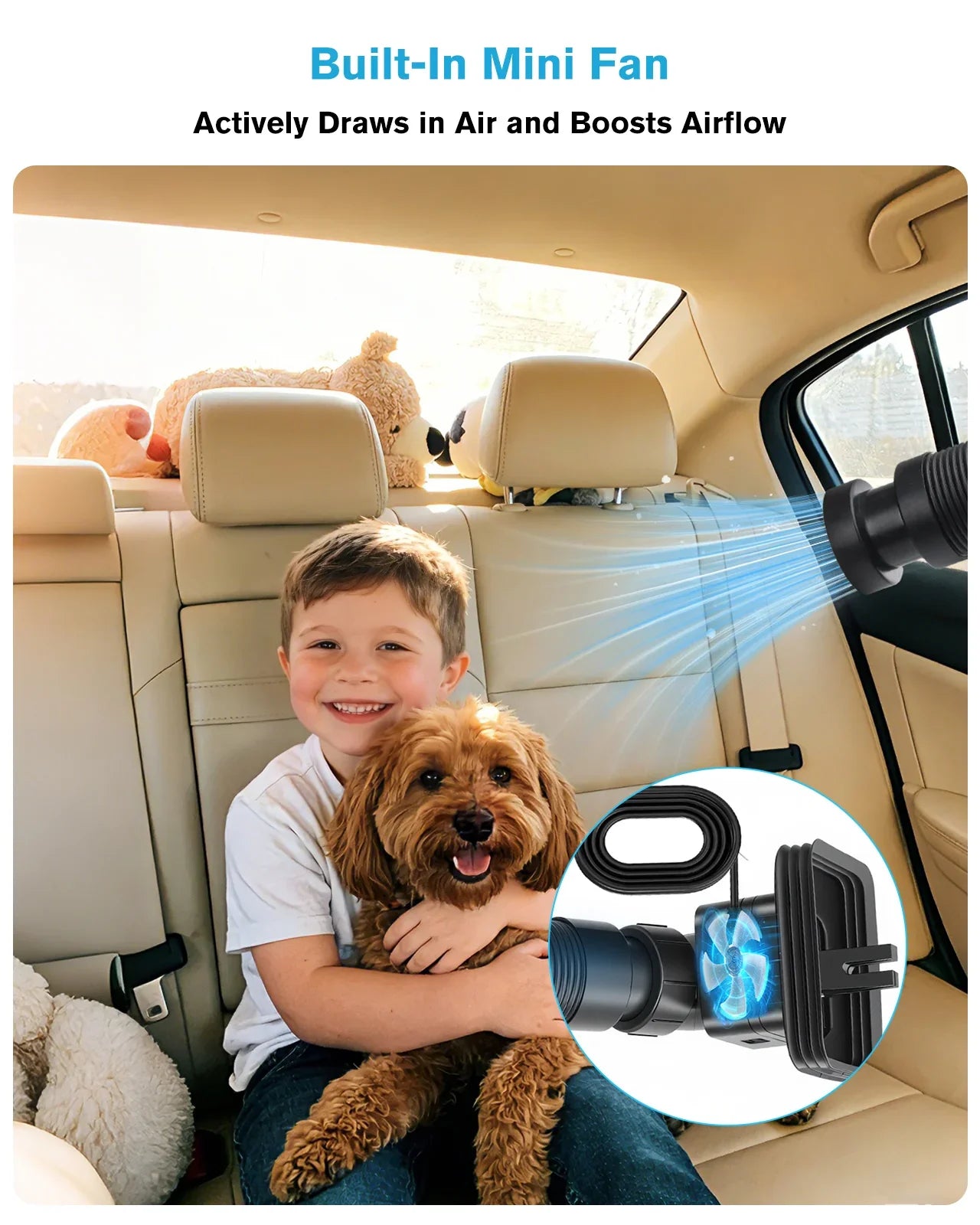
A powered extender adds an airflow boosting fan to help move air through the longer hose.
It does not replace your vehicle’s AC system. Instead, it helps deliver the existing cooled or heated air farther into areas where factory vents struggle to reach.
This difference becomes more noticeable in larger vehicles.
A 3-row SUV, minivan, or truck cabin has a much larger space to cool. Front dashboard vents are designed mainly for the front cabin, not a child seat behind the second row or a dog crate sitting near the rear hatch.
A better-designed fan-powered system also solves several common problems found in cheaper tubes:
Leak Reduction With Silicone Sealing Base
Many budget vent tubes lose airflow at the connection point.
A loose connection allows cold air to escape before it enters the hose.
A silicone sealing base creates a tighter connection between the dashboard vent and the extender, helping more climate-controlled airflow travel through the tube instead of leaking into the front cabin.
Stable Installation During Driving
A cooling accessory is useless if it falls off every time you hit a rough road.
The reinforced adjustable clip is designed to grip standard dashboard vents securely while keeping the installation tool-free.
This matters for families who drive on highways, camping roads, or long-distance trips where vibration is unavoidable.
Flexible Reach For Different Vehicles
The adjustable 2–6.6ft corrugated hose allows drivers to customize the setup.
A shorter length works well for rear seats.
A fully extended hose can reach third-row passengers or SUV cargo areas where dog crates are placed.
When the trip is over, the lightweight hose can be folded down and stored inside a cargo bag or storage compartment without taking up much space.
SUV Rear Seat, Child Seat and Dog Crate Performance
The biggest difference between passive tubes and powered extenders appears in larger vehicles.
Third-Row SUVs
Third-row passengers are usually the last to feel comfortable.
The distance from the dashboard means factory airflow becomes weaker by the time it reaches the back.
A powered extender helps send airflow directly toward the third row instead of waiting for the entire cabin temperature to balance.
It also works during winter mornings when rear passengers need warmer heater air instead of cold air.
Rear-Facing Child Seats
Parents know this problem well.
Rear-facing infant seats have thick padding designed for safety, but that same padding can trap heat during summer drives.
A dashboard vent cannot easily bypass the front seats and reach the child.
By routing the hose above or beside the car seat, parents can direct comfortable airflow toward the rear area without relying only on cabin circulation.
SUV Dog Crates
For pet owners, this is often the biggest challenge.
A dog crate placed in the rear cargo area is usually the farthest point from the factory AC vents.
Many owners try inexpensive passive tubes first. The idea sounds good, but after routing the hose several feet through the vehicle, the airflow often becomes disappointing.
A 6.6ft adjustable hose allows the outlet to reach deeper cargo areas and deliver airflow closer to where the dog actually sits.
The dual mounting options also help. The outlet can be positioned using headrest mounting or grab handle placement, keeping the hose away from curious pets.
Power, Noise and Cable Safety Considerations
Because the extender uses a built-in airflow boosting fan, it requires USB power.
The included dual-port cigarette lighter adapter makes installation easier because you can power the extender while keeping another charging port available for your phone.
For pet owners, cable placement is an important detail.
Many cheap pet cooling products place wires near the back seat or crate area. Dogs love chewing loose cables.
This design keeps the power connection at the front intake unit, meaning the electrical components stay away from paws and teeth.
For the cleanest setup:
- Keep extra cable length secured near the dashboard.
- Avoid loose wires hanging into the passenger area.
- Check the connection before long trips.
Fan-Powered Extender vs Passive Tube Comparison
| Feature | Passive Vent Tube | Fan-Powered AC Vent Extender |
|---|---|---|
| Power Required | No power needed | USB powered |
| Airflow Distance | May weaken over longer hoses | Designed for longer rear delivery |
| Sealing Design | Basic connection | Silicone sealing base reduces leakage |
| Hose Length | Usually limited | Adjustable 2–6.6ft hose |
| Stability | Depends on basic clips | Reinforced adjustable vent clip |
| SUV Third Row | Limited performance | Better for large cabins |
| Dog Crate Use | May lose airflow in cargo area | Better for rear cargo cooling |
| Child Seat Cooling | Depends on cabin circulation | Direct airflow routing |
| Storage | Usually bulky | Lightweight foldable design |
| Included Accessories | Rarely included | Dual-port USB car charger adapter |
Which One Should You Choose?
A passive vent tube can be enough if you drive a smaller vehicle, only need short-distance airflow, or mainly want a simple solution for occasional use.
However, drivers with SUVs, trucks, minivans, third-row seating, rear-facing child seats, or dog crates usually need more than a basic tube.
A fan-powered AC vent extender offers better control because it combines longer reach, stronger airflow support, better sealing, and more secure installation.
The biggest difference is simple:
A cheap tube moves air.
A properly designed extender helps deliver airflow where your passengers actually need it.
Frequently Asked Questions
Does a car AC vent extender with fan cool faster than a passive tube?
A powered extender helps maintain airflow through longer tubing, especially in larger vehicles. Actual cooling performance depends on your vehicle’s AC system, outside temperature, and installation setup.
Can I use a car AC vent extender for a dog crate?
Yes. A 2–6.6ft adjustable hose is especially useful for SUV cargo areas where dog crates are located far from front vents.
Will the vent clip damage my dashboard vents?
A properly installed reinforced clip with a soft sealing base is designed to hold securely without excessive pressure on the vent louvers.
Does it work in winter?
Yes. The system can help route warm heater airflow to rear passengers during cold weather drives.
Does it come with a USB car charger?
Yes. The fan-powered kit includes a complimentary dual-port cigarette lighter USB adapter, allowing you to power the extender while keeping another charging port available.
Keep Every Passenger Comfortable On Every Drive
Uneven cabin temperatures are frustrating — especially when the people who need comfort most are sitting farthest from the AC.
Whether you are protecting a child in a rear-facing seat, keeping a senior passenger comfortable, or making summer road trips easier for your dog, reaching the back row is the real challenge.
With a leak-reducing silicone seal, reinforced mounting clip, adjustable 2–6.6ft hose and flexible installation options, a fan-powered car AC vent extender helps bring balanced airflow to the places your factory vents cannot reach.
Prepare your SUV for more comfortable trips.