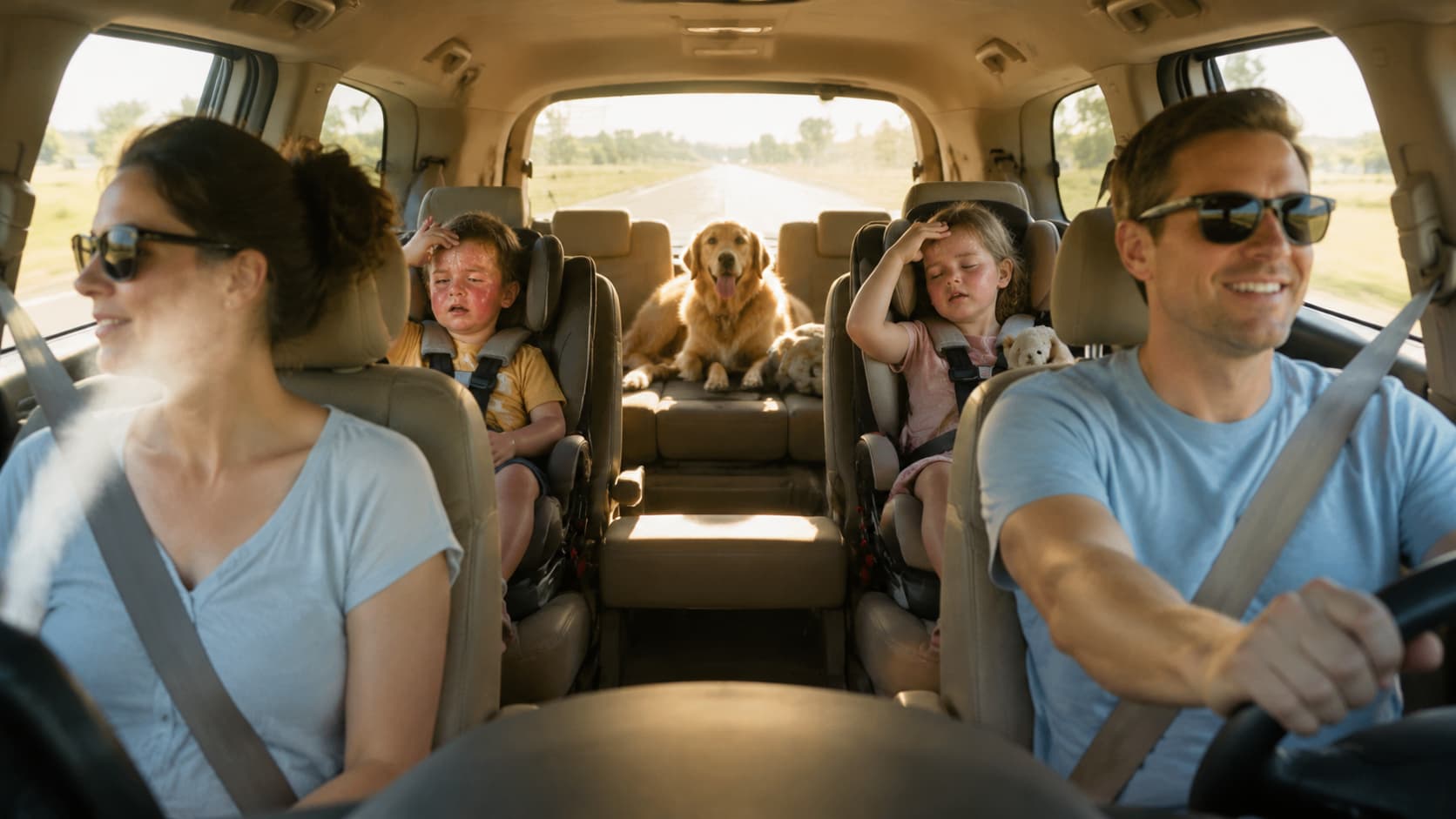
There’s nothing better than hitting the highway with your four-legged travel companion for camping, beach days or cross-country adventures. But summer driving creates a hidden risk for pet owners: uneven cabin temperatures.
Front-seat riders enjoy icy AC airflow, yet rear seats and SUV cargo areas easily become stagnant heat traps. Knowing how to keep your dog cool inside an SUV is essential before any hot-weather drive.
Here is your complete dog road trip cooling checklist, covering essential packing gear, proper cargo setup, and safety tips to keep your pup safe and comfortable on long highway drives.
Test Rear Airflow Before Departure: Avoid Hidden Heat Traps
One of the most common mistakes pet owners make is assuming the back row feels just as cold as the dashboard.
Before packing your bags, do a simple 2-minute reality check:
-
Turn on your car, set the AC to your usual driving temperature, and let it run for 5 minutes.
-
Climb into the back seat—or crawl into the far rear cargo area where your dog’s crate normally sits.
-
Sit there for a full minute.
You’ll quickly notice that while your front vents are icy cold, very little of that airflow reaches the rear seats or third row. In large SUVs and minivans, air travels slowly, leaving rear passengers and pets in a dead zone of trapped heat. Identifying this gap before you leave the driveway is the first step to a safer trip. Even mild sunny days can turn poorly ventilated cargo zones dangerously hot within minutes.
Must-Have Cooling Gear for Dog Summer Road Trips
Packing the right dog car travel essentials for summer ensures you are prepared for both highway cruising and unexpected traffic delays.
Here is what should be on your packing list:
-
Fresh Drinking Water & Collapsible Bowl: Keep cold water accessible at all times, not packed beneath heavy luggage.
-
Window Sunshades: Block direct solar heat from beaming through side and rear windows.
-
Cooling Mat or Damp Towel: Gives your dog a cool surface to lie on during long stretches of driving.
-
Digital Cabin Thermometer: Place it near your dog’s crate or bed so you can monitor real rear temperatures at a glance.
-
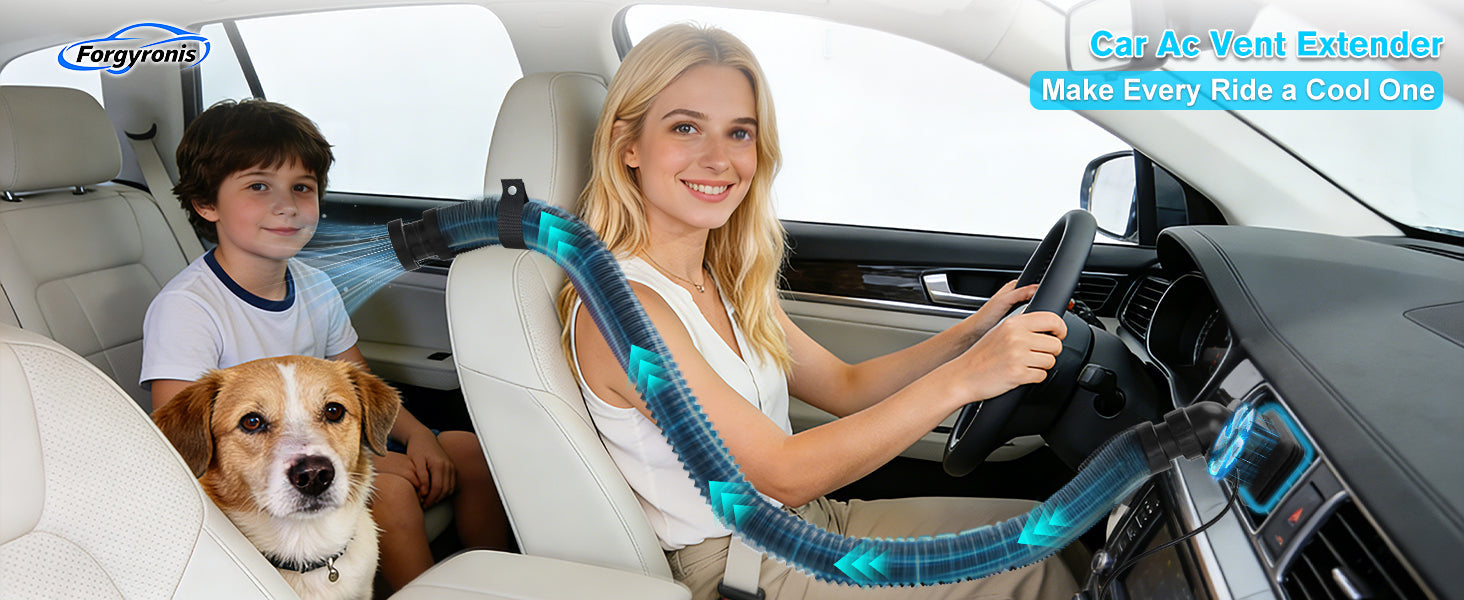
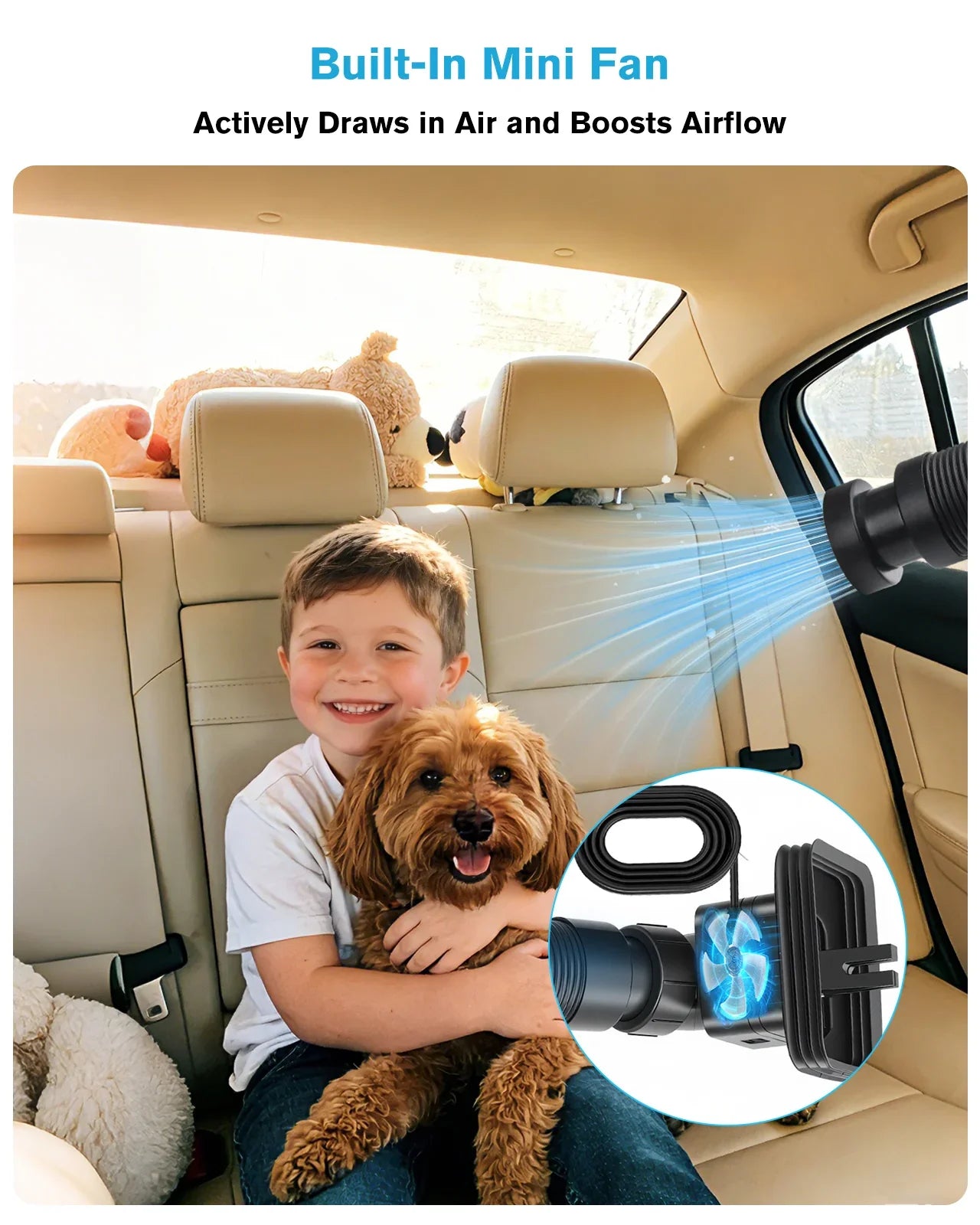
Active AC Vent Extender: Powered air duct that draws cold air from your dash vents and actively pushes airflow to rear seats or cargo crates, unlike passive hoses that rely only on weak natural air pressure.
-
Dual-Port USB Car Adapter: Ensures you can power your cooling accessories without sacrificing phone charging slots.
Gear Cheat Sheet: How Each Cooling Item Helps Your Dog
To help you organize your vehicle before heading out, here is how key cooling gear contributes to your dog’s comfort:
| Travel Essential | Main Benefit | Best Placement |
| Active AC Vent Extender | Delivers true factory-cold air to rear rows | Front dash vent to rear seat/crate |
| Window Sunshades | Reduces direct greenhouse heat rays | Rear side and trunk windows |
| Collapsible Water Bowl | Prevents dehydration during stops | Easy-reach side door pocket |
| Cooling Mat | Provides body heat relief on contact | Inside dog crate or rear bench |
How to Set Up the Back Seat or Cargo Area
How you pack your SUV directly impacts how well air circulates around your pet. Even the most powerful car AC won't help if your vehicle's air paths are blocked.
Follow these packing and setup rules:
-
Avoid Blocking Return Air: Do not stack duffel bags, coolers, or camping gear tightly against the bottom of the front seats. Your car needs open space underneath to pull warm air out of the back.
-
Route the Air Tube Safely: If using a powered AC vent extender, snake the flexible, ultra-light duct along the side of your center console floorboards. This keeps it completely clear of the driver’s pedals.
-
Feed Air Directly into Crates: If your dog rides in a cargo crate, stretch the 6.6ft extendable tube over the rear headrests and slot the exit nozzle straight into the crate's wire mesh.
-
Keep Cable Wiring Up Front: Ensure all USB power cords remain strictly at the dashboard so curious dogs never have access to chewable wires in the back.
Recommended Stop Schedule for Hot-Weather Dog Travel
There is no "one-size-fits-all" rule for how often you should stop, as every dog’s age, coat thickness, and health differ. Thick-coated breeds (like Huskies or Golden Retrievers), senior dogs, and brachycephalic breeds (like Bulldogs or Pugs) heat up much faster than short-haired breeds.
Best practices for rest stops:
-
Plan a quick break every 2 to 3 hours during daytime drives.
-
Always park in shaded spots whenever possible.
-
Offer small amounts of fresh water during each stop rather than letting them gulp large volumes all at once.
-
Let your dog walk on grass instead of hot asphalt, which can burn sensitive paw pads in seconds.
Warning Signs That Mean You Should Stop Immediately
Even with the AC running, heat stress can sneak up on pets during long summer journeys. Keep an eye on your dog through the rearview mirror and watch for these early warning signs:
-
Heavy, rapid, or raspy panting
-
Excessive drooling or thick saliva
-
Red or pale gums
-
Lethargy, weakness, or unresponsiveness
-
Vomiting or restlessness
What to do if you notice heat stress: Stop the vehicle safely immediately. Move your dog into a shaded or air-conditioned space, offer small sips of cool (not ice-cold) water, and apply damp, cool towels to their paws, belly, and inner thighs. Do not use ice-cold water, as rapid cooling can trigger shock. If symptoms do not improve quickly, contact a local veterinarian right away.
Final Pre-Drive Checklist
Screenshot or save this quick checklist before turning the key on your next highway adventure:
-
Tested rear airflow while sitting in the back seat/cargo area.
-
Installed the AC vent extender and verified the soft silicone seal sits flush against the dash vent.
-
Checked that the USB power cord is tucked safely away from chewing pets.
-
Packed fresh drinking water, a collapsible bowl, and a cooling mat.
-
Ensured luggage is not blocking air circulation beneath front seats.
-
Saved local emergency vet clinics along your driving route.
Frequently Asked Questions
Will an AC vent extender work with minivans and three-row family cars?
Yes. The flexible hose design works for most SUVs, minivans and large family vehicles with distant rear cargo zones.
Can cooling mats replace proper airflow for dogs in hot cars?
No. Cooling mats offer surface relief but cannot lower overall cabin temperature. Consistent airflow remains the most important safety measure.
Is it safe to leave a dog in an SUV with the AC running?
Temperatures can still shift if airflow fails in the rear. We recommend stopping regularly and monitoring rear cabin temperature whenever your pet rides in the back.
Can I run the vent extender together with a cooling mat?
Absolutely. Pairing steady cold airflow with a cooling mat creates the most comfortable resting space for dogs during summer travel.
Prepare Your SUV for Safer Summer Trips
Basic passive vent hoses depend entirely on weak factory airflow and struggle to deliver cold air to far rear cargo spaces. Our USB-powered airflow booster actively circulates conditioned air — cool in summer, warm for winter trips — straight to rear benches, third rows and pet crates.
Tool-free assembly takes less than 5 minutes, so every passenger, including your dog, rides comfortably on long drives.
👉 [Prepare Your SUV for Safer Summer Trips — View the Car AC Vent Extender Today!]