You finally get the temperature right in the front seats.
Then someone in the back says:
Sound familiar?
This is one of the most common complaints from SUV owners, especially families with kids, pets, or passengers sitting in the third row.
The driver and front passenger enjoy comfortable airflow, while rear-facing car seats stay warm, third-row passengers wait longer for heat, or pets in the cargo area struggle to get enough conditioned air.
That is where a car AC vent extender helps.
But many buyers have another question:
Should you buy one extender, or is a dual setup worth it?
The answer depends on your vehicle size, seating layout, and where you actually need better airflow.
For many drivers, one unit is enough.
But larger SUVs, multiple child seats, and full rear cabins often benefit from two separate airflow paths.
When One Vent Extender Is Usually Enough
Stick With One Unit If These Apply To You
A single extender works well for many everyday situations.
Choose one unit if:
- You drive a small or midsize SUV
- Only one area in the back needs additional airflow
- Rear passengers sit close together
- You mainly want airflow for one child seat or pet crate
For example:
A parent with one rear-facing car seat usually does not need two separate airflow routes.
A properly positioned extender can direct cool or warm air closer to the child seat area, making longer drives much more comfortable.
The same idea applies to pet owners.
If your dog crate stays in one fixed cargo-area position, one extender is often enough to bring your vehicle’s existing heating and cooling airflow closer to your pet.
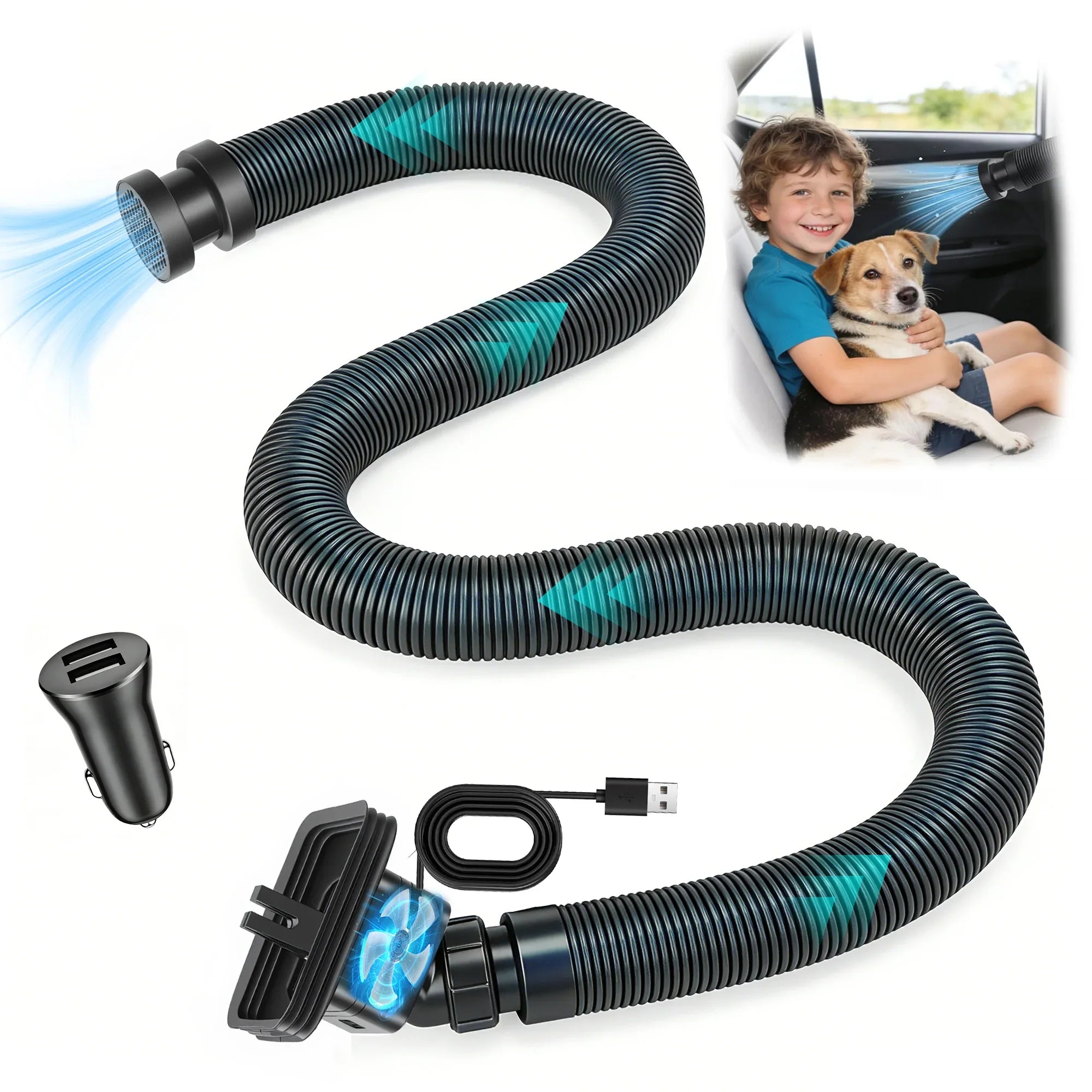
A quality extender with an adjustable hose extending from 2 to 6.6 feet gives you the flexibility to aim airflow where it is actually needed.
When Two Extenders May Work Better
Larger Vehicles Need Better Airflow Coverage
Some vehicles simply have more cabin space than one hose can realistically cover.
A three-row SUV is the perfect example.
The distance from the dashboard vents to the third row can be several feet. Once you add passengers, child seats, or a cargo-area pet crate, one airflow path may not reach every area evenly.
A dual car vent extender setup creates two separate airflow routes.
Important note:
Two extenders do not double your vehicle’s total AC output.
They simply distribute your existing conditioned air more effectively across different areas of the cabin.
Think of it as improving coverage, not creating extra cooling power.
Why Powered Extenders Matter More in Larger Vehicles
Choosing one or two extenders is only part of the decision.
The extender design itself matters.
Cheap passive hoses rely only on your vehicle’s original AC pressure. Once the hose stretches several feet or bends around seats, airflow can weaken before reaching the rear.
This is why many SUV owners buy an extender and end up disappointed.
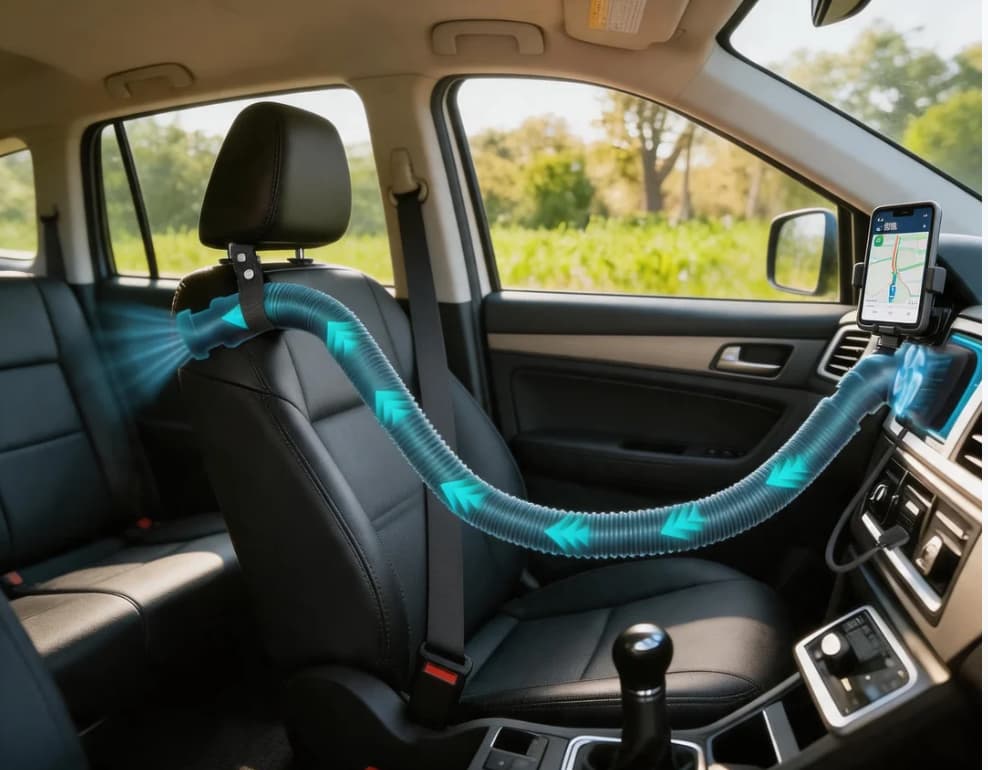
A fan-powered AC vent extender helps solve this problem by actively pulling conditioned air from the dashboard vent and pushing it through the hose.
This is not a standalone USB fan that simply moves warm cabin air around.
It uses your vehicle’s existing heating and cooling system and helps deliver that airflow farther into the cabin.
For large SUVs, third-row passengers, and pet cargo areas, that difference can be noticeable.
Two Rear-Facing Car Seats
Two rear-facing car seats are one of the biggest reasons parents consider buying two extenders.
Why?
Because both children sit far away from the dashboard vents.
The front seats may feel comfortable, but the back row can still feel warm during summer trips.
With two extenders, parents can create a more balanced setup:
- One extender aimed toward the left car seat
- One extender aimed toward the right car seat
Instead of asking one hose to cover the entire rear area, each child gets a more direct airflow path.
For families who spend hours driving, this small upgrade can make a big difference.
Second-Row and Third-Row Passengers
Large SUVs often have the same problem:
The second row gets some airflow.
The third row gets whatever is left.
This happens because factory vents are usually much closer to the front seats.
A dual setup can work better:
- One extender → second-row passengers
- One extender → third-row passengers or cargo area
This setup is especially useful for:
- Family road trips
- Long summer vacations
- Winter drives
- SUV owners traveling with pets
If your vehicle regularly carries passengers across all three rows, two airflow paths usually create a more balanced cabin.
Vehicle Airflow and Power Considerations
Before installing two extenders, check your vehicle setup.
More accessories do not automatically mean better performance.
The goal is smarter airflow distribution.
Available Dashboard Vents
Start by checking your front vent layout.
Most dual setups work best when you have two suitable vents available.
For example:
- Driver-side vent → extender one
- Passenger-side vent → extender two
Avoid converting every front vent into an extender connection.
The driver and front passenger still need direct airflow.
A balanced setup keeps everyone comfortable.
USB Ports and Power Capacity
Powered extenders need stable power to maintain fan performance.
Before installing two units, check:
- Available USB ports
- 12V car socket adapter output
- Cable placement
A complete kit with a reliable power option is much easier to install, especially in vehicles without convenient rear USB ports.
Cheap low-power adapters may cause weaker fan performance.
Note: Low-quality multi-port adapters may not provide enough power for multiple fans. Use a properly rated adapter for stable airflow.
Keep cables organized as well.
Loose wires near children or pets create unnecessary safety risks.
How To Choose The Right Setup
Choose One Extender If:
✅ Small or midsize SUV
✅ One child seat
✅ One pet crate location
✅ Only one rear area feels uncomfortable
Consider Two Extenders If:
✅ Three-row SUV
✅ Two rear-facing child seats
✅ Regular third-row passengers
✅ Large cargo-area pet setup
✅ You want separate airflow zones
The right choice is not about buying more accessories.
It is about matching your setup to your actual driving needs.
A Few Installation Tips For Better Results
Even a high-quality extender will not perform well if installed incorrectly.
Keep The Hose Smooth
Avoid sharp bends.
A twisted or tightly folded hose restricts airflow and reduces performance.
Check The Seal
A loose connection wastes conditioned air.
A silicone sealing gasket helps reduce air leakage and keeps airflow moving through the hose.
Secure The Mount
A loose extender can shift around on bumpy roads.
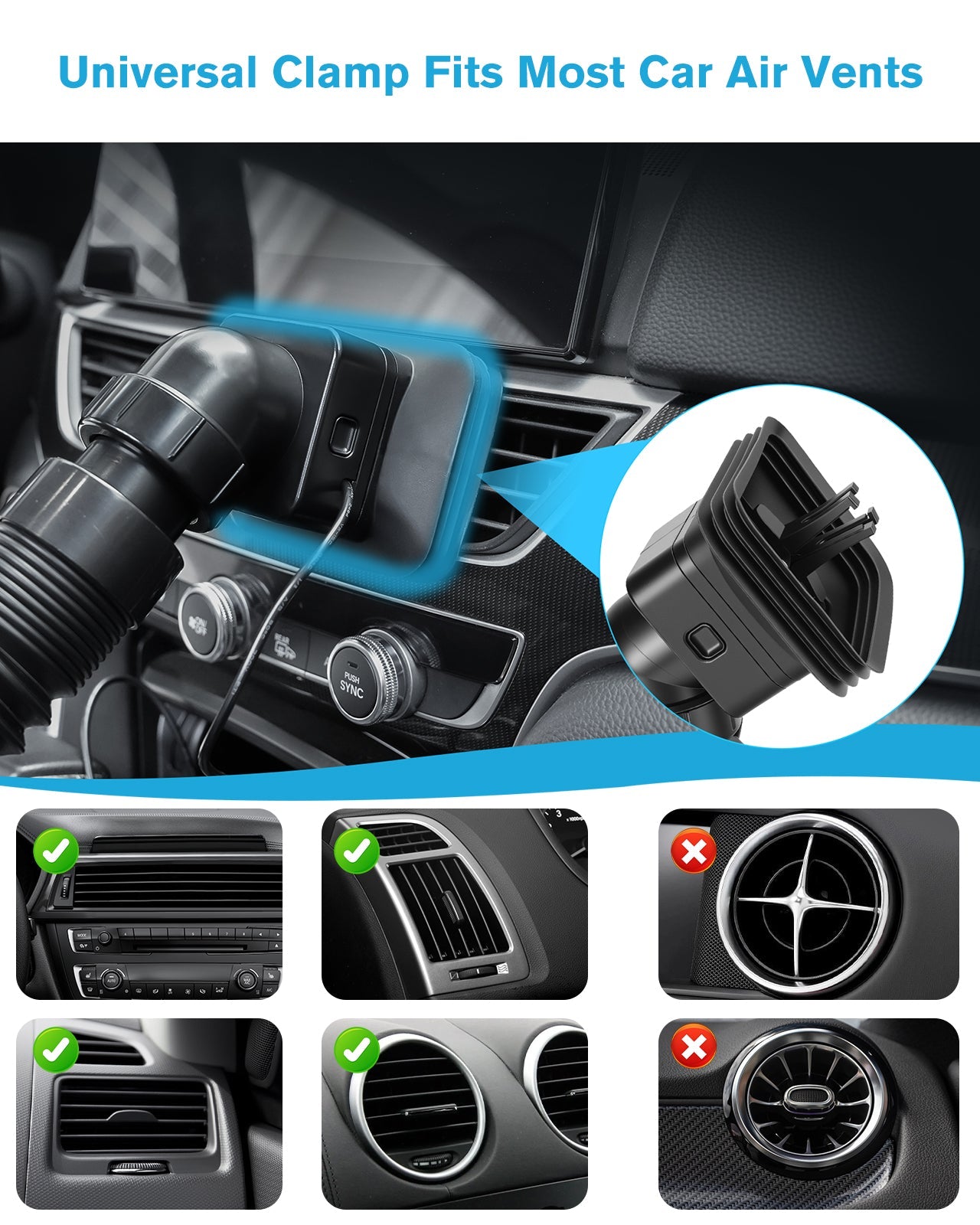
Look for reinforced clamps and flexible mounting options.
A good design should allow mounting on areas like:
- Headrests
- Grab handles
This keeps the hose stable and helps keep it away from kids and pets.
Final Thoughts
Choosing between one or two car AC vent extenders comes down to your vehicle and passengers.
For many drivers, one unit solves the problem.
For larger SUVs, multiple child seats, or full-cabin family travel, a dual setup can provide better airflow coverage.
The goal is simple:
Make sure passengers and pets sitting farthest from the dashboard are not left uncomfortable.
FAQ
Q1: Can one car AC vent extender cool two passengers?
Yes, if the passengers are sitting close together.
One extender can improve comfort for nearby passengers, but it will not replace having separate airflow paths for people sitting far apart.
For example, second-row and third-row passengers may benefit more from two separate extenders.
Q2: Can I connect two extenders to one USB adapter?
Yes, but make sure the adapter provides enough power.
Powered extenders rely on stable electricity to maintain fan performance.
Cheap low-power adapters may reduce airflow strength.
For the best results, use a properly rated adapter or separate power connections.
Q3: Will using two extenders reduce front-seat airflow?
It depends on how you use your dashboard vents.
A properly installed setup draws air from selected vents and does not damage your vehicle’s HVAC system.
However, if every front vent is used for extenders, front-seat passengers will lose direct airflow.
The best setup is simple:
Keep some front vents available for the driver and passenger while improving airflow for rear passengers.
Q4: Should I buy one or two extenders for a three-row SUV?
For occasional third-row passengers, one extender may be enough.
If your SUV regularly carries passengers in all rows, has multiple child seats, or transports pets in the cargo area, a dual setup usually provides better coverage.
Q5: Can two extenders cool a large SUV faster?
No.
Two extenders do not increase your vehicle’s total AC power.
They simply distribute existing conditioned air into different areas more effectively.