You finally buy a larger SUV for your family, pets, and road trips.
Then summer arrives.
The front seats feel perfect. The AC is blowing cold. Everyone in the front is comfortable.
But the second and third rows?
A completely different story.
Kids complain they’re hot. Your dog in the cargo area starts panting. Rear passengers keep asking:
“Can you turn the AC up?”
The frustrating part is that your AC system may not be broken. The problem is often simple — the cold air never reaches the places where people actually need it.
That’s where car AC vent extenders come in.
But are they really worth buying?
Or are they just another car gadget that sounds useful but ends up sitting in your garage?
The answer depends on your vehicle, your passengers and the type of airflow problem you are trying to solve.
What Problem Does a Vent Extender Solve?
A car AC vent extender does one simple job:
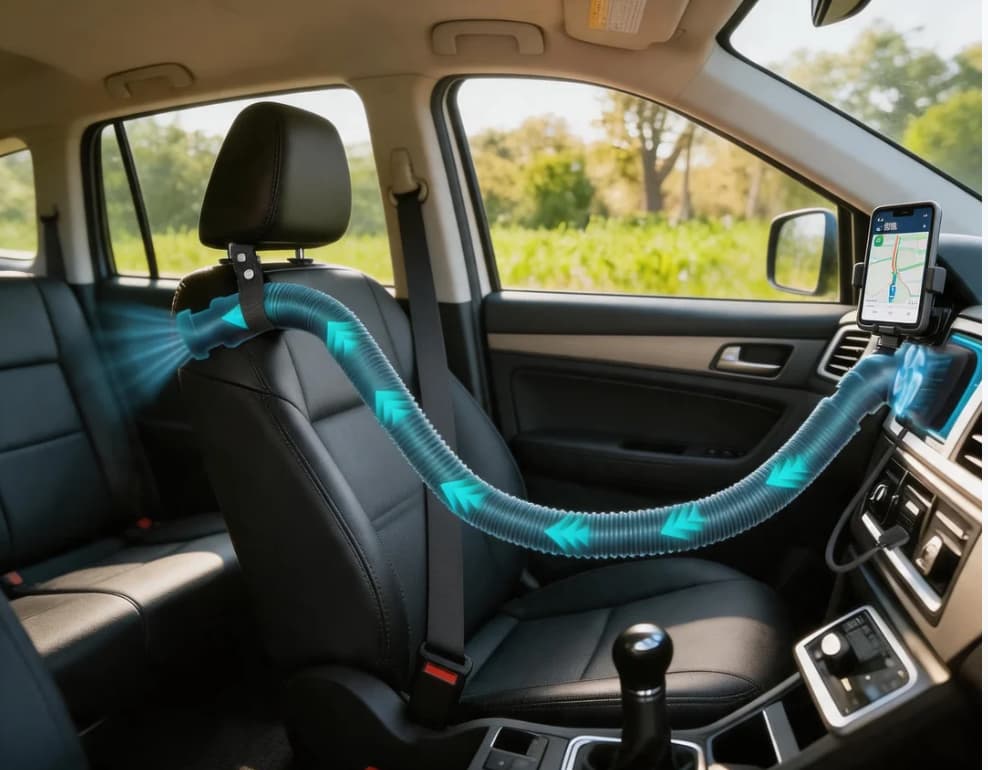
It redirects the conditioned air your vehicle is already producing and sends it to areas that normally receive weaker airflow.
Think about it like moving your home fan closer to where you are sitting.
The room temperature does not change, but the airflow feels much better because the air reaches you directly.
The same idea applies inside your vehicle.
Many SUVs, trucks and minivans have strong front airflow but poor rear distribution. Long cabins create distance between the dashboard vents and passengers sitting farther back.
Common situations include:
- Rear-facing child seats getting hot during summer drives
- Third-row passengers waiting too long for warm air in winter
- Dogs riding in cargo areas without direct airflow
- Family road trips where front passengers are comfortable but everyone behind them is not
A rear seat AC vent extender helps move that existing cool or warm air closer to those areas.
Are Car AC Vent Extenders Actually Worth It?
For the right vehicle, yes.
But it is important to understand what they do — and what they do not do.
A vent extender is not a replacement for your factory HVAC system.
It does not create colder air.
It does not repair a weak or damaged AC system.
Instead, it improves air distribution.
If your vehicle already produces cold air but struggles to deliver it to the back, an extender can make a noticeable difference.
For many SUV owners, the problem is not the strength of the AC.
The problem is where the air goes.
Benefits and Realistic Limitations
Directing Existing Conditioned Air
The biggest advantage of a vent extender is simple:
It brings factory AC airflow closer to passengers, pets and hard-to-reach areas.
A quality fan-powered extender takes this idea further by helping maintain airflow through a longer hose route.
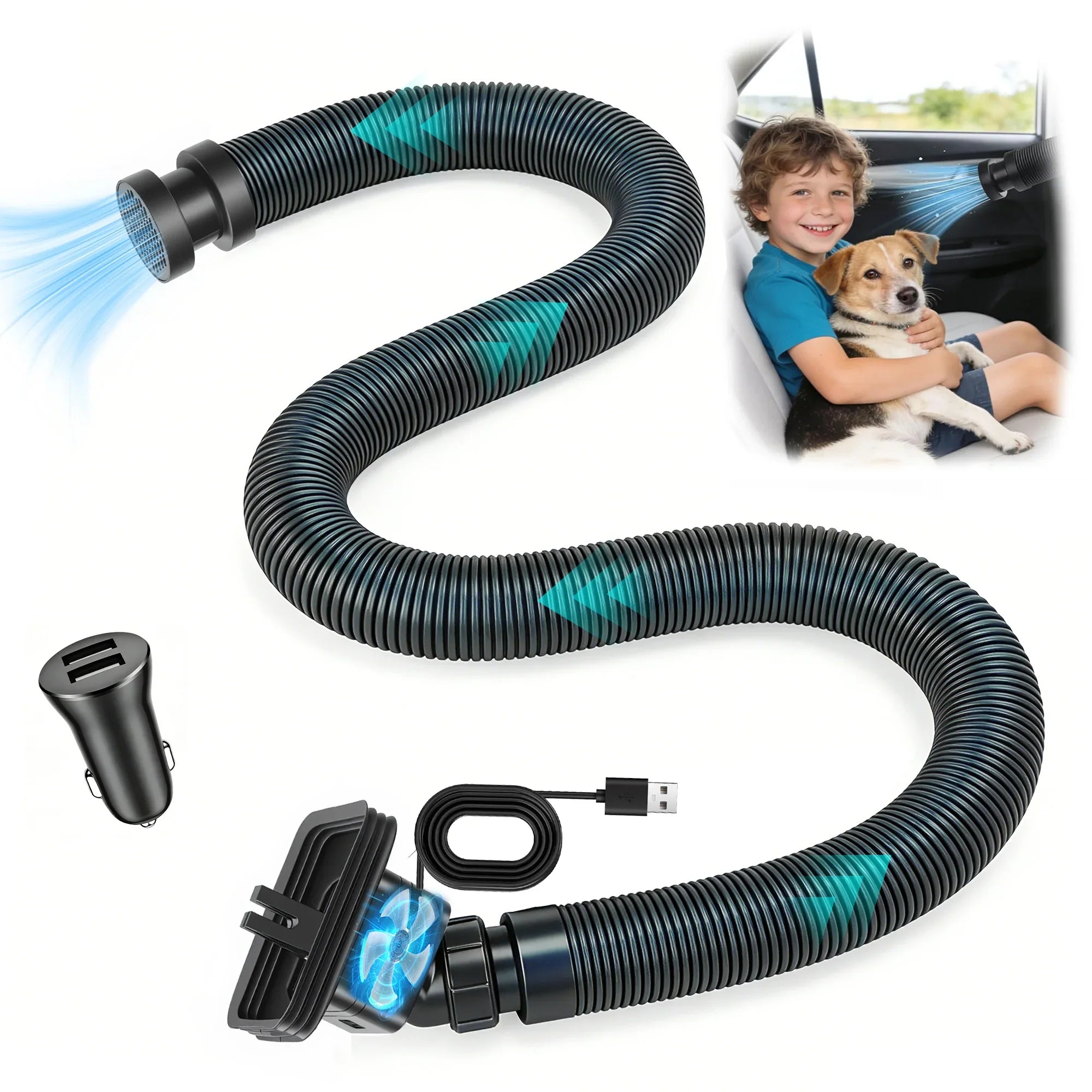
Unlike a small USB cabin fan that only moves existing air around, a fan-powered AC vent extender pulls real conditioned air from your dashboard vent and pushes it through the extension hose.
This means you are not just circulating warm cabin air.
You are redirecting your vehicle’s actual heating and cooling airflow.
For large SUVs and three-row vehicles, this difference matters.
A passive tube may work in short distances, but once the hose stretches several feet or bends around seats, airflow strength can drop quickly.
What It Cannot Fix in Your Car
A vent extender is useful, but it is not magic.
It will not:
- Make your AC system colder
- Repair a weak blower motor
- Fix blocked factory vents
- Turn an underpowered HVAC system into a high-performance cooling machine
It simply helps move the air your vehicle already produces to another location.
Think of it like moving your home fan right next to you.
The room temperature stays the same, but you feel more comfortable because airflow reaches you better.
Having realistic expectations is the key to being satisfied with the product.
Who Gets the Most Value From It?
Not every driver needs an AC vent extender.
But for some vehicles and lifestyles, it solves a very common frustration.
Families, Pet Owners and Third-Row Passengers
Three-row SUVs are one of the biggest use cases.
A large cabin gives families more space, but that extra space also creates airflow challenges.
Common examples:
- Parents driving with toddlers in rear-facing seats
- Families taking long summer road trips
- Pet owners transporting dogs in cargo areas
- Seniors sitting in the back who feel cold faster in winter
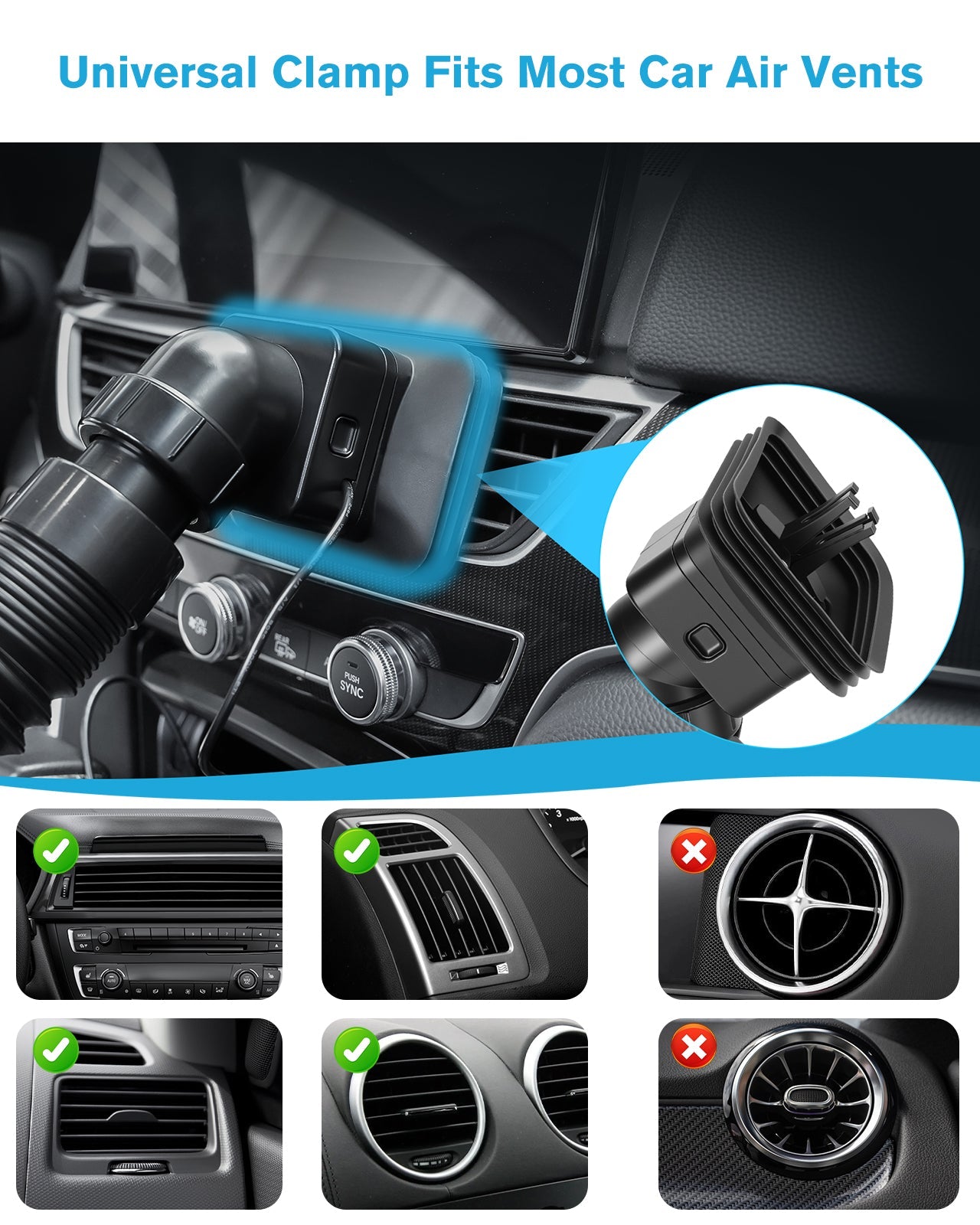
A fan-powered car AC vent extender with features like a built-in airflow booster, silicone sealing base, reinforced mounting clips and dual installation options helps deliver more consistent comfort where factory vents struggle.
Vehicles Without Strong Rear Airflow
Some vehicles simply have better front airflow than rear airflow.
You may notice:
- Front vents blow strongly, rear passengers barely feel anything
- Cargo areas become warmer than the cabin
- Winter heat takes too long to reach the back seats
In these cases, redirecting airflow can improve comfort without modifying your vehicle.
It is especially practical for drivers who do not want expensive HVAC upgrades or permanent installations.
Questions to Answer Before You Buy
Before spending money, ask yourself:
Where Do I Need More Airflow?
A compact sedan and a full-size SUV have different needs.
A shorter hose may work for small vehicles.
Larger SUVs, minivans and pet cargo setups usually need more reach.
An adjustable hose extending from 2 to 6.6 feet provides more flexibility for different vehicle layouts.
Will the Extender Stay Secure?
This is where cheaper products often disappoint.
A loose clip can ruin the entire experience.
Nobody wants to fix a fallen hose every few minutes on a bumpy road.
A better design uses reinforced clamps that grip the vent securely and stay stable during daily driving.
What Features Actually Matter?
You do not need the most expensive option.
You need the right design.
Important features include:
- Built-in booster fan for longer airflow distance
- Silicone sealing base to reduce air leakage
- Strong mounting clips that stay attached
- Flexible hose design without excessive airflow restriction
- Dual mounting options for headrests or grab handles
FAQ
Q1: Can a vent extender make car AC colder?
No.
A vent extender does not lower the temperature produced by your vehicle’s AC system.
It redirects existing cool or warm air to areas that normally receive less airflow.
If your front AC already works well but the back seats stay uncomfortable, an extender can improve air distribution.
Q2: Does hose length reduce airflow?
Yes, especially with passive tubes.
Long hoses, sharp bends and poor sealing can reduce airflow before it reaches the rear.
That is why features like a built-in booster fan, leak-resistant silicone seal and flexible hose design matter.
A properly designed extender helps maintain stronger airflow over longer distances.
Q3: When is a car fan a better option?
A portable car fan works well if you only need basic air circulation for short trips.
But it only moves existing cabin air.
If you want to deliver your vehicle’s actual cold or warm AC airflow to rear passengers or pet areas, a vent extender is usually the better choice.
Final Thoughts
So, are car AC vent extenders worth it?
For drivers dealing with hot back seats, cold third rows or uncomfortable pet travel areas, they can be a practical upgrade.
The key is choosing a design that solves real problems — not just buying the cheapest tube available.
A fan-powered car AC vent extender helps bring balanced heating and cooling to places where your factory vents struggle to reach.
👉 If poor rear-cabin airflow ruins your road trips, upgrade your vehicle comfort with a fan-powered car AC vent extender and keep every passenger and furry companion comfortable.