If you’ve shopped around for a way to cool your SUV’s sweltering back seats, you’ve likely spotted a huge gap in car AC vent extender pricing.
Some basic models cost less than $20, while better-designed fan-boosted AC vent extension tubes usually sell around $45–$60.
But what causes that massive price gap?
Truth is, these products are far from one-size-fits-all.
A cheap passive tube and a fan-boosted AC vent extension tube may look similar at first, but they solve different problems.
A basic hose simply redirects whatever airflow reaches it. A better system focuses on maintaining stronger airflow, preventing leaks, staying secure on rough roads, and making installation practical for real family vehicles.
Because if you own a three-row SUV, you already know the problem:
The front seats feel perfect.
The third row? Still hot.
Your dog’s crate in the cargo area? Barely getting any air.
That is where design quality starts to matter.
Typical Car AC Vent Extender Price Ranges
Budget Passive Tubes: Around $10–$25
Budget passive tubes are attractive because they are cheap and simple.
The idea sounds easy: attach a hose to your dashboard vent and guide air toward the rear.
For short distances, they may provide some extra airflow.
But larger vehicles create a bigger challenge.
In a full-size SUV or minivan, the hose often needs to travel several feet. Once the tube bends around seats or stretches toward the cargo area, cold air pressure drops quickly.
Many buyers discover the same frustrating problem:
The product is installed correctly, but the rear area still does not feel much cooler.
Cheap designs also tend to cut costs on the details that matter.
Weak clips can loosen on bumpy roads.
Thin hoses collapse when sharply bent.
Poor connections allow air to escape before it reaches passengers.
A low price looks attractive until you realize you paid for something that does not solve the original problem.
Mid-Range Fan-Boosted AC Vent Extension Tubes: Around $45–$60
For most SUV owners, this is the range where real performance improvements begin.
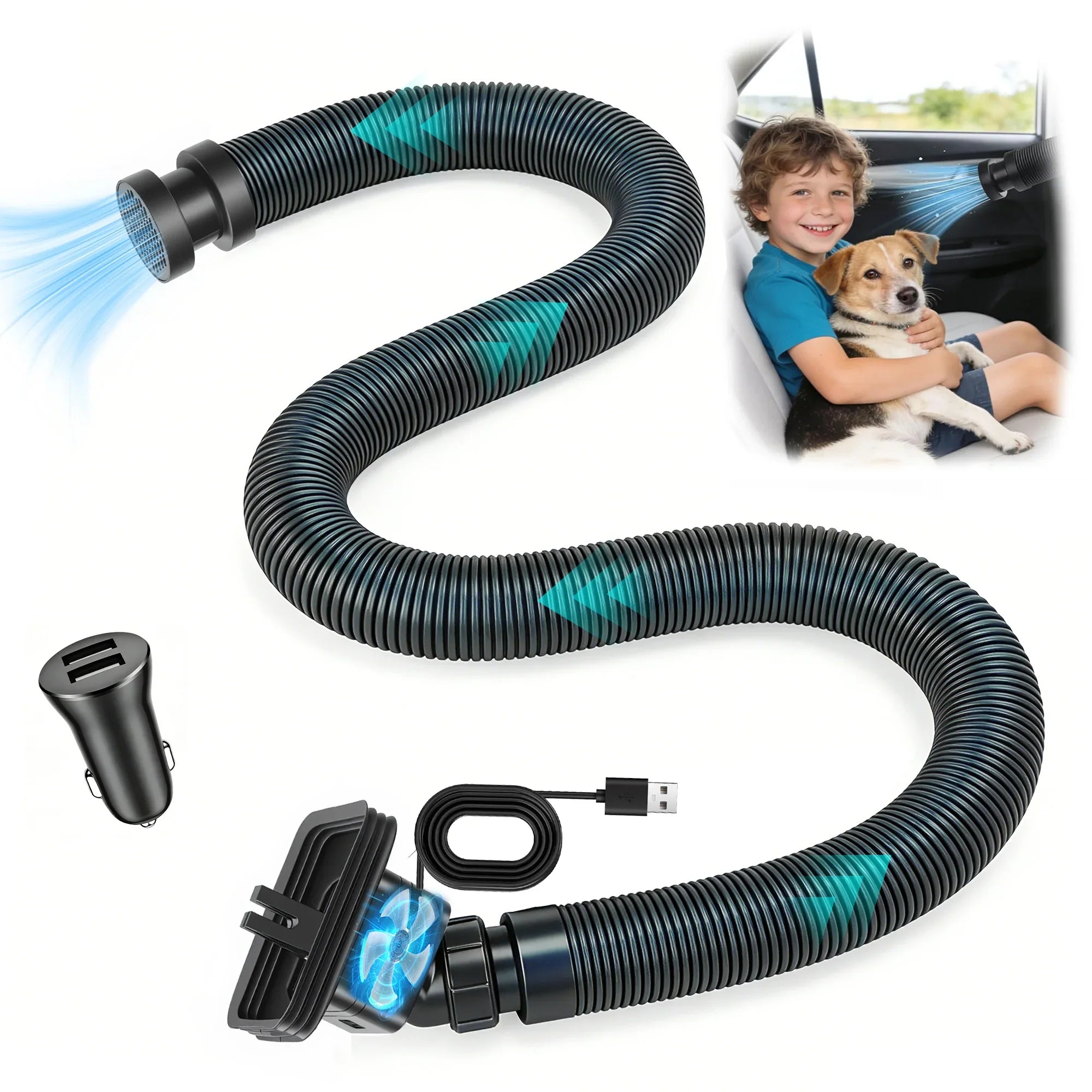
A quality fan-boosted AC vent extension tube usually adds features designed for everyday driving:
- Built-in booster fan
- USB-powered operation
- Adjustable 2–6.6 ft hose
- Silicone sealing gasket
- Reinforced vent clamp
- Flexible mounting options
These upgrades are especially useful when you need conditioned air to travel from the front dashboard to:
- Third-row seats
- Rear-facing child seats
- SUV cargo areas
- Dog crates
A product around $49.99 is not simply selling a longer hose.
It is solving the airflow problems that cheaper passive tubes often cannot handle.
Premium Systems: $60+
Some premium options add upgraded materials or extra accessories.
But a higher price tag does not automatically mean better real-world cooling performance.
What matters most is:
- Airflow support
- Connection sealing
- Mounting stability
- Installation design
A well-designed $49.99 fan-boosted AC vent extension tube can outperform a more expensive product with poor airflow management.
What Determines the Price?
The biggest price differences usually come from the engineering behind the product.
A longer hose alone does not guarantee better results.
Built-In Fan and Power System
The biggest difference between passive tubes and powered models is airflow support.
Passive tubes depend only on your vehicle’s factory AC pressure.
That can work for short distances, but airflow naturally weakens when air must travel through a long hose.
A fan-boosted AC vent extension tube uses a built-in booster fan to actively help move conditioned air through the extension hose.
And this is an important difference:
This is not a standalone small USB fan that just recirculates hot cabin air — it pulls genuine cooled AC air from your dashboard vents and pushes it down the hose.
The result is more consistent airflow for rear passengers, kids, seniors, and pets.
The USB-powered design also makes installation simple. A complete kit should include the necessary power accessories instead of forcing buyers to purchase extra parts afterward.
Hose Length, Clamp and Sealing Design
Many shoppers focus only on hose length.
But the small details often decide whether the product actually works.
Adjustable 2–6.6 ft Hose
A flexible corrugated hose extending from 2 to 6.6 feet provides coverage for different vehicles.
Compact cars may only need a shorter setup.
Large SUVs and minivans often require the full extension length to reach rear passengers or cargo areas.
Just remember:
Do not crush the hose with sharp bends.
A twisted tube can restrict airflow and reduce performance.
Reinforced Mounting Clamp
No cooling accessory works well if it slips loose during a drive.
A reinforced clamp helps secure the extender to standard dashboard vents, keeping airflow directed toward the rear instead of moving around every time the vehicle hits a bump.
This is especially important for families who drive on highways, gravel roads, or long road trips.
Silicone Sealing Base
Air leakage is one of the biggest weaknesses of cheaper designs.
Many low-cost vent tubes lose airflow at the connection point before the air even enters the hose.
A silicone sealing gasket creates a tighter connection with the dashboard vent, helping more conditioned air travel through the tube instead of escaping around the edges.
What Should Be Included in the Price?
When comparing car AC vent extender costs, do not look only at the product price.
Check what actually comes inside the package.
Some cheaper competitors advertise a low price but only include the tube itself. Buyers then need to purchase USB chargers or mounting accessories separately.
USB Cable and Car Charger
A practical kit should include everything needed for daily use.
A USB-powered fan system is easy to install, but not every vehicle has a convenient USB port.
A complete package with a 12V car charger allows installation in more vehicles without extra purchases.
Warranty, Shipping and Return Policy
Price is also about confidence.
Before buying, check:
- Vehicle compatibility
- Return options
- Shipping speed
- Customer support
A slightly higher upfront cost is often worth it when the product is designed for repeated family use.
How to Decide Whether the Product Offers Good Value
The cheapest option is not always the best choice.
The better question is:
Will this actually fix my vehicle’s airflow problem?
A passive tube may be enough if:
- You drive a smaller vehicle
- Rear passengers sit close to the front
- You only need minor airflow adjustment
A fan-boosted AC vent extension tube is a better fit if:
- You own a three-row SUV
- Your kids sit in rear-facing car seats
- Your dog rides in a cargo crate
- You take long summer road trips
- You need heating support in winter too
For family vehicles, small design details make a big difference.
A secure clamp prevents movement.
A sealed connection reduces wasted airflow.
Dual mounting options help keep the hose away from children and pets.
Why a $49.99 Car AC Vent Extender Can Be Worth It
At first glance, spending $49.99 on a vent extender may seem like a lot compared with a simple $20 tube.
But the difference is what happens after installation.
A cheaper passive tube may still leave you with:
- Weak airflow in the third row
- Loose connections
- Air leaks
- Extra accessory purchases
A better-designed fan-boosted AC vent extension tube provides:
✔ Built-in airflow booster
✔ USB-powered operation with included charger
✔ Leak-reducing silicone sealing gasket
✔ Reinforced vent clamp
✔ Adjustable 2–6.6 ft hose
✔ Dual mounting options for headrests and grab handles
For SUV families and pet owners, these features are what turn a basic hose into a useful comfort upgrade.
Final Thoughts
Choosing a car AC vent extender is not just about finding the cheapest option or the longest hose.
Real-world performance comes down to airflow support, sealing quality, mounting stability and installation design.
If you are tired of hot back seats for your kids or furry passengers, a well-built fan-boosted AC vent extension tube is a simple upgrade that helps balance cabin temperatures on every road trip.
Get yours today and save 10% with our current offer.
FAQ
How much should a car AC vent extender cost?
Most car AC vent extenders range from around $10 to $60.
Budget passive tubes are cheaper, while fan-boosted AC vent extension tubes with airflow support, sealing design and included accessories usually cost more.
For SUVs, minivans and pet travel, the additional features often provide better long-term value.
Are low-cost passive hoses worth buying?
They work for some simple situations.
However, if you own a 3-row SUV or regularly cool cargo-area pet crates, passive tubes are usually not enough.
Long hose distances, bends and airflow loss can make a big difference.
Does a higher price mean stronger airflow?
Not always.
A higher price only matters when it comes from useful design improvements.
Look at the features behind the price:
- Built-in airflow support
- Sealing performance
- Clamp stability
- Hose quality
Those details determine whether the product performs well in a real vehicle.
Is a $49.99 AC vent extender expensive?
Compared with basic passive tubes, yes.
But compared with replacing uncomfortable rear-seat conditions or buying multiple cheaper accessories that fail to work, a well-designed extender can offer better value.
Does it work for pets and dog crates?
Yes.
With a long adjustable hose and flexible mounting options, it can help direct conditioned air toward rear seating areas and SUV cargo spaces where pets travel.