A car AC vent extender sounds like a simple accessory until you actually need one.
Many SUV owners know the problem: the driver gets plenty of cool air, but passengers sitting in the second or third row are still uncomfortable. Kids in rear-facing car seats get sweaty during summer drives, while passengers in the back may still be waiting for warmth on freezing mornings.
The same issue happens with pets. Dogs riding in SUV cargo areas are often the farthest point from the factory vents, making it difficult for conditioned air to reach them.
That is why choosing the right extender matters. Hose length is important, but it is only one part of the equation. Sealing, airflow support, mounting stability and safety design all affect how well the product performs in daily use.
Here are the 9 features worth checking before buying.
What Is a Car AC Vent Extender?
A car AC vent extender redirects air from your vehicle’s dashboard vents toward areas that factory airflow struggles to reach.
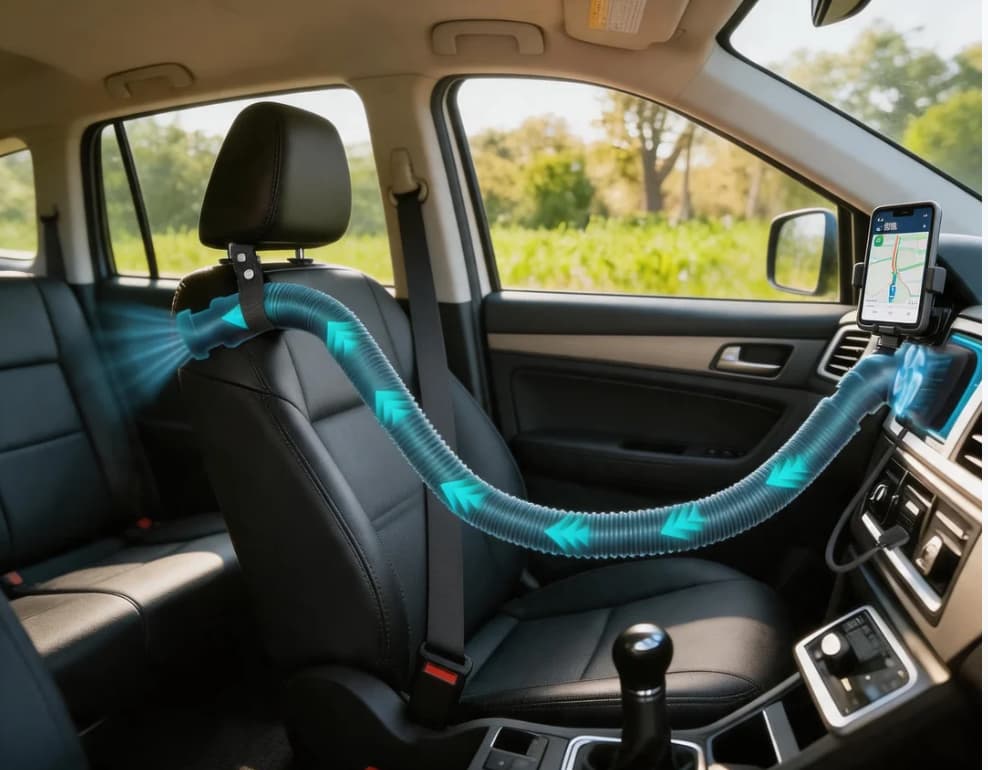
Instead of relying only on the original vent location, the extender uses a flexible hose to move cooled or heated air toward rear passengers, third-row seats or pet areas.
This is especially helpful in larger vehicles. Full-size SUVs and family minivans provide plenty of space, but factory ventilation is usually strongest near the front cabin.
A well-designed rear seat AC vent extender creates a more direct airflow path, helping balance comfort throughout the vehicle.
9 Features to Check Before Buying
1. Built-In Fan & USB-Powered Airflow Support
The biggest difference between models is how they move air.
Basic passive tubes rely only on factory AC pressure. As air travels through a long hose, airflow can become weaker, especially when reaching third-row seating or rear cargo areas.
A powered extender with a built-in airflow booster helps maintain stronger air movement through the extended tube.
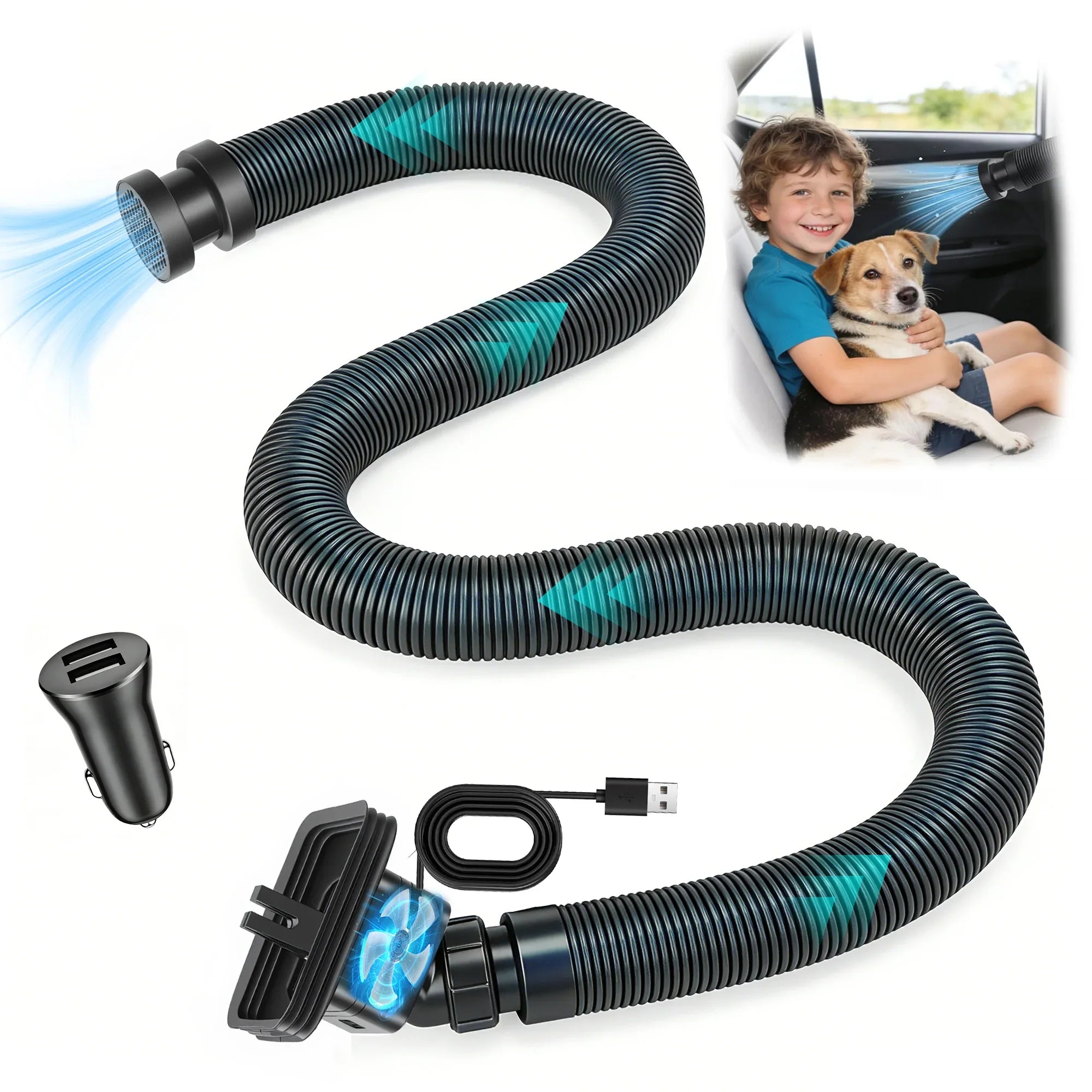
USB power also makes installation simple. A practical kit should work with standard vehicle USB ports, and an included dual-port 12V car charger is a useful bonus because you can run the extender while keeping another device charging.
For pet owners, keeping the power unit near the dashboard is also important. Loose cables running near dog crates or rear seats create unnecessary chewing risks.
2. Hose Length & Vehicle Coverage
Longer does not always mean better.
The right hose length depends on where you need airflow.
A flexible corrugated hose extending from 2 to 6.6 feet provides enough reach for different vehicle layouts.
Shorter setups work well for rear passengers, while longer extensions are better suited for:
- Three-row SUVs
- Large family vehicles
- Rear-facing child seats
- Dog crates placed in cargo areas
Avoid forcing the hose into sharp bends. A smooth curve keeps airflow moving more efficiently.
3. Sealing Quality
Many buyers focus on the hose but overlook the connection point.
Small gaps between the dashboard vent and extender can reduce airflow before it even enters the tube.
A silicone sealing base creates a tighter connection with the vent surface, helping reduce air leakage and improving airflow efficiency.
This small feature becomes much more noticeable when air needs to travel several feet toward the rear of a large vehicle.
4. Mounting Stability
No cooling accessory works well if it slips loose mid-journey.
A weak attachment can move around when driving over bumps or making turns.
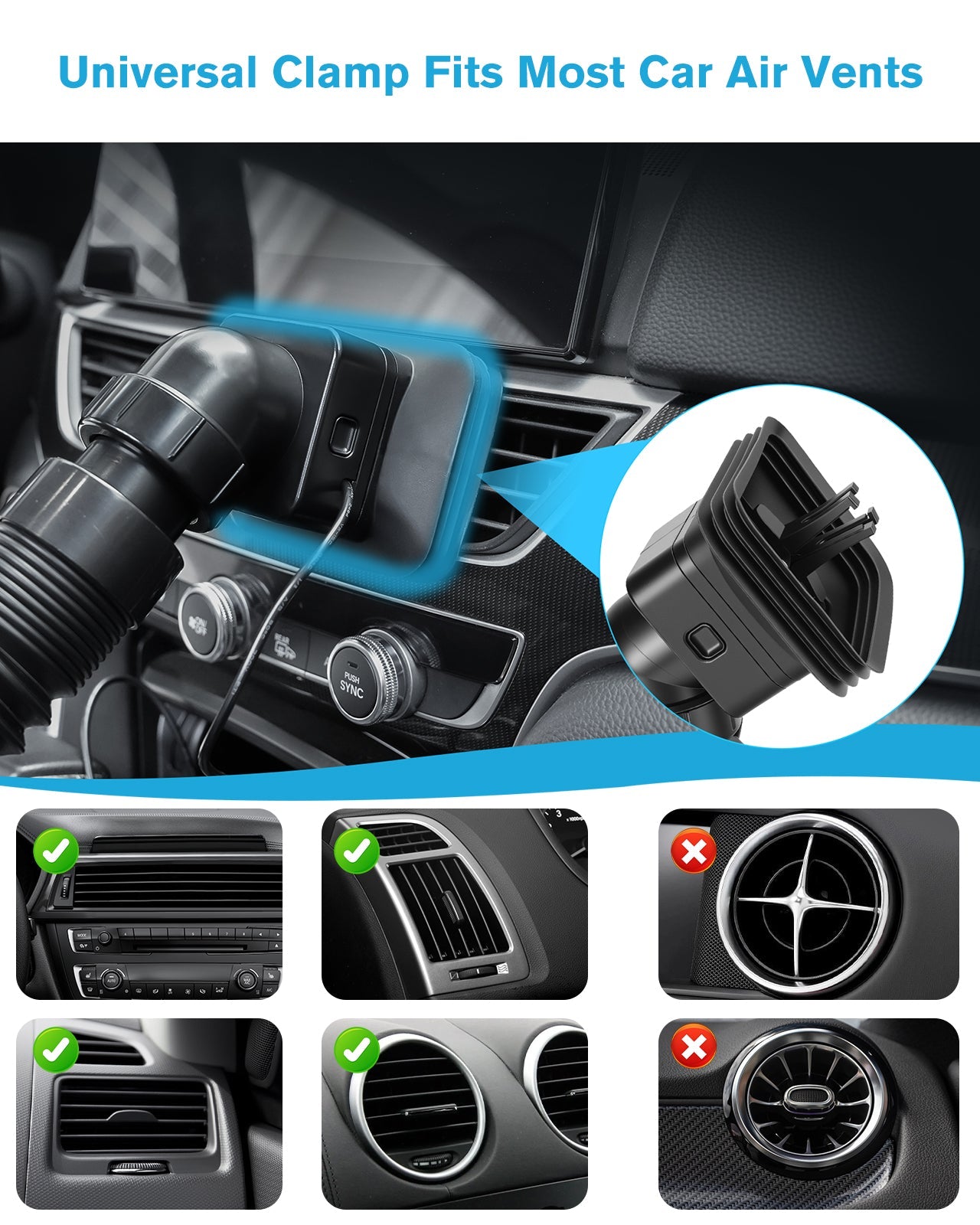
A reinforced clamp design helps secure the extender onto standard dashboard vents, keeping the system stable during everyday driving.
For families, stability matters. A loose hose near children or pets can quickly become annoying.
5. Flexible Mounting Options
Different vehicles need different setups.
A good extender should allow flexible placement instead of forcing one fixed position.
Dual mounting options allow the rear nozzle to attach to areas such as:
- Headrest bars
- Interior grab handles
This makes it easier to position airflow toward passengers without leaving the outlet where kids or pets can easily pull on it.
6. Compact Storage
A useful car accessory should not permanently take over your storage space.
A lightweight, flexible hose should collapse easily when not in use.
After a road trip, camping weekend or seasonal use, the extender can be folded and stored in a glove box, cargo compartment or travel bag.
7. Year-Round Cooling & Heating
Many people think of vent extenders as summer accessories only.
They can also improve winter comfort.
On cold mornings, front passengers may warm up quickly while rear-facing child seats, third-row passengers or pets still feel chilly.
A properly designed extender helps redirect warm heater air toward those areas, creating a more balanced cabin temperature throughout the year.
For families who drive in different seasons, a cooling and heating solution is much more practical than a single-purpose accessory.
8. Vehicle & Vent Compatibility
Not every extender fits every vehicle.
Before purchasing, check your dashboard vent style and available mounting space.
Most clamp-style designs work with common horizontal and vertical slat vents. Unusual round or uniquely shaped vents may require extra checking.
Vehicle size also matters:
- Sedans usually need shorter hose reach
- SUVs benefit from longer extensions
- Minivans often require flexible routing options for multiple passengers
9. Kid & Pet-Friendly Safety Design
Family vehicles need accessories that are safe around passengers and animals.
A good design keeps power components near the dashboard and avoids loose wires stretching toward the back seat.
For pet owners, this is especially important. Dogs are naturally curious and may chew exposed cables near their crate area.
Dual mounting options also help keep the air outlet positioned securely instead of hanging where children or pets can grab it.
How to Check Vehicle Compatibility
Before ordering, check three things:
Dashboard Vent Design
Measure your vent shape and confirm the clamp can attach securely.
Available Routing Space
Plan where the hose will run.
SUV owners often route the hose along the side of the center console, while sedan owners may prefer running it underneath the seats.
Destination Area
Think about where you actually need airflow:
- Third-row passengers
- Child safety seats
- Pet crates
- Rear cargo zones
The best setup is the one that delivers air where your passengers actually sit.
Who Should Consider a Car AC Vent Extender?
A rear seat AC vent extender is especially useful for:
- Families with children
- Owners of large SUVs
- Pet owners traveling with dogs
- Drivers taking long road trips
- Anyone dealing with uneven cabin temperatures
If your front seats feel comfortable while the back of the vehicle does not, redirecting airflow can make a noticeable difference.
FAQ
Do car AC vent extenders really work?
Yes, when the design and installation are right.
Performance depends on factors like hose length, sealing, mounting stability and airflow support.
A properly installed extender helps move conditioned air toward areas that factory vents may not reach effectively.
Will a vent extender fit every car?
No accessory fits every vehicle automatically.
Check your dashboard vent style, available installation space and hose length requirements before buying.
Most standard horizontal and vertical vents work well with universal clamp designs.
Is a powered vent extender better than a passive hose?
For short distances, passive tubes may work.
However, longer routes in SUVs, minivans and cargo areas can experience airflow loss. A powered extender uses a built-in airflow booster to help maintain more consistent air delivery.
Does it block the original AC vent?
Once installed, most airflow will feed into the extender hose, so very little air continues from the original vent opening.
If front passengers need direct airflow again, simply remove the extender.
Will it damage my vehicle’s HVAC system?
A properly installed extender does not modify your vehicle’s heating and cooling system.
It redirects existing airflow through the hose and does not require permanent changes to your vehicle.
Final Thoughts
Choosing the right car AC vent extender is not just about buying the longest hose.
Small details decide the real experience: secure mounting, reliable sealing, flexible routing and year-round performance.
For SUV owners, families and pet travelers, the right design can solve one of the most common vehicle comfort problems — uneven temperatures between the front and rear cabin.
👉 Upgrade your vehicle with a fan-powered car AC vent extender and deliver balanced heating and cooling to every passenger and pet on your next journey.