Shopping for a car AC vent extender can be confusing.
Open Amazon or any marketplace, and you’ll see dozens of products that look almost identical. Similar hoses. Similar pictures. Similar promises.
But here’s what many buyers discover after installation:
The cheap one they picked struggles to move air to the back seat.
The clip loosens after a few drives.
The hose bends and airflow drops.
Or worse — the connection leaks air before it even reaches the third row.
A quality car AC vent extender is not just a plastic tube attached to your dashboard. The small design details decide whether it actually improves your driving experience.
So how do you tell the difference?
Let’s look at the features that separate a reliable best car AC vent extender from low-quality alternatives.
Why Build Quality Matters
A car AC vent extender has a simple job:
Take the cold or warm air your vehicle already produces and redirect it to places that factory vents struggle to reach.
That sounds easy.
But real vehicles create challenges.
Large SUVs, minivans and three-row vehicles have a long distance between the front dashboard vents and rear passengers. By the time air travels several feet through a hose, weak designs often lose performance.
A poorly built extender usually fails in three areas:
- Airflow becomes too weak
- Connections leak air
- The hose or mounting system does not stay secure
For families using rear-facing child seats, third-row passengers or dog crates, these small issues become very noticeable during summer road trips or cold winter mornings.
A well-designed extender focuses on airflow efficiency, stable installation and long-term durability.
Four Components to Inspect Before Buying
1. Fan Housing, Power Cable and Airflow Performance
The biggest difference between basic models and premium designs is often the airflow system.
Many low-cost passive tubes simply rely on your vehicle’s original AC pressure. They may work for short distances, but airflow becomes weaker as the hose gets longer.
For SUVs and larger vehicles, this can become frustrating.
You may feel strong air coming from the dashboard, but barely notice anything reaching the back.
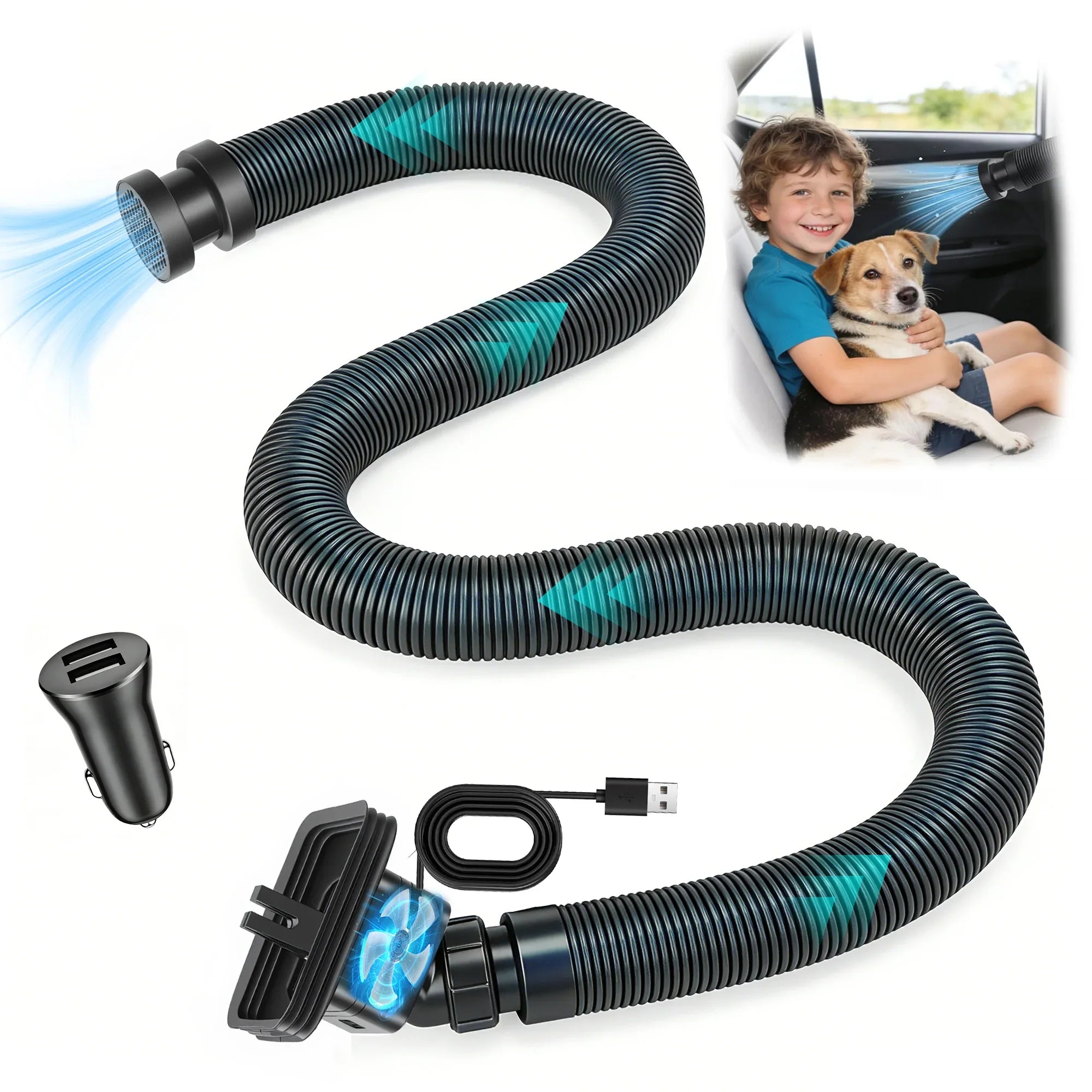
A better option is a car AC vent extender with fan that actively boosts airflow through the hose.
Important:
This is not a regular USB fan that only moves warm cabin air around.
A quality powered vent extender pulls the actual cooled or heated air from your vehicle’s AC vent and pushes it through the extension hose toward the rear area.
A built-in booster fan helps maintain stronger airflow when the hose stretches toward:
- Third-row seats
- Rear-facing child seats
- Cargo areas
- Pet travel zones
Your product advantage can be highlighted here:
Our fan-powered extender uses a built-in airflow booster, USB power connection and included 12V car charger, allowing easy installation even in vehicles without available USB ports.
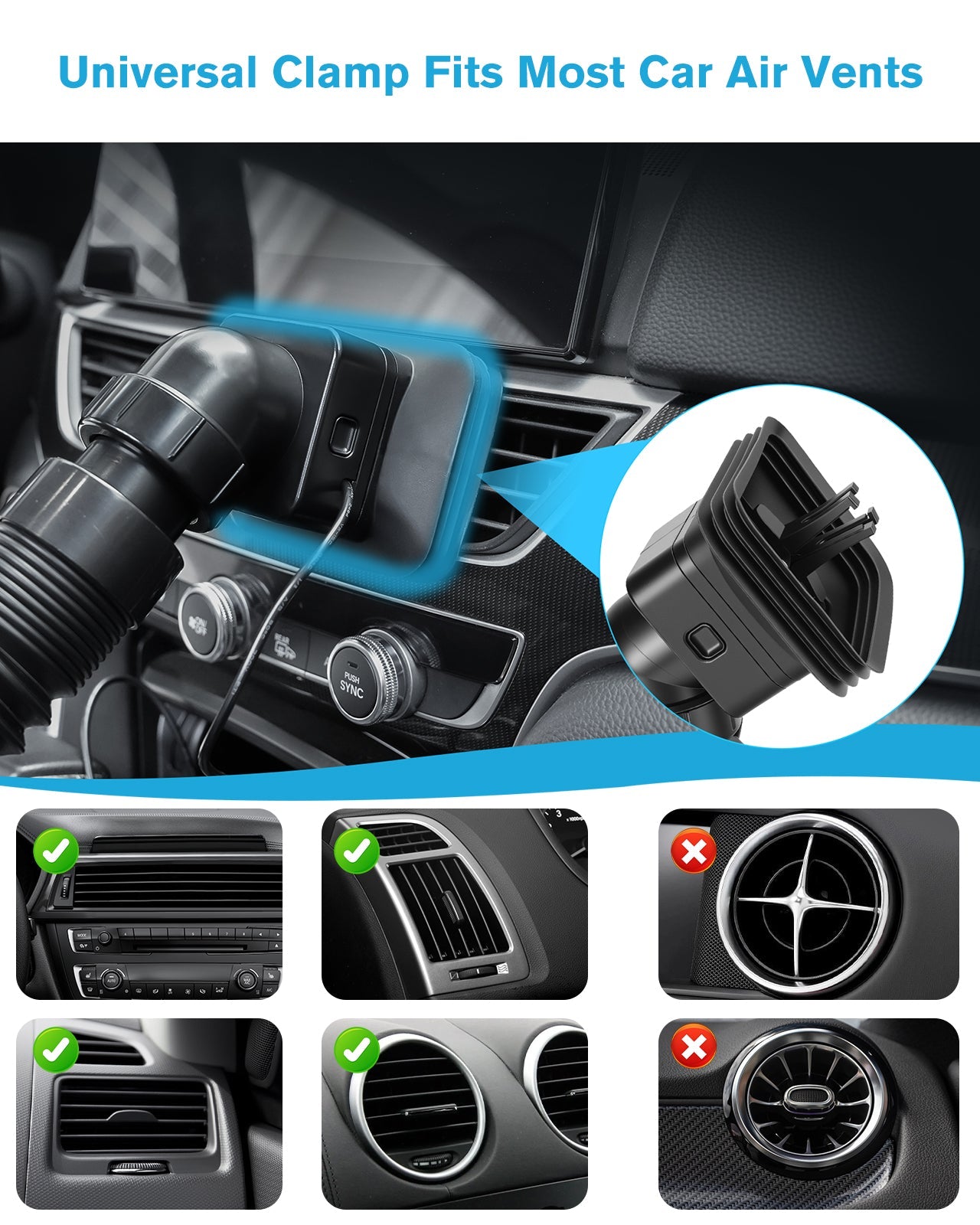
2. Clamp Strength: Will It Stay in Place?
A cooling accessory is useless if it falls off during driving.
This is one of the biggest complaints with cheaper vent extenders.
The problem usually appears on:
- Rough roads
- Highway driving
- Frequent adjustments
Weak clips slowly loosen, causing the hose position to change or disconnect completely.
A quality mounting clamp should:
- Grip the vent firmly
- Avoid damaging vent blades
- Stay stable during daily driving
Your extender uses a reinforced clamp design that securely attaches to standard vehicle vents and helps prevent unwanted movement.
3. Gasket and Sealing Design
Many buyers focus on hose length but overlook one important detail:
Air leakage.
Even a powerful fan cannot perform well if air escapes before entering the hose.
Low-quality models often connect directly to the vent without proper sealing.
The result?
Cold air leaks around the connection instead of traveling toward the rear.
A better design includes a sealing layer between the vent and extender.
Your product uses a rubber gasket connection that helps reduce air loss and improves airflow efficiency.
This is especially important for longer setups where every bit of airflow matters.
4. Hose Construction and Mounting Flexibility
A long hose sounds impressive, but length alone does not guarantee performance.
The hose material matters.
Cheap hoses often:
- Collapse when bent
- Create airflow restrictions
- Feel fragile after repeated use
A durable corrugated hose keeps its shape while allowing flexible routing.
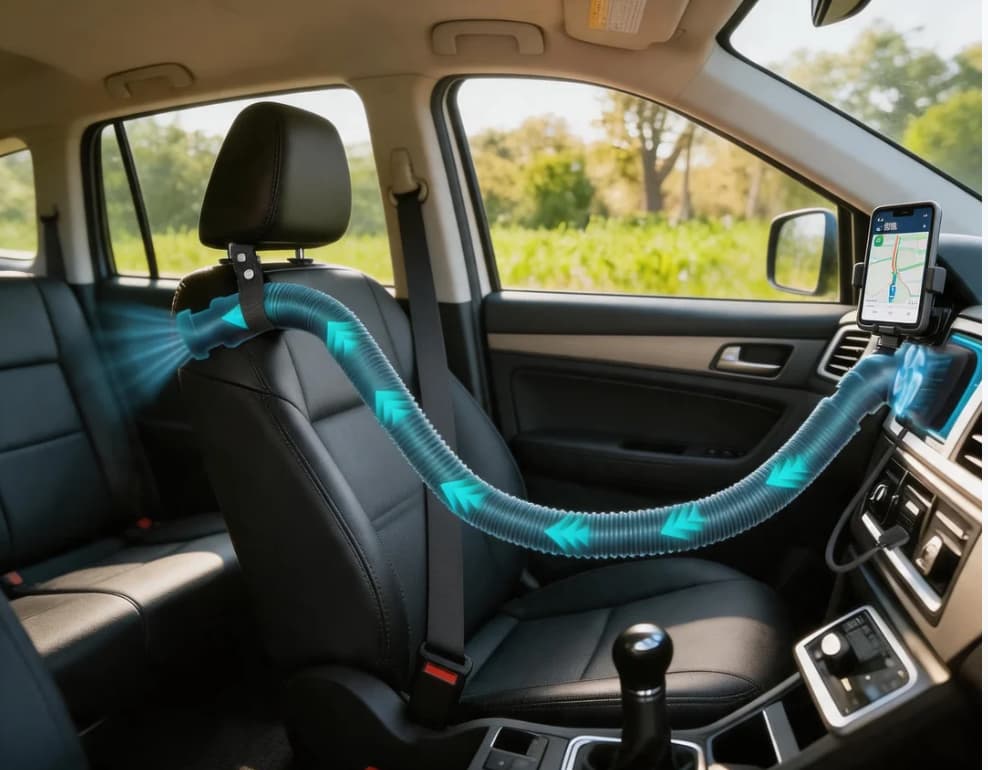
Your extender stretches from 2 to 6.6 feet, giving enough reach for different vehicles.
Examples:
- Sedan → rear passenger area
- SUV → second or third row
- Large vehicle → cargo area or pet zone
Installation flexibility also matters.
A good extender should not force one fixed position.
Your product supports two mounting options:
- Headrest installation
- Grab handle installation
This keeps the airflow outlet positioned away from curious kids or pets that may pull or chew on loose parts.
Warning Signs of a Low-Quality Product
Weak Connections and Poor Sealing
Be careful with products that only show a long hose in their pictures.
A longer tube does not automatically mean better cooling.
Ask:
- Does it have a sealing gasket?
- Does the clamp look reinforced?
- Is the connection designed to prevent leaks?
If the answer is unclear, the product may look better online than it performs in your vehicle.
Missing Specifications and Unsupported Claims
Another warning sign is vague marketing.
Some products claim:
“Powerful cooling”
“Maximum airflow”
“Universal fit”
But provide no details.
Before buying, check:
- Hose length range
- Fan power source
- Mounting method
- Vehicle compatibility
- Included accessories
A trustworthy product explains exactly how it works.
A Practical Pre-Purchase Checklist
Before choosing a car AC vent extender, check these points:
✅ Does it actively improve airflow or only rely on passive air pressure?
✅ Does it include a stable mounting clamp?
✅ Does the connection have sealing protection?
✅ Is the hose long enough for your vehicle?
✅ Can the installation avoid interfering with children or pets?
✅ Does it include the necessary power accessories?
Who Benefits Most From a High-Quality AC Vent Extender?
A good extender is especially useful for:
Three-Row SUV Owners
Many SUVs have excellent front-seat cooling but uneven airflow in the back.
Passengers sitting in the third row often feel the difference.
A vent extender helps bring conditioned air closer to those areas.
Families With Kids
Rear-facing child seats create a common problem:
The front cabin feels comfortable, while the child area feels warmer.
Redirecting airflow helps create a more balanced environment.
Pet Owners
Dogs traveling in cargo areas often sit far away from factory vents.
A properly installed extender helps deliver airflow closer to the pet travel area.
(Always maintain proper ventilation and never completely block airflow around pets.)
Final Thoughts
Finding the best car AC vent extender is not about buying the longest hose or the cheapest option.
The real difference comes from the details:
Strong airflow support.
Reliable mounting.
Better sealing.
Durable hose construction.
A design that fits real family vehicles.
If your SUV, minivan or truck struggles with uneven temperatures between front and rear seats, a well-built powered vent extender can be a simple upgrade that makes everyday drives much more comfortable.
FAQ
Q1: What makes a good car AC vent extender?
A good extender combines strong airflow, secure mounting, proper sealing and durable materials. For larger vehicles, features like a built-in booster fan, reinforced clips and leak-resistant connections make a noticeable difference.
Q2: Should the hose have a built-in fan?
For short distances, passive tubes may work.
But for SUVs, three-row vehicles or cargo-area applications, a fan-powered extender usually provides more consistent airflow because it helps push conditioned air through the longer hose.
Q3: How can I tell whether the clamp is safe for my vent?
Look for a clamp that grips firmly without forcing excessive pressure onto the vent blades.
A good mounting system should stay secure during driving while allowing easy removal when needed.
Q4: Does a longer hose always mean better cooling?
No.
A longer hose helps reach farther areas, but airflow quality depends on the entire design — including fan support, sealing and hose construction.
A poorly designed 6.6 ft hose can perform worse than a shorter, better-built system.