It is one of the most frustrating moments of a summer commute. You turn your vehicle's climate control system to maximum, select the face vents, and feel a powerful, freezing blast of air up front.
Yet, when you check on passengers or reach your hand into the rear row, there is almost no movement. The air back there feels completely dead, heavy, and hot.
When you experience no airflow back seat car problems, it is easy to think your vehicle has a mechanical failure. But if your dashboard is blowing ice-cold air, your compressor is working fine.
The real issue is a built-in rear seat ventilation problem, where the factory design cuts off air volume long before it ever reaches the back row. This layout defect leaves family members, young children, and anyone needing reliable backseat cooling for kids trapped in a stifling heat pocket.
The Automotive Design Flaw Behind Dead Rear Airflow
To understand why no air in back seat compartments is such a common complaint, you have to look at standard automotive cabin layouts. Car manufacturers design factory HVAC networks to prioritize the front row. Up to 80% of your system's total blower volume exits through the four main dashboard vents to keep the driver alert.
Once that high-velocity cold air leaves the front panel, it immediately enters a massive open space. Because cold air is naturally heavy, dense, and slow-moving, it loses its static pressure almost instantly.
Instead of gliding uniformly across the roof toward the back row, the chilled air drops straight into the front footwells. This pressure loss shatters the air stream, leaving the rear cabin completely isolated from your vehicle's cooling cycle.
Alt="Hot rear car back seat due to factory HVAC airflow design flaw"
For parents and pet owners trying to ensure reliable backseat cooling for kids or looking for ways to keep dogs cool in car travel environments, this physical decay means your passengers are left sitting in stagnant, humid air, which can lead to rapid heat strain.
The Airflow Path Blockage in Multi-Row Cabins
Even if your front blowers are running at maximum speed, the structural layout of your car's interior acts as a physical barrier system. Three main roadblocks stop fresh ventilation from migrating backward naturally:
-
The Front Seat Wall: High, thick front bucket seats and wide headrests act as solid insulation panels that block front-row cross-breezes.
-
Trapped Cargo Obstacles: Packed diaper bags, strollers, and road trip luggage stacked on the floorboards choke out lower return air tracks, stopping natural cabin air rotation.
-
Safety Seat Barriers: Deep-molded plastic shells and thick foam padding on child safety seats trap body heat and humidity, sealing off young passengers from ambient cabin airflow.
Why Stock Rear Vents Fail to Solve the Problem
Many car owners assume that buying a vehicle with built-in rear console vents or B-pillar registers automatically solves the issue. However, during severe summer heat waves, these small factory outlets fail to deliver real relief due to significant design limitations:
-
Long Uninsulated Runs: To reach the second row, factory air must travel through feet of narrow plastic ductwork buried under your car's hot metal floorboards. This journey warms the air up before it ever exits the rear slats.
-
Extreme Friction Loss: Every twist, turn, and split inside your car's hidden ventilation tubes cuts down wind velocity. By the time the air emerges, the breeze is often too weak to be felt past a passenger's shins or ankles.
-
Poor Target Direction: Lower console vents sit too close to the floor, completely missing a passenger's torso, face, and head areas where heat stress feels most intense.
Forgyronis Vent Hose: Create a Direct Backseat Cooling Channel
You do not need an expensive mechanic visit or noisy aftermarket fans to fix a no airflow back seat car issue. Traditional clip-on car fans do not drop the localized temperature; they merely spin the hot, humid air already trapping your child. To restore real comfort, you must change how your car's factory cold air is distributed.
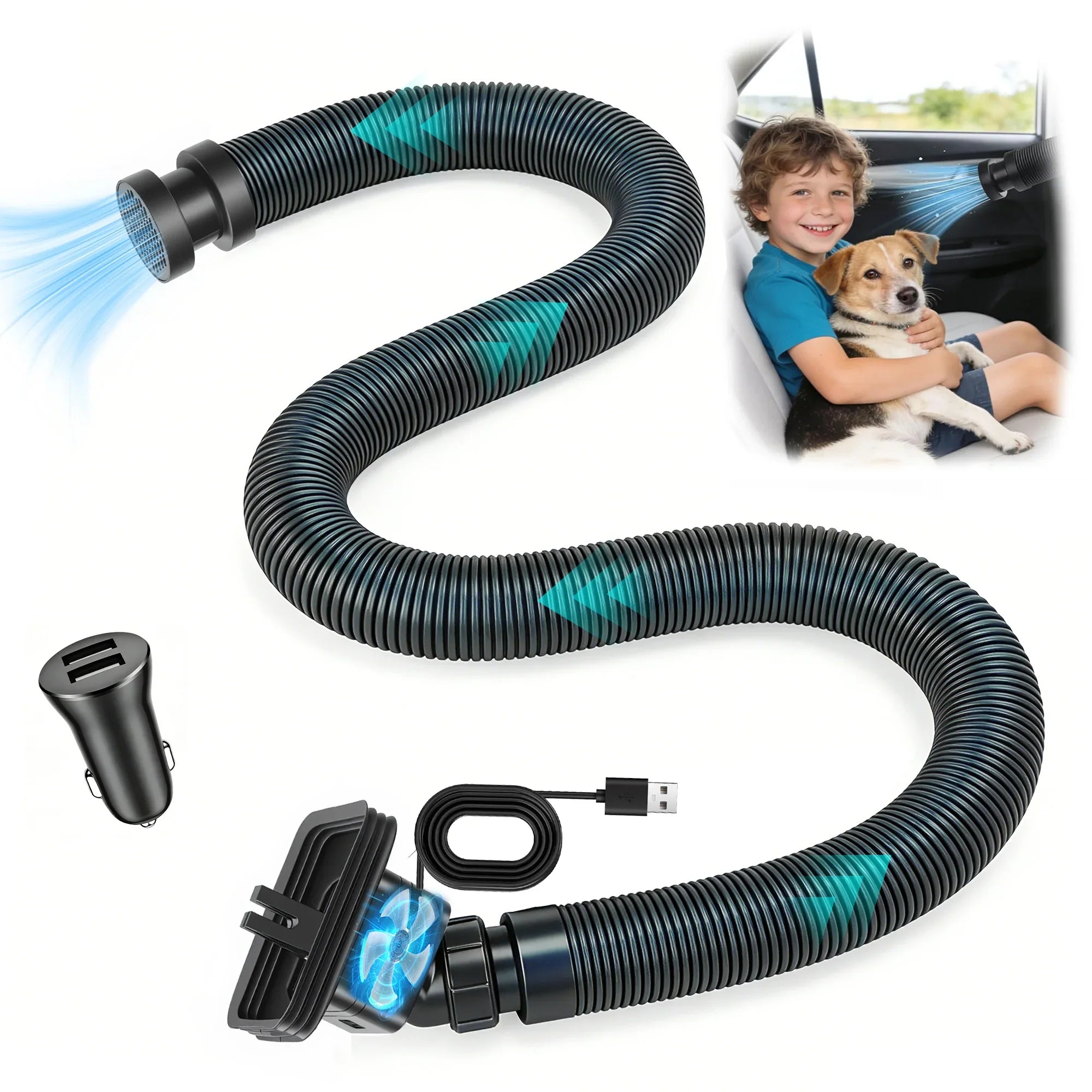
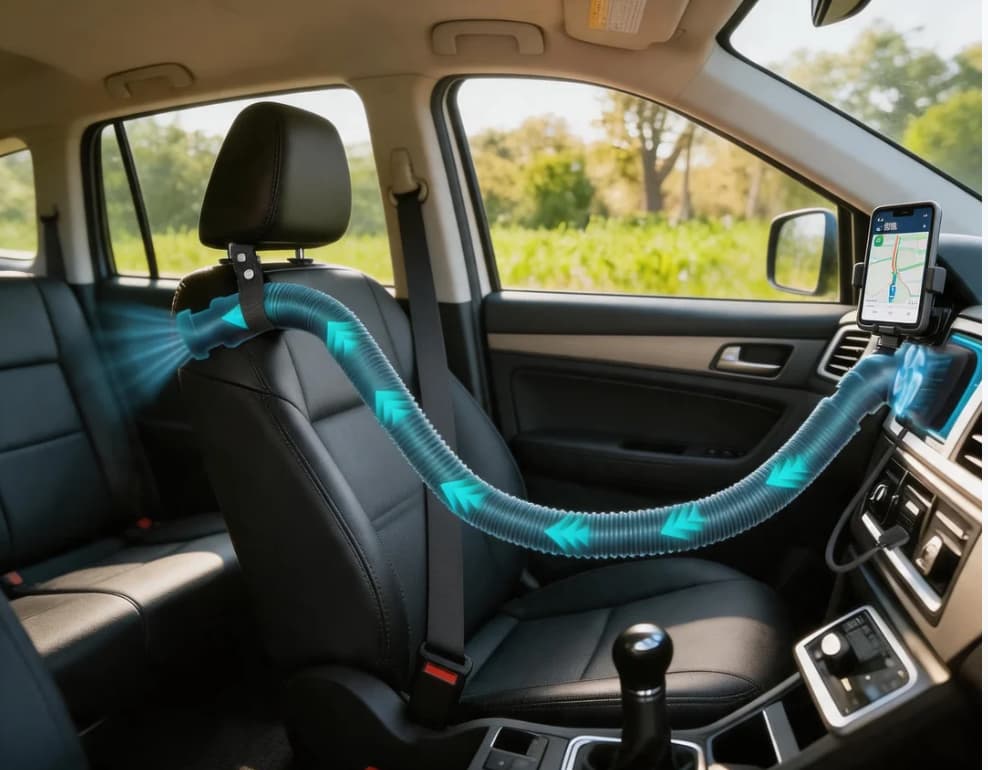
The Forgyronis Car Air Vent Extender solves this airflow issue by creating a direct, high-velocity cold air channel. This tool-free, flexible 5.91 ft (1.8 meters) car air vent hose snaps directly over your front dashboard vent register, serving as a highly reliable car AC extender for back seat positions. It acts as an enclosed pipeline that prevents pressure loss, transporting ice-cold air past all front-row barriers in three simple steps:
-
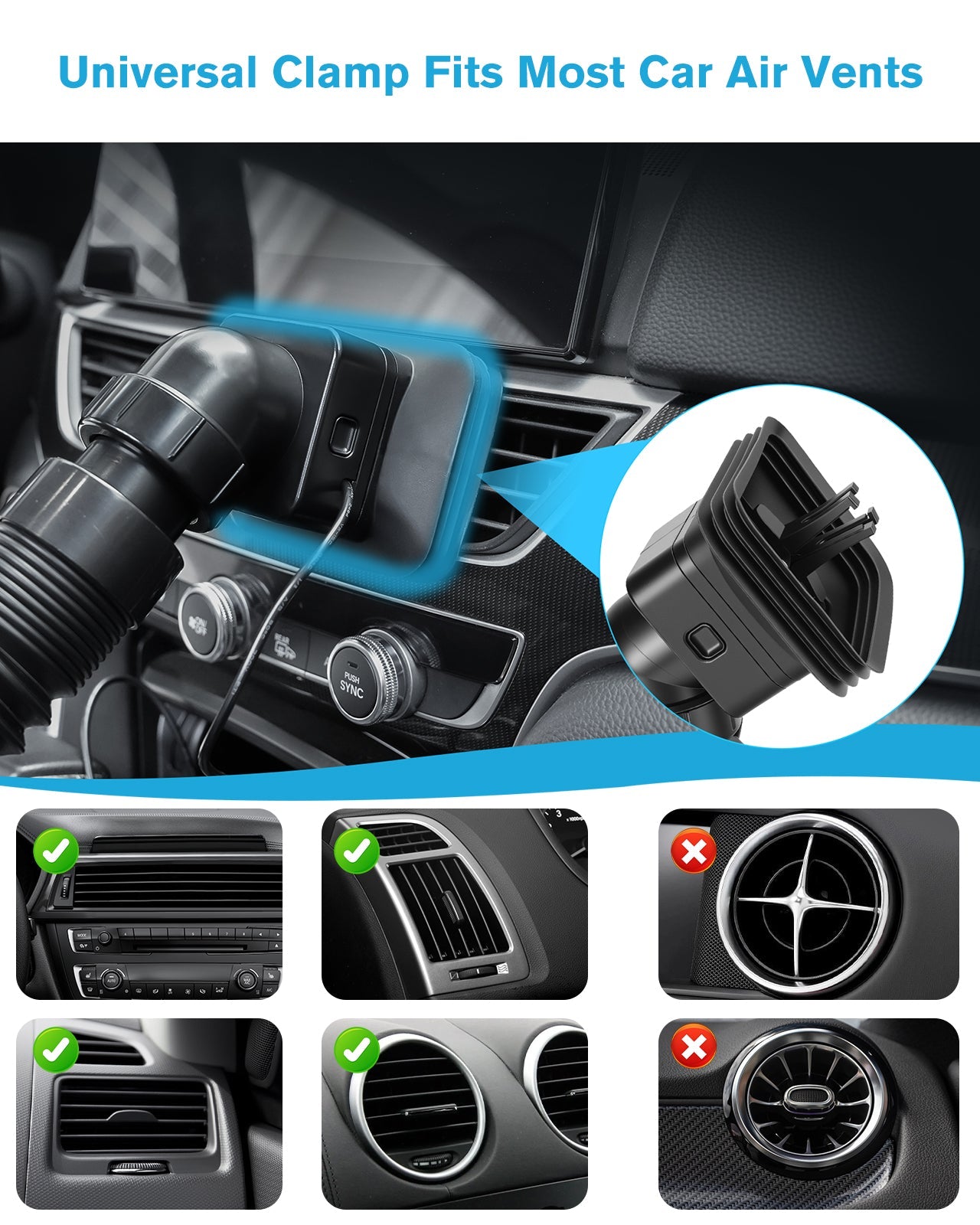
Snap the soft, rubber-padded silicone adapter onto any standard front air vent slat.
-
Extend the lightweight 1.8-meter tube over your center console to the rear seats.
-
Bend the flexible corrugated hose to aim the refreshing air stream directly at your passengers.
When your drive ends, the flexible tube coils into a tight, compact circle that slides easily under the front seat, leaving your dashboard looking clean and clutter-free. Molded from heavy-duty automotive silicone, it withstands extreme temperatures from -20°C to 80°C (-4°F to 176°F) without warping or releasing any plastic odors.
It is an efficient, budget-friendly pet car cooling hose that balances air temperatures all summer long, and it transitions perfectly into winter to deliver warm heater air directly to your family's safety seats. No more fussy, overheated kids ruining your daily commutes or summer family road trips.
Backseat Cooling Gear Comparison Chart
Understanding the mechanical differences and long-term costs of popular summer accessories helps parents choose the safest setup:
| Cooling Solution | Lowers Rear Seat Temp | Noise Level | Kid Safety | Long-Term Cost | Best For |
| Clip-On Electric Fan | No, only circulates hot air | Loud | Low: Exposed blades, cord tangling risk | Poor long-term value, yearly replacements | Temporary small-space use only |
| USB Dashboard Fan | Minimal weak airflow | Moderate | Low: Hanging cords hazard | Poor long-term value, frequent breakdowns | Front seat personal use, only cools front area |
| Window Solar Shades | Partial, only blocks sunlight | Silent | High, no moving parts | Great long-term value, cheap up front | Reducing sun radiation |
| Forgyronis Vent Extender | Yes, delivers direct cold AC air | Silent | High: No blades, no wires, no heat risk | Great long-term value, multi-year reusable | SUV/minivan multi-row family trips |
Frequently Asked Questions About Our AC Vent Extender
Does this vent extender block AC air from the driver?
No. It only redirects surplus airflow from one passenger-side vent and does not affect your car’s overall AC cooling performance. The driver’s airflow remains fully functional while your backseat gains dedicated cooling.
Can this vent hose cool dogs and pets in the car cargo area?
Absolutely. The long flexible tube reaches cargo bays, delivering steady cold air to pet crates to stop dogs from overheating on hot drives. It works perfectly alongside your standard window shades to secure comprehensive pet overheating car summer protection.
Will this air vent hose fit on vertical or circular dashboards?
The universal mounting clip is lined with flexible, protective rubber padding designed to stretch and grip standard horizontal, vertical, and most angled vehicle vent slats securely without scratching or bending your car's original trim pieces.
Can I run this extender to a third-row safety seat?
Yes. The 5.91 ft (1.8 meters) length is specifically tailored for larger family SUVs and minivans. It easily bypasses front bucket seats and second-row captain's chairs to deliver targeted relief to passengers sitting in the very back row.
Can a baby overheat even if the car AC is turned on high?
Yes. If your vehicle lacks active rear console vents, the front bucket seats block the cold air from moving backward. The front cabin will feel perfectly cold to the driver while a rear-facing infant carrier remains trapped in a stagnant heat pocket.
Quick Road Trip Hacks to Keep Rear Rows Cool
Protecting your children from backseat heat traps is one of the most important steps for a safe summer vacation. Combine your Forgyronis Car Air Vent Extender with these proactive travel habits to optimize your car’s interior cooling:
-
Pre-Cool the Vehicle: Run your car AC on full blast for 5 to 10 minutes before letting kids in. This clears out trapped cabin heat inside dense child safety seat fabric.
-
Block Radiant Heat: Install high-quality static sun shades on rear side windows to lower the overall temperature workload on your vehicle's cooling system.
-
Keep Travel Essentials Organized: Avoid stacking luggage or large diaper bags directly on the rear floorboards, which blocks lower cabin air rotation and return vents.
Optimize Your Vehicle's Road Trip Comfort Today
You do not have to settle for a vehicle interior split into a freezing front row and an overheated rear cabin. When your factory ventilation lacks the strength to reach the back, adding a direct mechanical channel ensures that fresh, conditioned air goes exactly where it is needed most.
Skip weak, loud electric fans that fail to lower temperatures. Grab the Forgyronis Car Air Vent Extender today to provide consistent, whisper-quiet backseat cooling for kids on every single drive, keeping your family comfortable and safe all summer long. It is the ideal choice for multi-child households, active pet travel, and cross-state vacations.
[Shop Forgyronis Car Air Vent Extender Now — Keep Your Family Safe & Cool on Every Trip]