If your back seat always feels warmer than the front, you’ve probably already looked at two common options.
A portable car fan.
Or a car vent extender.
At first, they seem like they solve the same problem.
But in real driving, they behave very differently.
And the difference becomes obvious once you actually use them on long trips.
How Most People Start This Search
Most drivers don’t plan this comparison.
It usually starts the same way.
Back seat feels hot.
Kids complain.
Pets look uncomfortable.
So you buy a small car fan first because it looks like the easiest fix.
But after a few drives, something feels off.
The air is moving—but the back seat still doesn’t feel much cooler.
That’s usually when people start looking deeper into other solutions.
How a Car Fan Actually Works (and Where It Falls Short)
A portable car fan mainly moves air inside the cabin.
That sounds useful, but there’s an important limitation.
It doesn’t change where cooled air comes from.
So if the air in the back seat is already warm, the fan just circulates warm air.
In larger cars, especially SUVs, this becomes very noticeable during long drives.
You feel airflow, but not real cooling improvement.
How a Car Vent Extender Works Differently
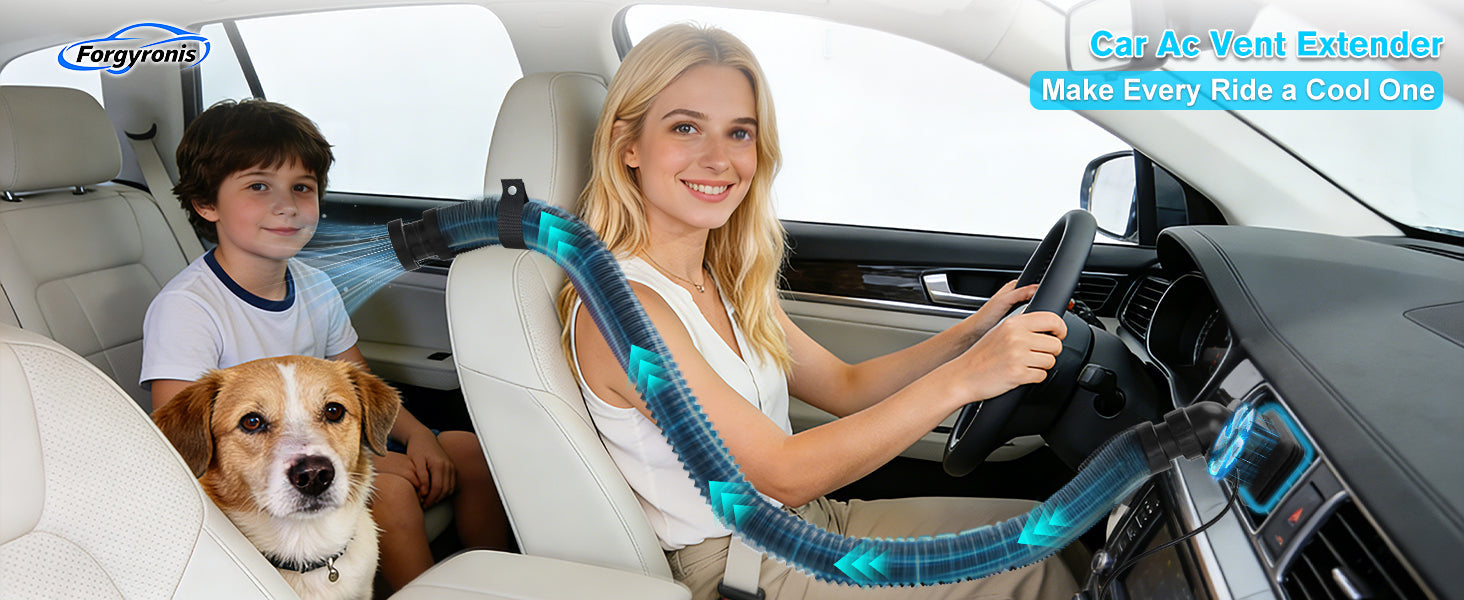
A car vent extender connects directly to your existing AC vent system.
Instead of circulating air inside the cabin, it extends the airflow path using a flexible air circulation tube.
This helps bring cooled air further into the back seat area.
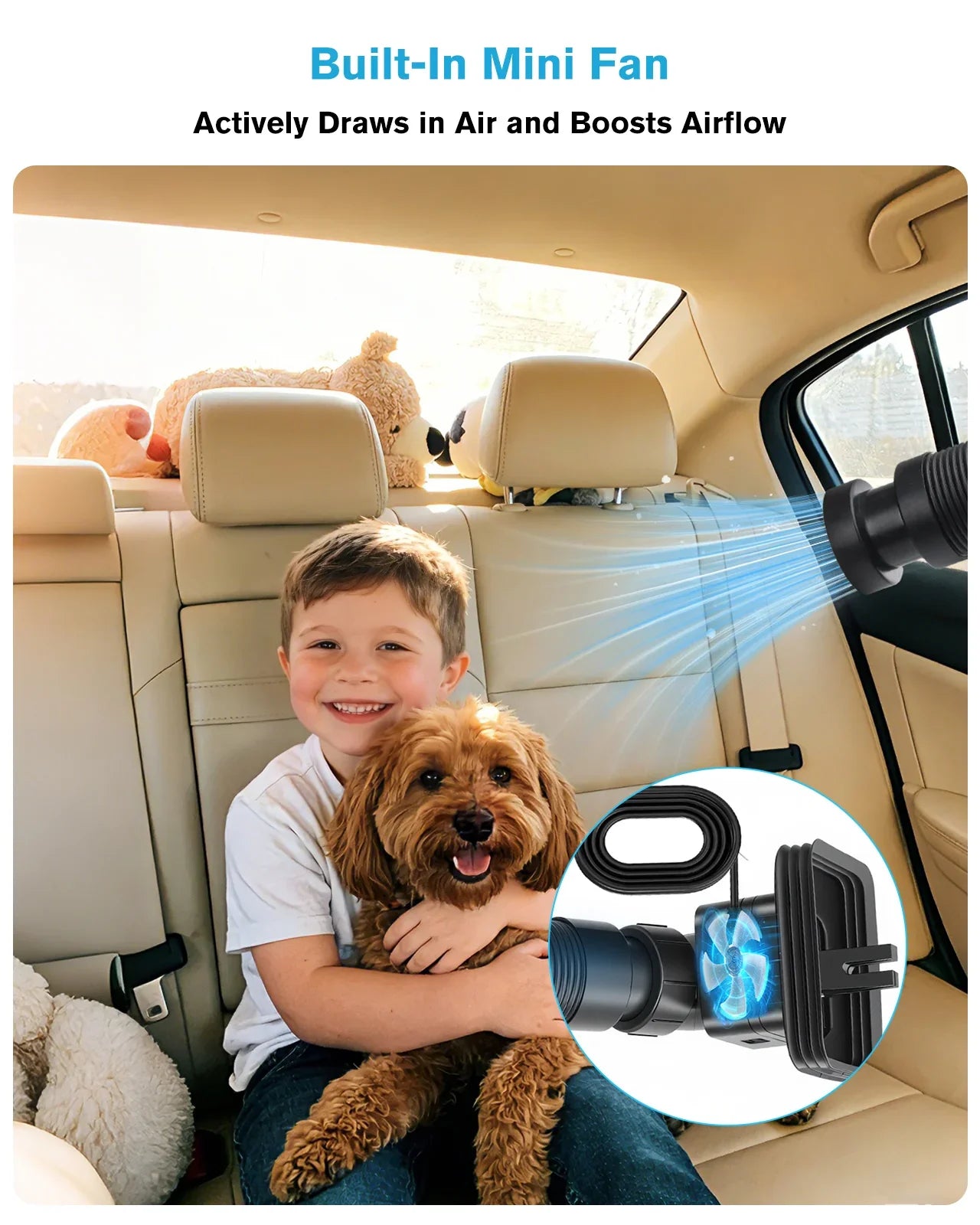
Some models also include a low-power USB booster fan to help push air through the tube more consistently.
So instead of moving air around, it actually helps deliver cooled air further inside the vehicle.
A Small Real-World Observation
It’s funny how portable car fans get marketed as a full cooling fix, yet they never solve the root uneven airflow issue in big family cars.
Once you notice that, the difference between the two becomes much clearer.
Real Driving Difference
On the road, the contrast is easy to feel.
With a car fan, you get airflow—but temperature change is limited.
With a vent extender, the back seat actually starts feeling closer to the front cooling level.
Not perfect. But noticeably more balanced.
Kids complain less.
Pets settle faster.
Long drives feel less uneven.
Back Seat Air Circulation Solutions Compared
Instead of treating them as the same type of solution, it helps to separate their roles.
A car fan mainly moves air inside the cabin.
It does not improve how cooled air reaches the back seat.
A car vent extender works with the AC system.
It extends the reach of cooled air toward the rear seating area.
So the difference is not small—it’s structural.
One improves comfort airflow.
The other improves airflow distribution.
Why This Matters in SUVs and Family Cars
In SUVs and minivans, the problem is even more obvious.
Air has to travel farther.
Cabin space is larger.
Rear seats are often blocked by luggage or child seats.
So airflow naturally weakens before reaching the back.
That’s why rear seat cooling becomes inconsistent in larger vehicles.
If your main issue is uneven cooling in the back seat during summer driving, choosing a solution that improves airflow distribution instead of just circulating air can make a noticeable difference.
A car vent extender is designed specifically for that purpose—helping extend AC reach to rear passengers.
FAQ
Which is better: car vent extender or car fan?
A vent extender is generally more effective because it helps deliver cooled air from the AC system instead of just moving air around.
Do car fans actually cool the back seat?
Not directly. They circulate air but do not improve temperature distribution.
Will the vent extender fit all standard car dash vents?
Yes, its adjustable connector works with most vent designs on sedans, SUVs and minivans.
Will the built-in booster USB fan drain my vehicle battery?
It runs on low power and only activates when the car’s power supply is on, with no battery drain risk.
Is this useful for SUVs and larger vehicles?
Yes, it is especially useful in SUVs and minivans where rear seats are farther from front vents.
Can I use both together?
Yes, some drivers combine both, but they solve different problems.
SEO Summary
Car vent extenders and car fans are often compared for rear seat cooling, but they work differently. Vent extenders improve airflow distribution from the AC system, while fans only circulate existing air. For larger vehicles, airflow distribution solutions are generally more effective.