If you’ve ever wondered why the front seat feels perfectly cool while the back seat feels slightly warmer, you’re not alone.
This is especially common in SUVs and larger family vehicles.
Air naturally loses strength as it travels farther from the front vents, which means the rear seating area receives weaker airflow even when the AC system is working normally.
So the back seat often ends up feeling like a different temperature zone inside the same car.
A Real Situation Most Drivers Have Experienced
I still remember a summer drive where everything seemed normal at first.
Front seat was cool, AC was running fine, and the drive felt comfortable.
But after a while, I noticed the back seat passengers shifting more often and looking uncomfortable.
At first I thought maybe it was just temporary.
But even after adjusting vents and fan settings, nothing really improved.
I always fill the back with kids’ toys and travel bags, and I never realized how much those small items block cool air circulation before.
That’s when it becomes obvious—airflow inside the cabin isn’t reaching evenly.
Why SUVs and Larger Cars Have More Airflow Issues
This problem is even more noticeable in SUVs, minivans, and 3-row vehicles.
Because the cabin is larger, air has to travel a longer distance before reaching the back seat.
And real-world conditions make it even harder:
- passengers occupying multiple rows
- luggage stacked in the trunk area
- child seats blocking airflow paths
Over time, the rear seating area becomes the weakest cooling zone in the entire vehicle.
Why Simple Fixes Don’t Really Work
Most drivers try a few basic adjustments:
Turn vent direction toward the back seat
Increase fan speed slightly
Reduce clutter near air vents
Each of these helps a little in the short term.
But in larger cars, the improvement is usually limited because the airflow distance problem still exists.
That’s why rear seat cooling issues often persist even after trying multiple adjustments.
Practical Ways to Improve Car Airflow to the Back Seat
Instead of relying only on AC settings, most effective improvements come from guiding airflow more efficiently.
Turn the vent direction toward the rear seating area.
Keep airflow paths as clear as possible inside the cabin.
Avoid blocking vents with bags or seat items.
But even with these steps, larger vehicles often still struggle with uneven cooling.
What a Car Vent Extender Helps With
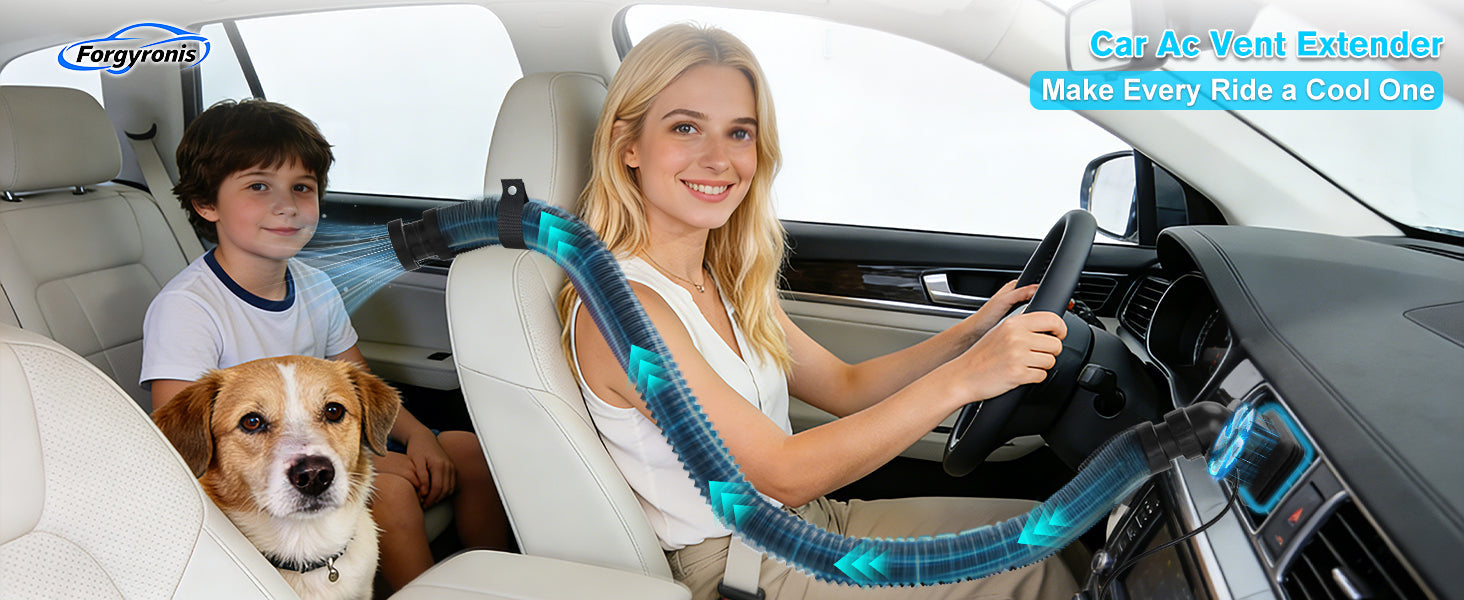
A car vent extender helps improve airflow distribution by extending the reach of cooled air from the dashboard vents toward the back seat.
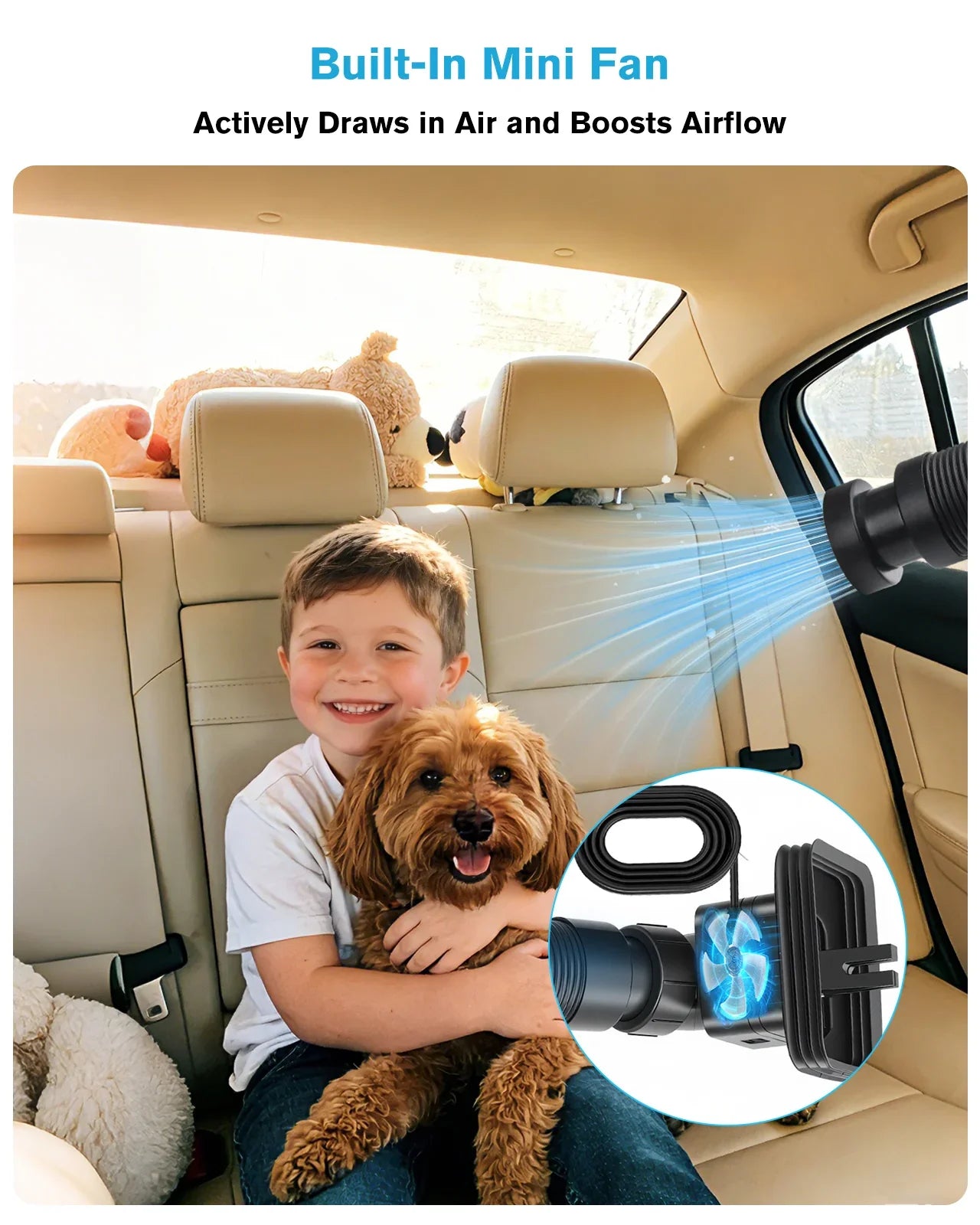
It connects directly to the existing AC vent system and uses a flexible air circulation tube to guide airflow deeper into the cabin.
Some versions also include a low-power USB booster fan that helps maintain consistent airflow over longer distances.
Instead of relying on natural air movement, it actively helps deliver cooled air to the rear seating area.
Real Driving Impact You Can Feel
The change is not dramatic, but it is noticeable.
The front seat remains unchanged.
The back seat becomes more stable in temperature.
Passengers stop constantly adjusting vents.
Kids stay more comfortable on longer drives.
The overall cabin feels more balanced.
Why This Matters for Daily Driving
This issue often goes unnoticed in short trips.
But during long summer drives, uneven airflow becomes much more obvious.
And when rear passengers are uncomfortable, it affects the entire driving experience.
More distractions.
More adjustments.
More fatigue over time.
Improving airflow balance helps reduce all of that.
If your car consistently has uneven cooling between front and back seats, improving airflow distribution is one of the simplest ways to enhance comfort without modifying the AC system.
A car ventilation solution designed to extend airflow to the rear seating area can make everyday driving noticeably more comfortable.
FAQ
Why is my rear seat always warmer than the front?
Because air loses strength as it travels farther from the front vents, especially in larger vehicles like SUVs and minivans.
Does fixing the AC system solve rear seat cooling issues?
Not always. In many cases, the AC system works normally—the issue is uneven airflow distribution inside the cabin.
Is this problem worse in SUVs?
Yes, SUVs and larger vehicles have longer cabin distances, which reduces airflow efficiency to the back seat.
Will the vent extender fit all car dashboard air vents?
Yes, its adjustable connector fits most standard vents on mainstream sedans, SUVs and family minivans.
Will the built-in USB booster fan drain my car battery?
It adopts ultra-low power design and only runs when the vehicle is powered on, so there is no risk of battery loss.
What is the simplest way to improve rear seat comfort?
Improving airflow direction toward the back seat is often more effective than changing AC settings alone.
SEO Summary
Improving car airflow to the back seat without replacing the AC system is a practical solution for uneven cooling in SUVs and family cars. Better airflow distribution inside the cabin helps enhance rear seat comfort without expensive repairs.