If you’ve ever driven an SUV, you’ve probably noticed this strange situation.
The front seats feel completely fine—sometimes even a little too cold.
But the back row tells a different story.
Passengers there often feel warmer, even though the AC is clearly working.
This isn’t a malfunction. It’s simply how most SUVs are designed.
Air starts strong from the dashboard vents but gradually loses strength as it moves through the long cabin space.
By the time it reaches the third row, the airflow is noticeably weaker.
A Real Situation Most SUV Drivers Know Too Well
I still remember one summer road trip in a 7-seater SUV.
Front seat felt great—almost too cold.
But the back seat? Totally different experience.
Kids were moving around, my dog was breathing heavily, and I kept wondering why the AC wasn’t reaching them properly.
I tried adjusting vents, lowering temperature, and even changing fan modes while driving.
Nothing really changed.
And on road trips, the back seat always ends up packed with bags, snacks, and random items, which quietly blocks natural airflow without you realizing it.
Why Larger SUVs Make the Problem Worse
SUVs and minivans naturally have bigger cabins.
That means air has to travel much farther to reach the back row.
And in real life, several things make it even harder:
- child seats blocking airflow
- luggage stacked in the trunk
- passengers filling every row
Over time, the rear seating area slowly becomes the warmest part of the entire vehicle.
It’s one of those problems you don’t notice immediately—but it becomes obvious on long summer drives.
Why Common Fixes Don’t Really Work
Most drivers try the same quick solutions:
Turn AC colder
Increase fan speed
Point vents backward
Use small USB fans
At first, these seem reasonable.
But in real driving situations, they don’t solve the root issue.
Turning the AC colder mostly just makes the front seats uncomfortable.
Small fans don’t actually improve airflow direction—they just move existing air around inside the cabin.
So even with all these adjustments, the back seat often stays warmer than expected.
The real issue is not temperature—it’s airflow distribution.
Why Repair Shops Don’t Always Fix the Problem
Some drivers assume something is wrong with the AC system and go to repair shops.
But in most cases, nothing is actually broken.
The system itself works normally.
The issue is how air is distributed inside the vehicle.
Even after paying for inspections or adjustments, many drivers still experience weak rear cooling.
Because this isn’t a mechanical failure—it’s a design limitation of airflow inside larger vehicles.
A Simpler Way to Improve SUV Rear Comfort
Instead of trying to repair the AC system, a more practical approach is improving how air moves inside the cabin.
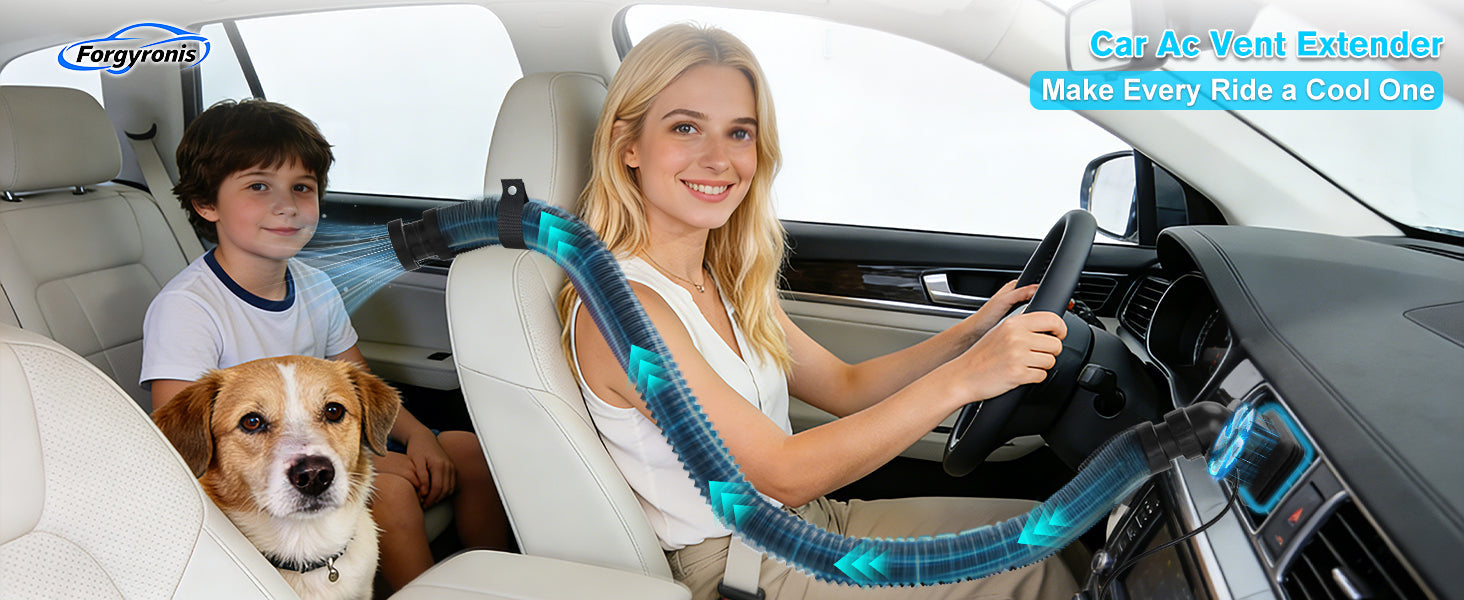
A car airflow vent extender helps guide air from the front vents further into the rear seating area.
It works like an air circulation tube that extends the reach of your existing AC system.
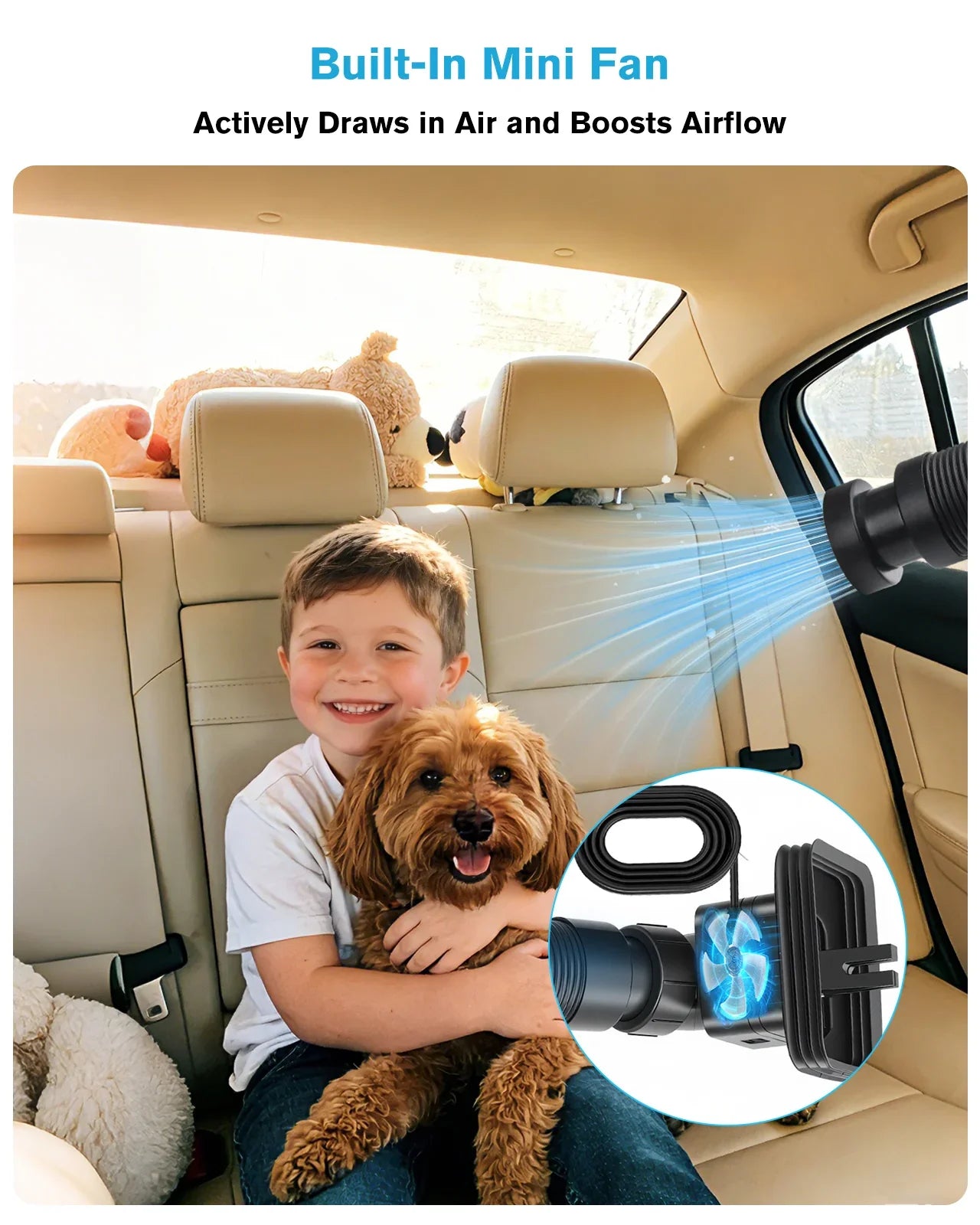
Some versions also include a small USB-powered booster fan that helps push air more consistently through the tube.
The goal is simple: help rear passengers receive more direct airflow instead of relying on weak natural circulation.
What It Actually Feels Like in Real Driving
This isn’t a dramatic transformation.
The AC doesn’t suddenly feel like a new system.
But the cabin feels more balanced overall.
Front remains the same.
Rear no longer feels disconnected.
Kids complain less.
Pets settle faster.
And the constant need to adjust airflow during driving disappears.
Why This Matters More Than People Think
At first, it feels like a minor comfort issue.
But in real driving situations, it affects focus.
Back seat discomfort leads to more distractions, more adjustments, and more stress during long trips.
Improving airflow balance inside an SUV makes the entire driving experience smoother—not just cooler.
Simple Solution for SUV Back Seat Heat
If your SUV consistently feels uneven in cooling during summer driving, improving airflow direction is one of the simplest ways to enhance cabin comfort without modifying the AC system.
A car airflow vent extender helps distribute air more evenly across SUVs, minivans, and family vehicles.
FAQ
Why is SUV back seat airflow weaker?
Because air has to travel a longer distance inside larger cabins, which reduces cooling strength before reaching the rear row.
Is this more common in 3-row SUVs?
Yes, third-row seats are the farthest from front vents, so cooling is usually weakest there.
Does this replace AC repair?
No, it does not repair the system. It helps improve airflow distribution inside the cabin.
Is installation complicated?
No tools are required. It connects directly to existing air vents and is usually ready within minutes.
Will it help on long road trips?
Yes, the effect becomes more noticeable during long drives when cabin heat builds up over time.
Is it durable in hot weather?
Yes, it is designed for normal high-temperature vehicle environments.
SEO Summary
SUV back seats often suffer from weak airflow due to cabin size and distance from front vents. Improving air distribution inside the vehicle can significantly enhance rear seat comfort without expensive repairs, especially during summer and long family road trips.