If your back seat feels hot during summer drives, you’ve probably seen both of these solutions:
a car window fan
or an air vent deflector
At first glance, both look simple and affordable.
One claims to pull fresh air into the cabin.
The other tries to redirect airflow inside the car.
So naturally, many drivers assume:
👉 “One of these should fix the problem.”
But in real driving conditions—especially in SUVs and family vehicles—the result is usually very different.
A Real Driving Experience Most Families Notice
At first, there’s always hope.
Maybe this time it will finally make the back seat cooler.
But after a while, reality sets in.
The front feels slightly improved.
The back seat barely changes.
Kids still complain about heat.
Pets still struggle to stay comfortable.
And passengers in the rear rows often feel like nothing really improved.
It’s not that the devices are broken.
It’s that they are solving the wrong problem.
Why These Two Solutions Don’t Fully Work
Car Window Fan (Hidden Real-World Problems)
A car window fan seems useful in theory.
But in real driving, especially on highways, it introduces several issues:
it pulls in outside air without controlling temperature
it does not integrate with the AC system
and most importantly—it requires leaving your window slightly open
That creates additional real-world problems:
👉 It generates deafening wind noise at highway speeds
👉 It leaves your vehicle vulnerable to rain
👉 It creates a potential security risk when parked
👉 It reduces cabin insulation efficiency
So instead of improving comfort…
👉 it often makes the driving experience worse overall
Air Vent Deflector
An air vent deflector is slightly more refined.
It helps guide airflow direction inside the cabin.
But it still has major limitations:
it cannot extend airflow distance
it cannot strengthen cooling output
rear passengers remain outside direct airflow paths
So in larger vehicles, its effect is minimal.
The Real Issue: It’s Not Airflow Direction, It’s Air Delivery
Most drivers focus on adjusting airflow direction.
But the real issue in SUVs and family cars is:
👉 cold air simply doesn’t reach the back seat effectively
Because:
air loses strength over distance
rear seating zones are outside direct vent range
large cabin layouts interrupt airflow travel
So even “better airflow direction” doesn’t fully solve the problem.
Car Window Fan vs Air Vent Deflector (Real Comparison)
Let’s make it clear:
A car window fan:
- pulls in outside air
- requires window gap (noise + safety issues)
- does not use AC system directly
- inconsistent cooling performance
An air vent deflector:
- redirects existing airflow only
- does not extend cooling reach
- limited impact in rear seating areas
👉 Both modify airflow behavior
👉 Neither delivers cold air to where it’s needed most
What Actually Works for Rear Seat Cooling
To truly fix rear seat cooling problems, you need a completely different approach.
Not air intake.
Not airflow direction.
But actual cold air delivery.
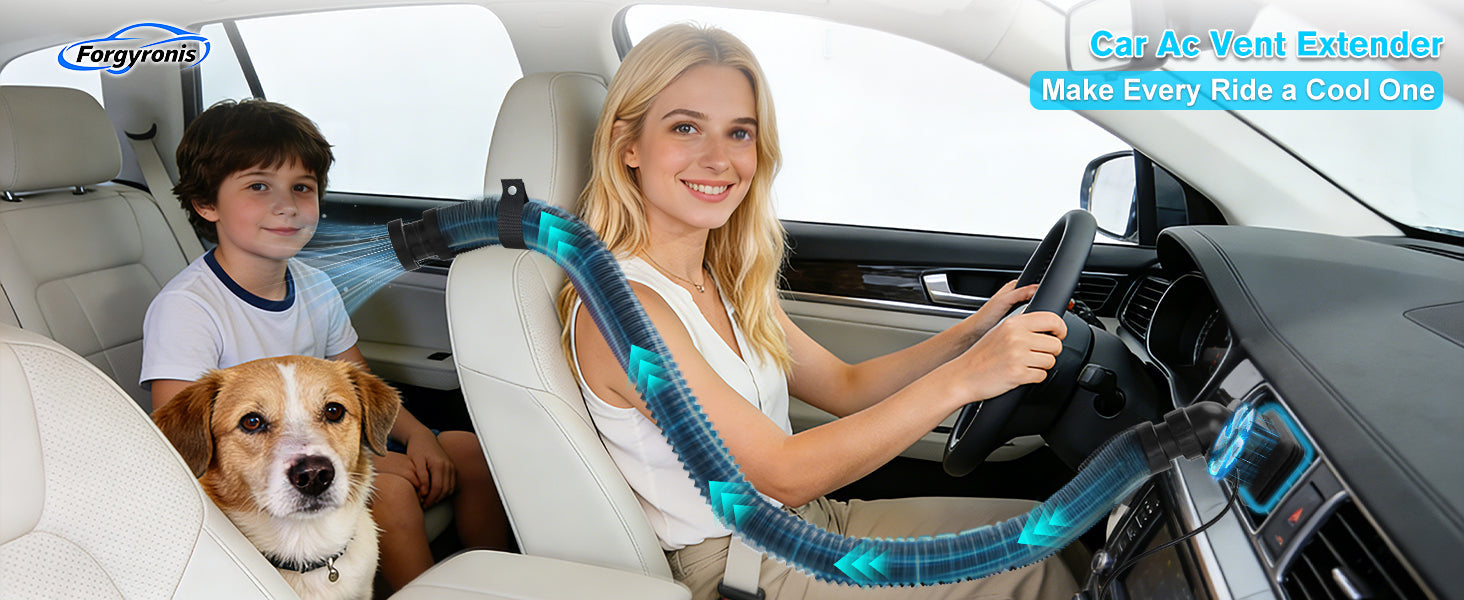
That’s where an AC vent extension tube system becomes the practical solution.
AC Vent Extension Tube System (Real Solution)
Instead of modifying airflow slightly, it connects directly to the vehicle’s AC system and:
physically channels cold air from front vents
extends airflow through a sealed duct system
delivers air directly toward rear passengers
reduces airflow loss during transport
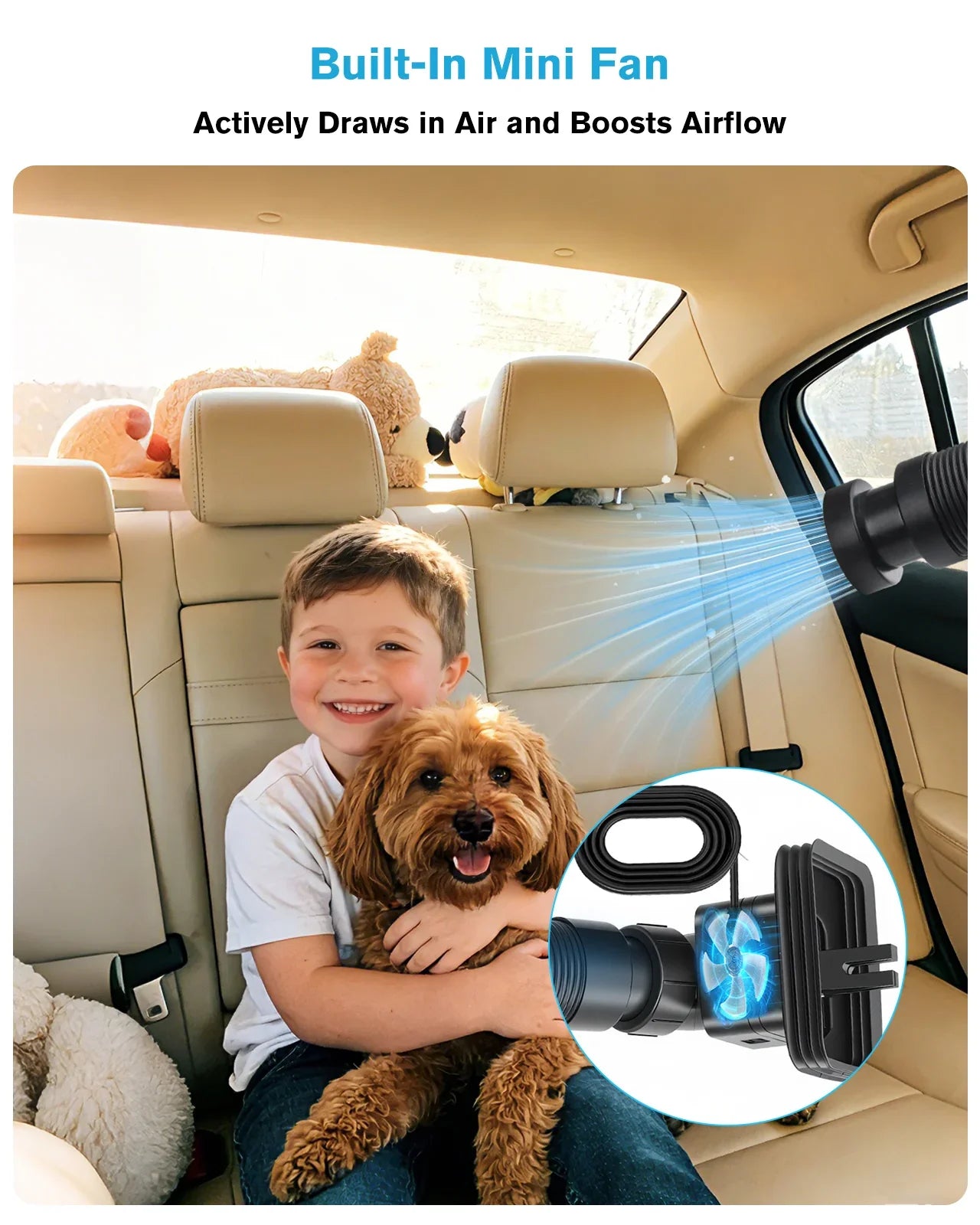
With a sealed silicone connector and flexible corrugated tube, cold air doesn’t fade halfway.
It continues all the way to the back seats where passengers actually sit.
What You Actually Notice While Driving
It’s not a dramatic transformation.
But during daily driving, the difference becomes clear.
The rear cabin no longer feels disconnected.
Kids settle more comfortably.
Pets stop constantly shifting around.
And the whole vehicle feels more evenly cooled.
Quick Comparison: Rear Seat Cooling Devices
| Solution | Cooling Method | Real Effect | Rear Seat Impact |
|---|---|---|---|
| Car Window Fan | Outside air intake | Low | Weak |
| Air Vent Deflector | Air direction adjustment | Medium | Slight |
| AC Vent Extension Tube System | Direct cold air delivery | High | Strong & consistent |
Why This Matters for Buyers
Most people compare products based on price or appearance.
But for real comfort, the key factor is simple:
👉 whether cold air actually reaches the back seat
Not how air moves.
Not how air is redirected.
But whether it is delivered properly.
FAQ
Does a car window fan actually cool the back seat?
No. It only brings outside air into the cabin and does not improve AC cooling performance.
Is a car window fan safe to use on highways?
Not fully. It requires a window gap, which can create wind noise, reduce comfort, and expose the car to rain or security risks.
Is an air vent deflector better than a car window fan?
Slightly, but both are limited because they do not extend airflow to rear seats.
What is the best way to cool the back seat?
A system that directly delivers cold AC air from the front vents to rear passengers.
Why does the back seat always feel hotter?
Because rear passengers are outside the direct AC airflow path and receive weaker air circulation.
Can this help in SUVs and family cars?
Yes. It is especially effective in larger cabins where airflow distance is longer.