If you drive an SUV, minivan, or family car…
You’ve probably noticed this already:
The front seats feel fine.
But the back seat often feels warmer.
Sometimes slightly uncomfortable.
Sometimes completely different in temperature.
And it’s not just your car.
This is a very common issue across most modern vehicles.
What Most Drivers Try First
When people search for the best way to cool car back seat, they usually try simple fixes first:
turning AC colder
adjusting vent direction
adding small fans
At first, these seem logical.
But in real driving situations, especially on long summer trips…
The improvement is usually limited.
Front gets cooler.
Rear barely changes.
That’s when drivers start looking for a real, reliable rear seat airflow solution.
Why Rear Seat Cooling Is So Difficult
The core issue is not AC strength.
It’s airflow distribution inside the cabin.
Most vehicles are designed to:
prioritize front passengers
push airflow forward first
reduce airflow strength over distance
And in larger vehicles like SUVs:
long cabin distance weakens airflow
third-row seats sit outside direct vent range
rear zones receive indirect air only
So even a strong AC system can struggle in the back.
Common Car Cooling Solutions (And Why They Don’t Fully Work)
Car Fans
Car fans are often the first solution people try.
But they:
only circulate existing cabin air
do not reduce temperature
can even move warm trapped air around
So they provide limited real cooling benefit.
Vent Adjustments
Adjusting vents helps slightly.
But:
it does not extend airflow reach
it only changes direction locally
rear passengers still remain under-served
Portable Devices
Some drivers try portable cooling gadgets.
But most of them:
lack integration with vehicle AC
rely on local air movement
do not solve cabin-wide airflow issues
What Actually Works for Back Seat Cooling
To truly fix the issue, your choice of a cooling solution must do one thing:
👉 deliver cold air further into the cabin
Not just stronger airflow.
Not just circulation.
But real air delivery.
AC Vent Extension Tube System (Practical Solution)
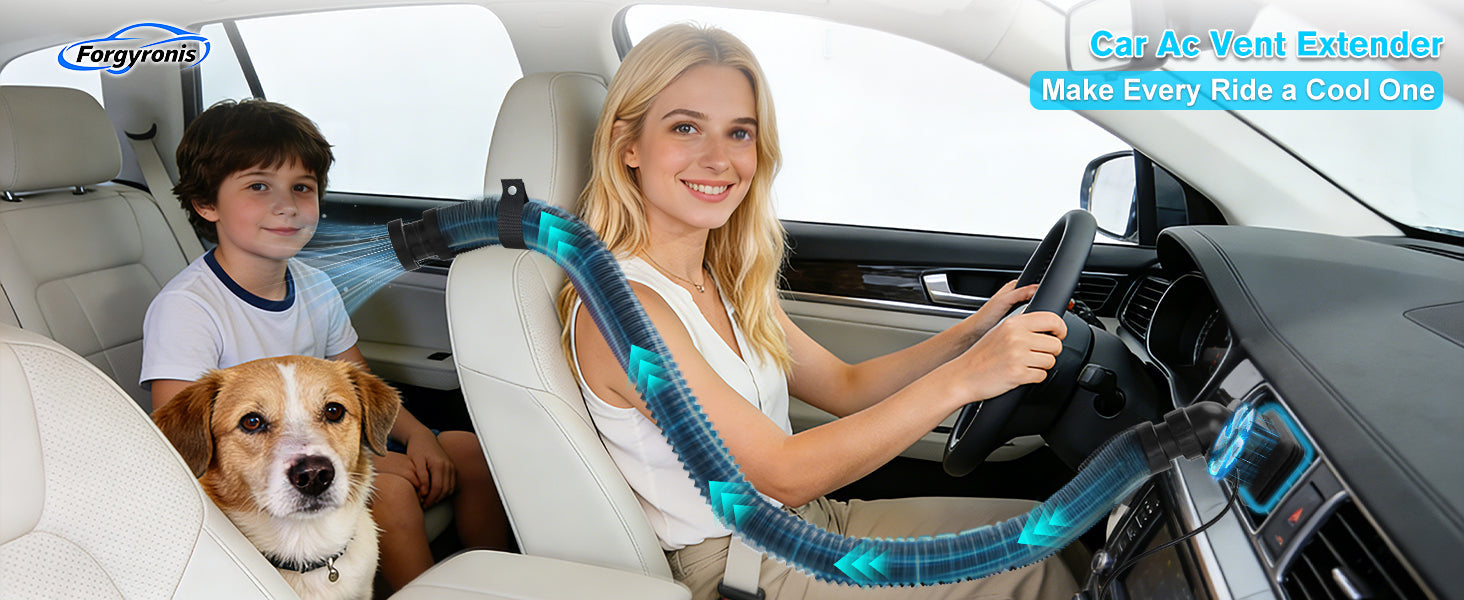
One of the most effective approaches is an AC vent extension tube system.
It works by:
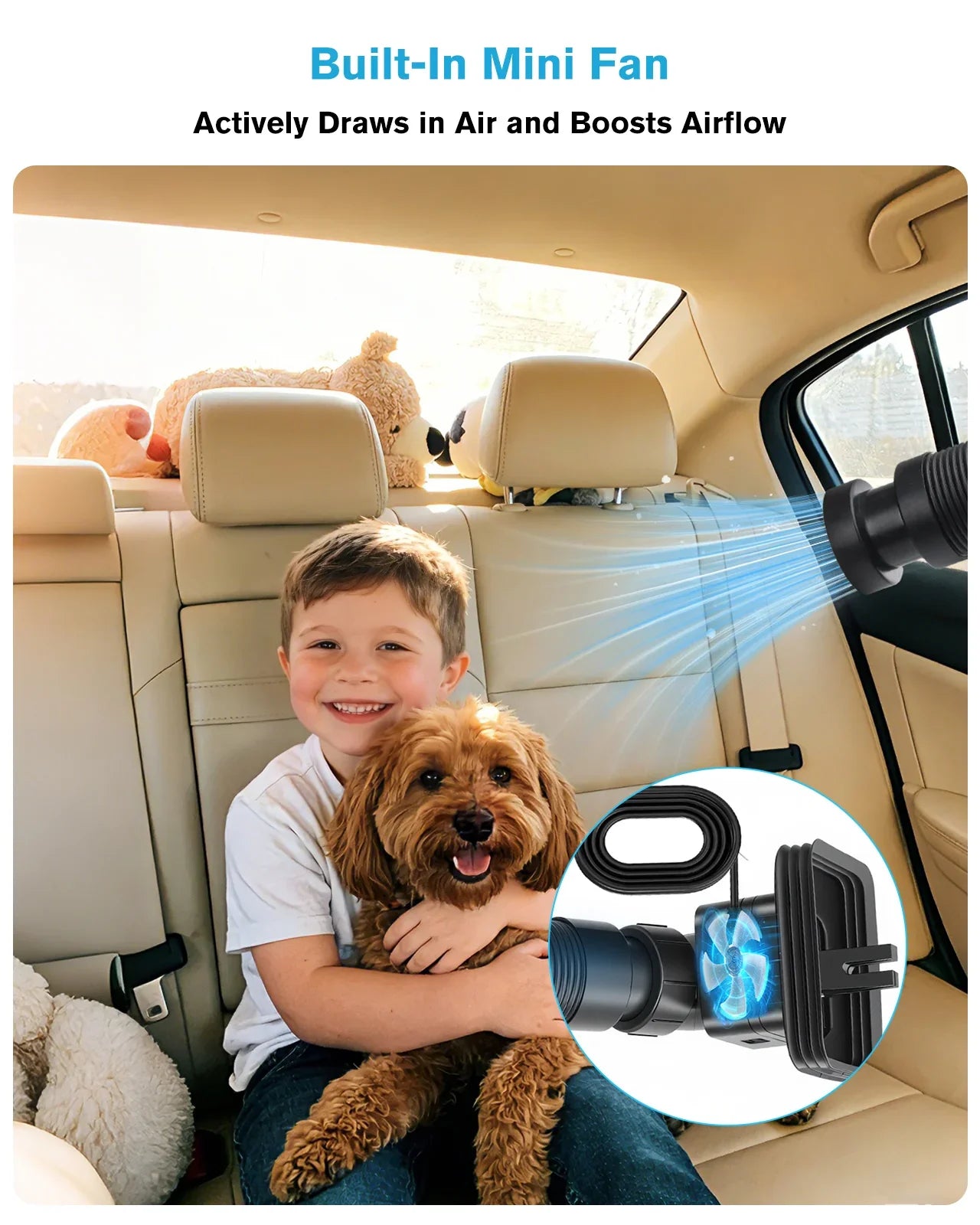
connecting directly to factory AC vents
physically guiding cold air through a duct
extending airflow toward rear passengers
reducing air loss during travel
With a sealed silicone connector and flexible corrugated tube design, cold air remains strong even at longer distances.
This makes it especially effective in SUVs and family vehicles.
What You Actually Notice in Real Driving
It’s not an instant transformation.
But during daily use, the difference becomes noticeable:
rear seats feel more evenly cooled
kids are more comfortable on long drives
pets settle faster during travel
And overall cabin temperature feels more balanced.
Car Cooling Solutions Comparison Table
| Solution | Cooling Method | Rear Seat Comfort | SUV Performance | Installation Type | Cost-Effectiveness |
|---|---|---|---|---|---|
| Car Fans | Air circulation only | Weak (stirs hot air) | Poor | Plug-in device | Low |
| Vent Adjustment | Direction control | Slight improvement | Limited | No install | Medium |
| Portable Devices | Local cooling | Inconsistent | Weak (lacks reach) | Messy setup | Low |
| AC Vent Extension Tube System | Direct cold air delivery | Strong & consistent | Excellent | Plug & Play | High |
Why This Matters for Buyers
Most people compare products based on price or appearance.
But for real comfort, the key factor is simple:
👉 whether cold air actually reaches the back seat
Not airflow direction.
Not extra gadgets.
But real air delivery performance.
FAQ
What is the best car cooling solution for back seats?
A system that directly delivers cold air from the vehicle’s AC vents to rear passengers is the most effective solution.
Do car fans really cool the back seat?
No. They only circulate air and do not reduce cabin temperature.
Why do most cooling devices fail in SUVs?
Because SUVs have longer cabins and rear airflow distance is naturally weaker.
Is an AC vent extension tube compatible with my vehicle?
Yes. It uses a universal high-elasticity silicone connector designed to fit most standard vents in SUVs, trucks, and family cars.
What makes this different from portable cooling devices?
Portable devices create local airflow, while this system delivers real cold air from the AC source.
Does this require installation?
No. It is a plug-and-play system with no modification required.
SEO Summary
This guide compares the best car cooling solutions for back seat comfort in SUVs and family vehicles. While fans and portable devices provide limited results, AC vent extension tube systems offer a more effective way to improve rear seat cooling by delivering cold air directly to passengers.