You’re not imagining it.
In most SUVs, the front seats feel perfectly fine.
Sometimes even too cold.
But the moment you sit in the back—or glance at your kids—you realize something weird:
The rear cabin just never feels the same.
It’s like two different climate zones inside one car.
A Real Driving Situation Most SUV Owners Experience
On summer drives, this becomes obvious pretty quickly.
AC is on.
Vents are blowing.
But the back seat still feels uncomfortable.
Kids start shifting around and asking why it’s so warm back there.
Pets lie flat trying to cool themselves down.
And you’ll probably hear the same questions again and again:
“Is the AC even working back here?”
“Why is it hotter in the back than the front?”
It’s not just one family.
It’s something almost every SUV owner runs into sooner or later.
And honestly—it’s not a broken system.
It’s just how airflow behaves in larger cabins.
Why SUV Back Seats Get Hot So Easily
There are a few simple reasons:
SUV cabins are long
air has to travel farther
rear seats are not in the direct cooling path
And in real family use, it gets worse:
child seats trap heat and block airflow
bags, jackets, and luggage reduce circulation
third-row seats sit far away from AC vents
So even when the AC is doing its job…
👉 cold air just doesn’t make it all the way back effectively
Why Turning the AC Colder Doesn’t Fix It
Most drivers try the same solution first.
Lower the temperature.
Increase fan speed.
Adjust vent direction.
But the result stays mostly the same.
Front seats get colder fast.
Rear seats barely change.
Because the issue is not cooling power.
It’s how far that cold air actually travels inside the cabin.
The Real Problem: Airflow Distribution in SUVs
SUVs are designed to prioritize front cabin comfort first.
That means:
front passengers get direct airflow
rear passengers rely on indirect movement
third-row areas receive the weakest cooling
So even with a strong AC system…
👉 the rear cabin is always under-served
Why SUV Airflow Feels So Uneven in Real Life
This becomes even more obvious during long trips:
the cabin is simply too long for natural airflow
air loses momentum before reaching the back
rear vents (if available) are often weak or poorly positioned
That’s why you hear the same complaints from the back:
“Why is it so hot back here?”
“Can someone turn it colder?”
It’s not a rare issue—it’s a structural limitation in most SUVs.
Common Fixes (And Why They Don’t Fully Work)
Car Window Fan / Small Fans
Most people try small fans first.
But they don’t actually cool the air.
They just stir up trapped warm air inside the cabin.
On a hot day, that’s like waving around the same heat instead of removing it.
Adjusting AC Vents
This helps slightly in the front.
But it doesn’t extend airflow reach.
Rear passengers still sit outside the main cooling path.
Increasing Fan Speed
This only increases airflow intensity up front.
It doesn’t solve distance or distribution.
What Actually Works for SUV Back Seat Cooling
To truly improve SUV airflow, you need one thing:
👉 physically move cold air further into the cabin
Not just circulate it.
Not just increase fan power.
But actually deliver it to the back.
AC Vent Extension Tube System (Practical Solution)
This is where an AC vent extension tube system becomes useful.
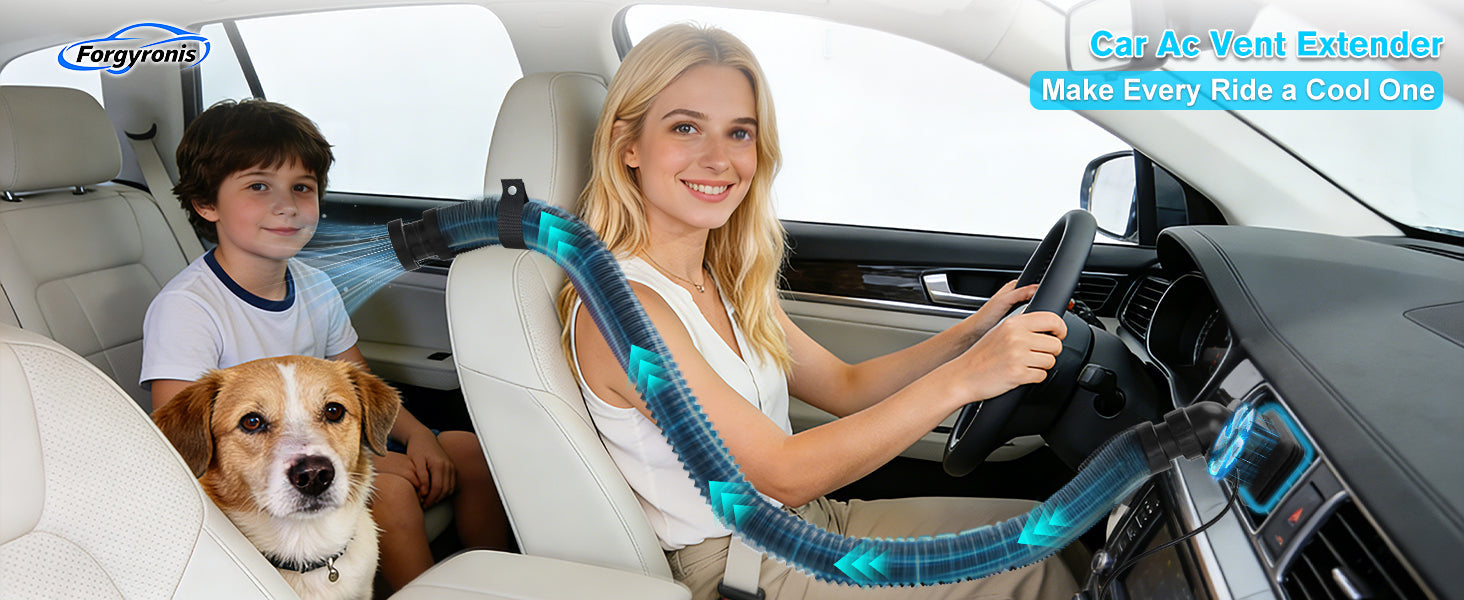
Instead of relying on natural cabin airflow, it creates a direct path for cold air.
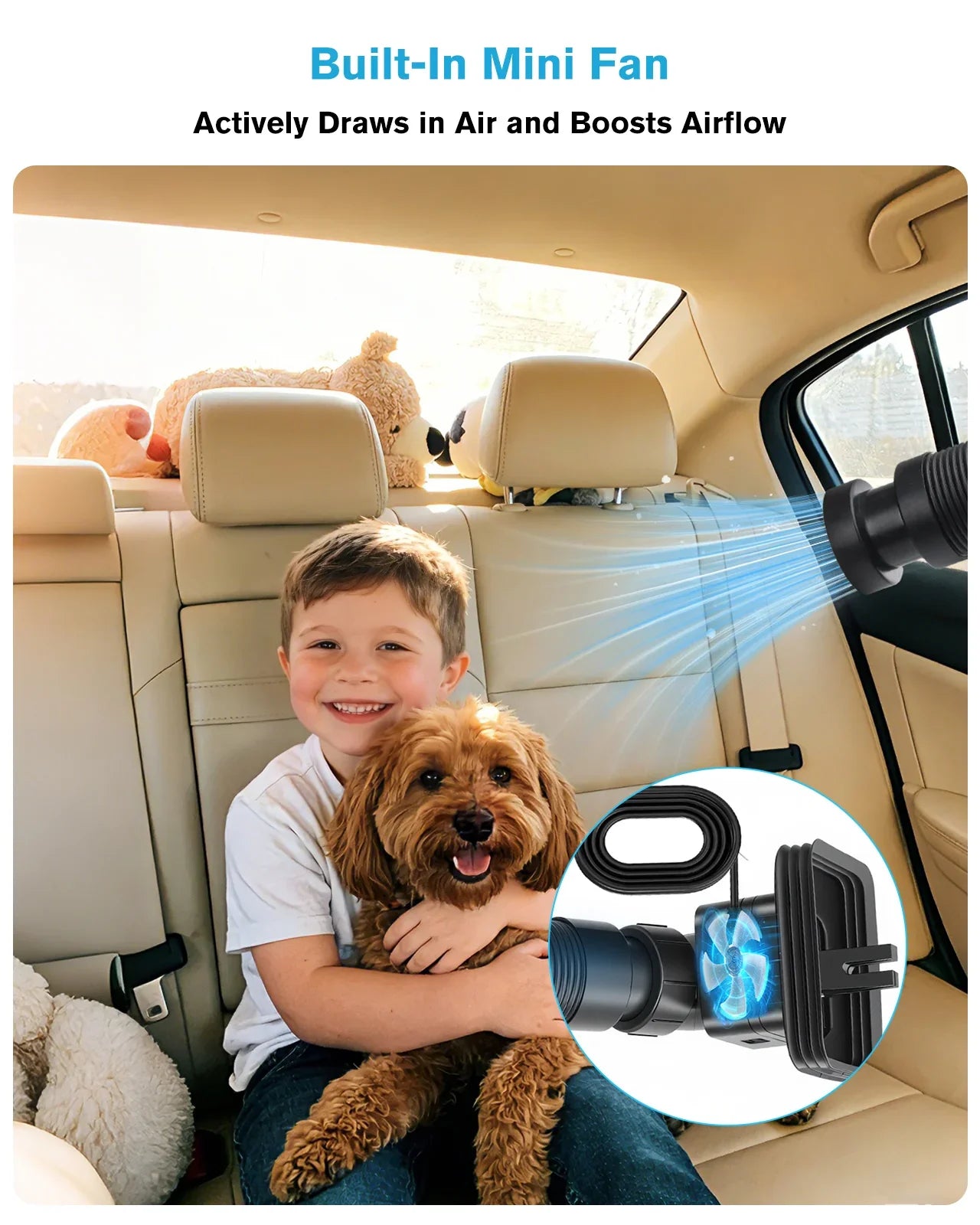
It works by:
connecting to the front AC vent
using a sealed silicone connector to prevent air leakage
pushing air through an extendable corrugated tube
guiding cold airflow toward rear seating areas
The result is simple:
cold air doesn’t fade halfway anymore
it actually reaches second and third-row passengers
What You Actually Notice While Driving
It’s not a dramatic transformation.
But during real use, the difference is obvious.
The back seat no longer feels like an afterthought.
Kids stop constantly complaining about heat.
Pets settle faster.
And the cabin feels more evenly balanced overall.
Quick Comparison: SUV Cooling Options
| Solution | Real Cooling Effect | Rear Seat Impact | SUV Performance |
|---|---|---|---|
| Car Window Fan | Low | Stirs up trapped hot air | Poor |
| Vent Adjustment | Medium | Slight improvement | Limited |
| AC Vent Extension Tube System | High | Channels factory cold air directly to rear seats | Excellent |
Why This Matters for SUV Owners
SUVs are built for families.
But ironically, the rear seats are often the least comfortable area in summer.
That’s why solving airflow distribution—not AC strength—is what actually fixes the problem.
FAQ
Why do SUV back seats always feel hotter?
Because SUVs are long cabins and rear passengers are outside the main AC airflow path.
Is this a common problem in all SUVs?
Yes, especially in 3-row SUVs and family vehicles where airflow has to travel further.
Do car window fans actually help?
Not really. They circulate warm cabin air instead of cooling it.
What actually works for rear seat cooling?
A system that physically delivers cold AC air from the front vents to the back seats.
Why does the back always feel hotter than the front?
Because front seats receive direct airflow while rear seats rely on weakened indirect circulation.
Can this help on long road trips?
Yes. It helps maintain more consistent cooling across all seating rows during extended driving.