On paper, portable car AC sounds like a simple fix.
Plug it in.
Turn it on.
Cool air everywhere.
But once you’re actually driving a family SUV or minivan… the experience is very different.
Up front, you might feel a little airflow.
But in the back seat?
It barely makes a difference.
The cooling just doesn’t reach that far.
And that’s when most drivers realize something important:
It’s not about producing air.
It’s about delivering cold air to the right place.
A Real Driving Situation Most Families Run Into
I’ve seen this happen on long summer road trips more than once.
People install a portable AC unit expecting instant comfort.
At first, everyone is hopeful.
But after 20–30 minutes on the road, reality kicks in.
The airflow feels weak and localized.
Front passengers may notice a slight breeze.
But rear seat riders still feel warm and uncomfortable.
Kids keep adjusting their seats.
Pets lie flat trying to cool down.
And the driver usually ends up switching back to the car’s built-in AC system.
Not because it’s broken—but because portable units simply don’t reach the back.
Why Portable Car AC Units Don’t Work in Real Vehicles
Here’s the core limitation most people don’t realize:
Portable car AC units do not connect to your vehicle’s air system.
They only circulate air in a small area inside the cabin.
That works in theory.
But in real-world conditions:
SUV cabins are too long
airflow doesn’t naturally travel backward
rear passengers sit outside the cooling zone
So even if the device is working perfectly, the back seat barely benefits.
The Real Issue Isn’t Cooling Power
This is where most buyers get misled.
They assume the problem is weak cooling strength.
But in reality, most modern cars already produce enough cold air.
The real issue is:
👉 cold air delivery to the rear seating area
That’s why increasing “cooling power” doesn’t solve back seat discomfort.
Portable Car AC vs AC Vent Extension Tube (Real Difference)
Let’s make it simple.
A portable car AC:
- circulates air locally
- does not connect to vehicle AC system
- limited reach inside cabin
- weak effect on rear passengers
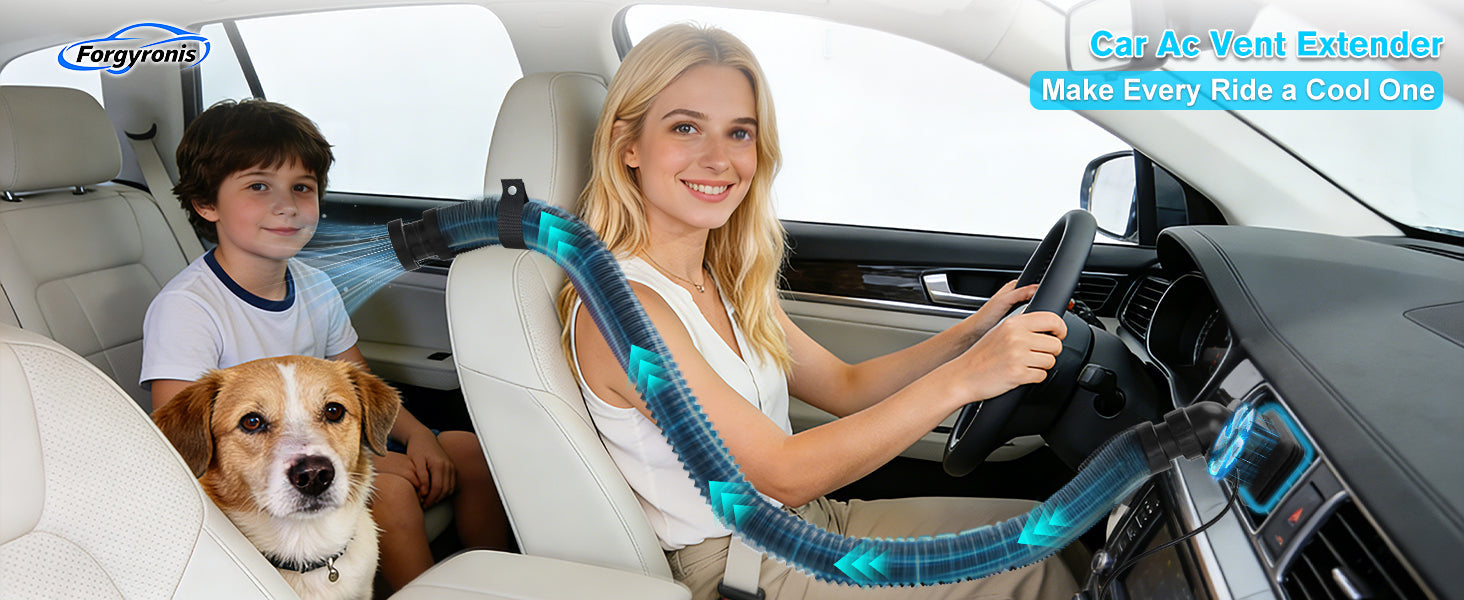
An AC vent extension tube system:
- connects directly to factory AC vents
- physically transfers real cold air from front vents
- extends airflow to second and third rows
- works with SUVs, minivans, and family cars
Comparison Table
| Feature | Portable Car AC | AC Vent Extension Tube System |
|---|---|---|
| Cooling Method | Local air circulation | Direct cold air delivery |
| Real Cooling Reach | Limited front area | Front to rear seats |
| SUV Performance | Weak | Strong & consistent |
| Installation | Plug-in device | Vent-mounted tube system |
| Back Seat Effect | Minimal | Noticeable improvement |
| System Integration | None | Uses existing car AC system |
Why the Vent Extension Tube Works Better in Practice
Instead of trying to “create cooling inside the car,” the vent extension tube system focuses on something more practical:
It moves real cold air from your existing AC system directly to backseat riders.
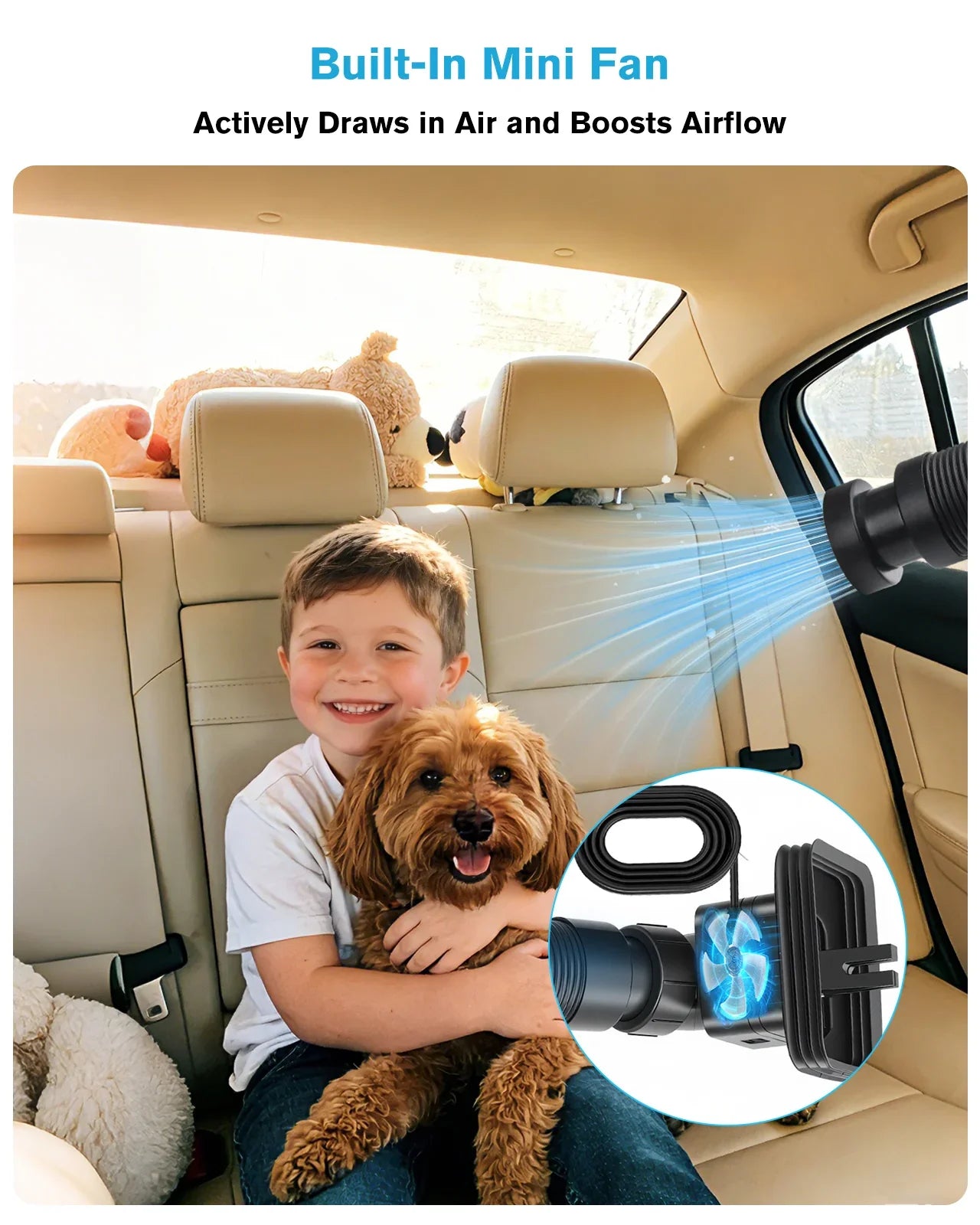
A USB-powered booster fan helps push airflow through the duct instead of relying only on passive movement.
A sealed silicone vent connector reduces air leakage at the source.
And the extendable tube allows airflow to reach deeper into SUVs and minivans.
So instead of air fading out halfway, it actually reaches where people are sitting.
What You Actually Feel While Driving
It’s not an overnight transformation.
But you notice it during real use.
The front still feels normal.
But the back seat no longer feels like it’s disconnected from the cooling system.
Kids stop constantly complaining.
Pets stop searching for cooler corners.
And long drives feel more balanced across the whole cabin.
FAQ
Do portable car AC units actually cool the back seat?
Not effectively. They mainly circulate air in a small area and do not connect to the vehicle’s AC system.
Why doesn’t portable car AC work in SUVs?
Because SUV cabins are too large and air doesn’t naturally travel far enough to reach rear passengers.
What is the main advantage of an AC vent extension tube system?
It directly connects to your car’s AC vents and physically delivers cold air to rear seats instead of relying on circulation.
Is this better than increasing AC fan speed?
Yes. Fan speed does not solve airflow distance. Rear seat cooling depends on air delivery, not just air strength.
Does the system require modification to the car?
No. It attaches directly to existing vents and uses your car’s built-in AC system.
Will it help during long family road trips?
SEO Summary
Portable car AC units often fail to cool back seats in SUVs and family vehicles because they rely on local air circulation. An AC vent extension tube system improves cold air delivery by connecting directly to the vehicle’s AC system and extending airflow to rear passengers.