If your back seat gets hot during summer driving, a backseat fan usually feels like the easiest solution.
Clip it on.
Turn it on.
Hope for cooler air.
That’s the expectation.
But in real driving—especially in SUVs or family vehicles—the result often feels underwhelming.
The front feels okay.
But the back seat barely changes.
And that’s when most people start questioning whether it actually works.
A Real Driving Situation Most Drivers Recognize
I’ve tested these setups in real summer traffic, and the experience is usually the same.
At first, the breeze feels fine up close.
But after a few minutes, the limitations become obvious.
The breeze is incredibly weak, the cooling area is limited to just a few inches, and the folks in the back row won’t feel a thing.
Kids still complain about heat.
Pets still look uncomfortable.
And the cabin still feels uneven from front to back.
It’s not that the fan is broken.
It’s just doing a very limited job.
The Real Issue With Backseat Fans
Here’s the part most people misunderstand:
A backseat fan does NOT cool air.
It only moves whatever air is already inside the cabin.
And in hot weather, that air is often:
warm
stale
and trapped inside the vehicle
So instead of cooling the back seat, it ends up circulating warm air in a small loop.
That’s why the comfort improvement is usually minimal.
Why Fans Struggle Even More in SUVs and Family Cars
In larger vehicles, the problem becomes even clearer.
Because the rear seats are much farther from the front AC vents, airflow weakens naturally over distance.
So even strong fan movement can’t compensate for:
long cabin layout
blocked airflow paths
rear seating isolation
That’s why SUVs and minivans are the worst-case scenario for fan-based cooling.
Backseat Fan vs AC Vent Extension Tube (Correct Comparison)
Let’s fix the comparison properly so it actually makes sense.
A backseat fan:
- circulates warm cabin air
- creates local airflow only
- does not reduce temperature
- limited impact in rear seats
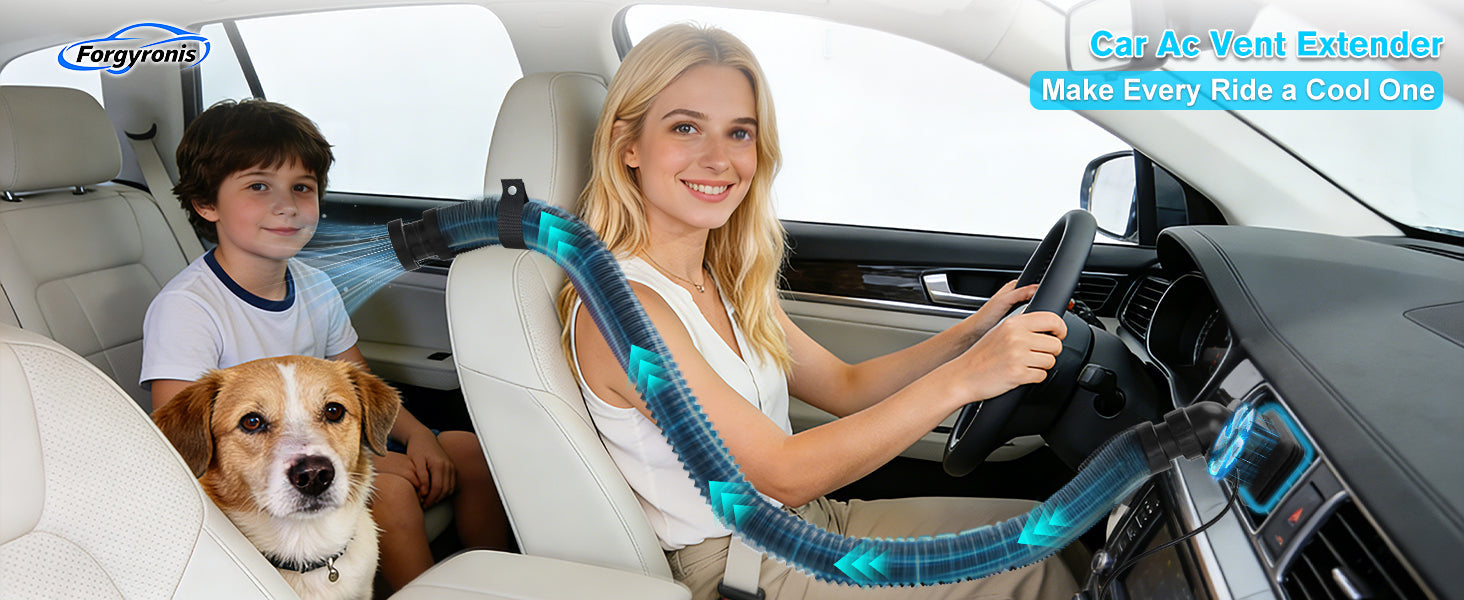
An AC vent extension tube:
- physically delivers cold AC air from front vents
- extends cooling reach to rear passengers
- maintains air temperature from source
- works in SUVs, minivans, and family vehicles
Correct Comparison Table (More Accurate & Stronger Impact)
| Feature | Backseat Fan | AC Vent Extension Tube |
|---|---|---|
| Air Temperature | Warm / stale cabin air | Icy cold AC air from source |
| Cooling Effect | Local breeze only | Real rear seat cooling |
| Reach | Few inches | Front to rear cabin |
| SUV Performance | Weak | Strong & consistent |
| Heat Reduction | None | Noticeable improvement |
| Function Type | Air circulation | Air delivery system |
Why AC Vent Extension Tubes Work Better in Real Driving
The key difference is simple:
Fans circulate air.
Vent extension tubes deliver air.
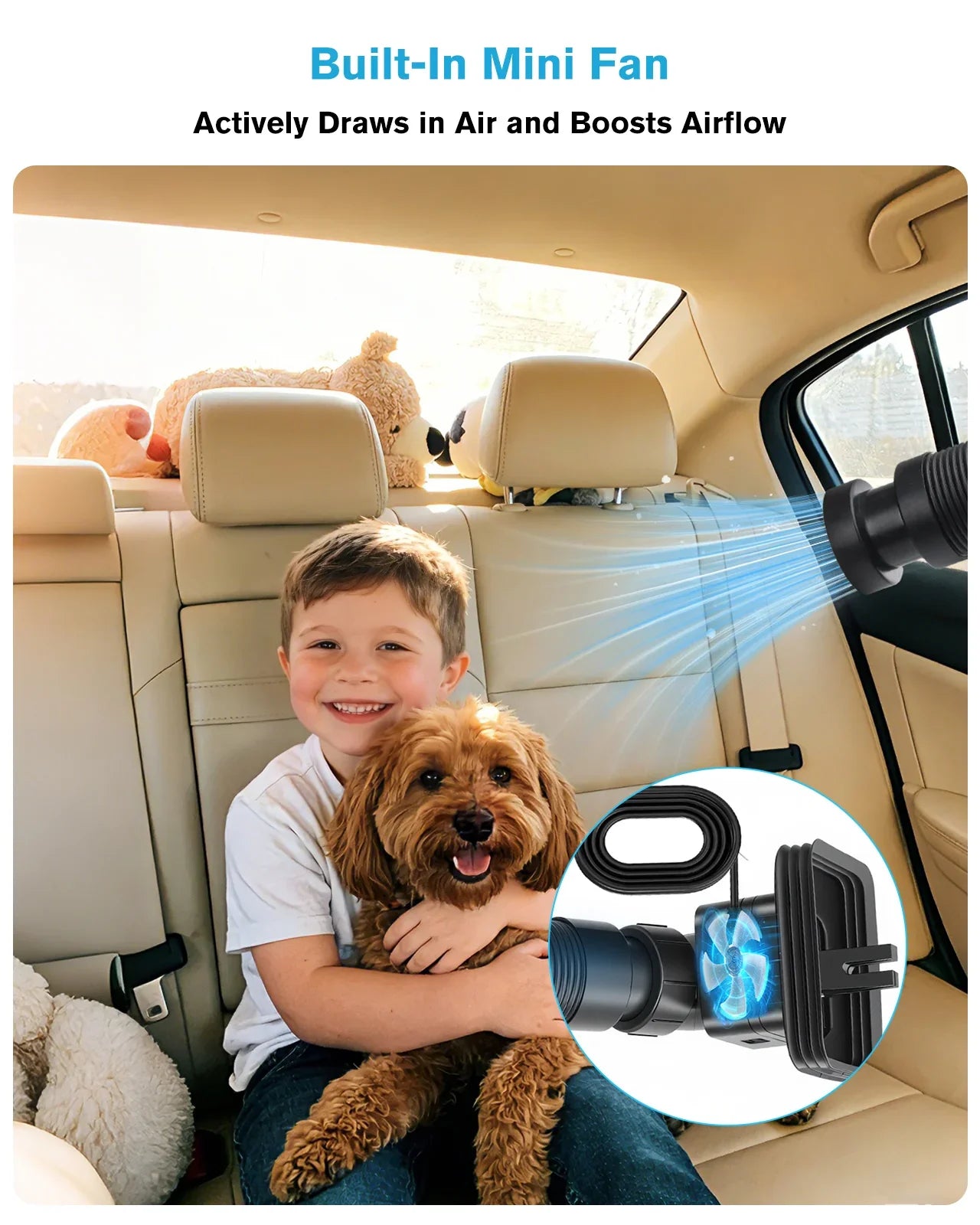
Instead of relying on weak cabin airflow, the system connects directly to the vehicle’s AC vent and channels cold air through a duct toward rear seating areas.
A sealed connector reduces air leakage at the vent.
A flexible tube guides airflow deeper into the cabin.
And the result is much more consistent cooling for rear passengers.
What You Actually Notice While Driving
It’s not a dramatic overnight transformation.
But the difference becomes clear pretty quickly.
The back seat no longer feels disconnected from the AC system.
Kids settle down more easily.
Pets stop constantly shifting around.
And the overall cabin feels more balanced during the drive.
FAQ
Do backseat fans actually cool the car?
No. They only circulate existing cabin air, which is often already warm in summer conditions.
Why does a backseat fan feel weak?
Because it only moves air locally and cannot reduce cabin temperature or extend cooling reach.
What is the main advantage of an AC vent extension tube?
It delivers real cold AC air directly from the front vents to rear passengers instead of circulating cabin air.
Is this better than increasing fan speed?
Yes. Fan speed only affects air movement, not air delivery or temperature distribution.
Will this work in SUVs and minivans?
Yes. It is designed specifically for longer cabin layouts where rear airflow is naturally weaker.
Does it replace the car’s AC system?
No. It enhances how existing AC air is distributed inside the cabin.