If you have ever taken a summer road trip with kids, you have probably experienced a very frustrating problem. Up front, the driver and passenger positions feel perfectly comfortable. However, twenty minutes into a highway drive, the temperature in the back row feels significantly warmer than the front cabin. Despite setting the climate controls to maximum, your child is flushed, sweating, and miserable because the front car ac doesn't reach back seat areas effectively.
Finding a reliable way to ensure consistent backseat cooling for kids becomes an absolute priority during summer car travel with kids. When you are stuck in long school pickup lines or planning a long-distance drive, a hot back seat makes the entire journey stressful. It is a common issue that leaves parents constantly looking for ways to keep kids cool in car seats without freezing out the front row.
To solve this, many parents immediately look for a quick fix online, searching for items like a temporary car seat fan or an electric baby fan for stroller and car seat. From a practical standpoint, these standalone accessories rarely provide actual relief. They do not lower the temperature; they simply circulate the existing warm, humid air inside a car too hot for kids. To truly fix poor rear seat cooling, you need to bring real, chilled air from the front dashboard directly to the back row.
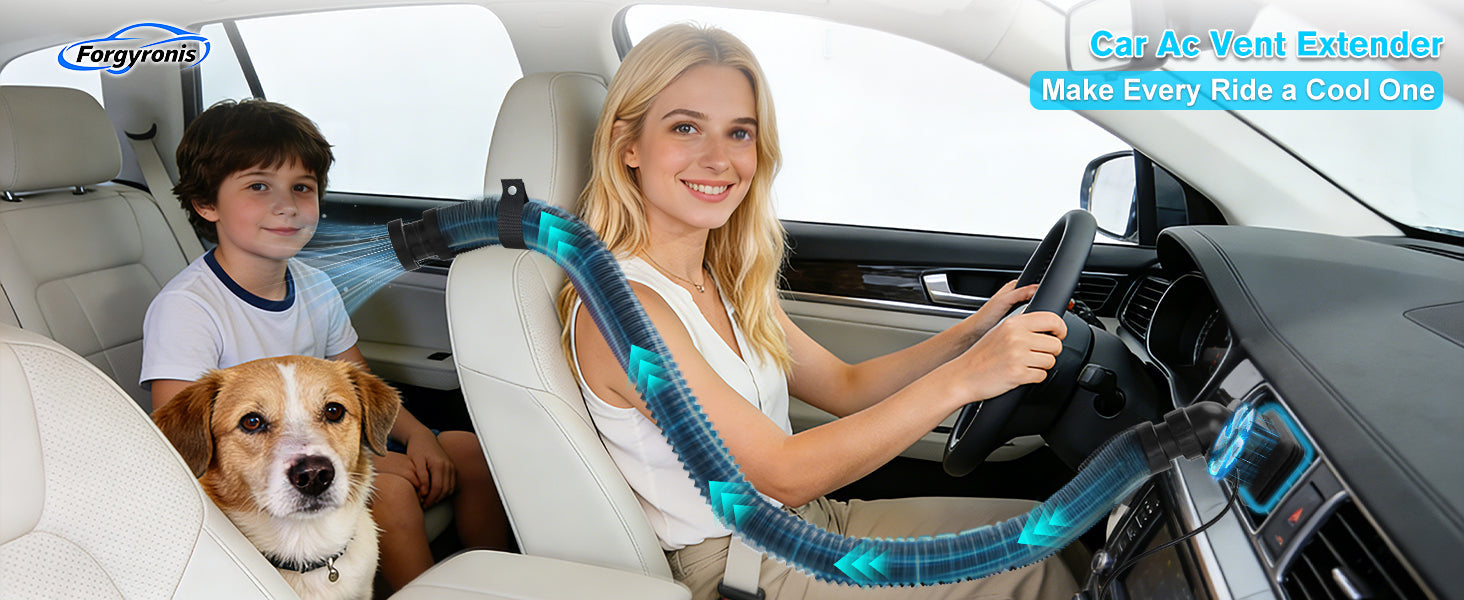
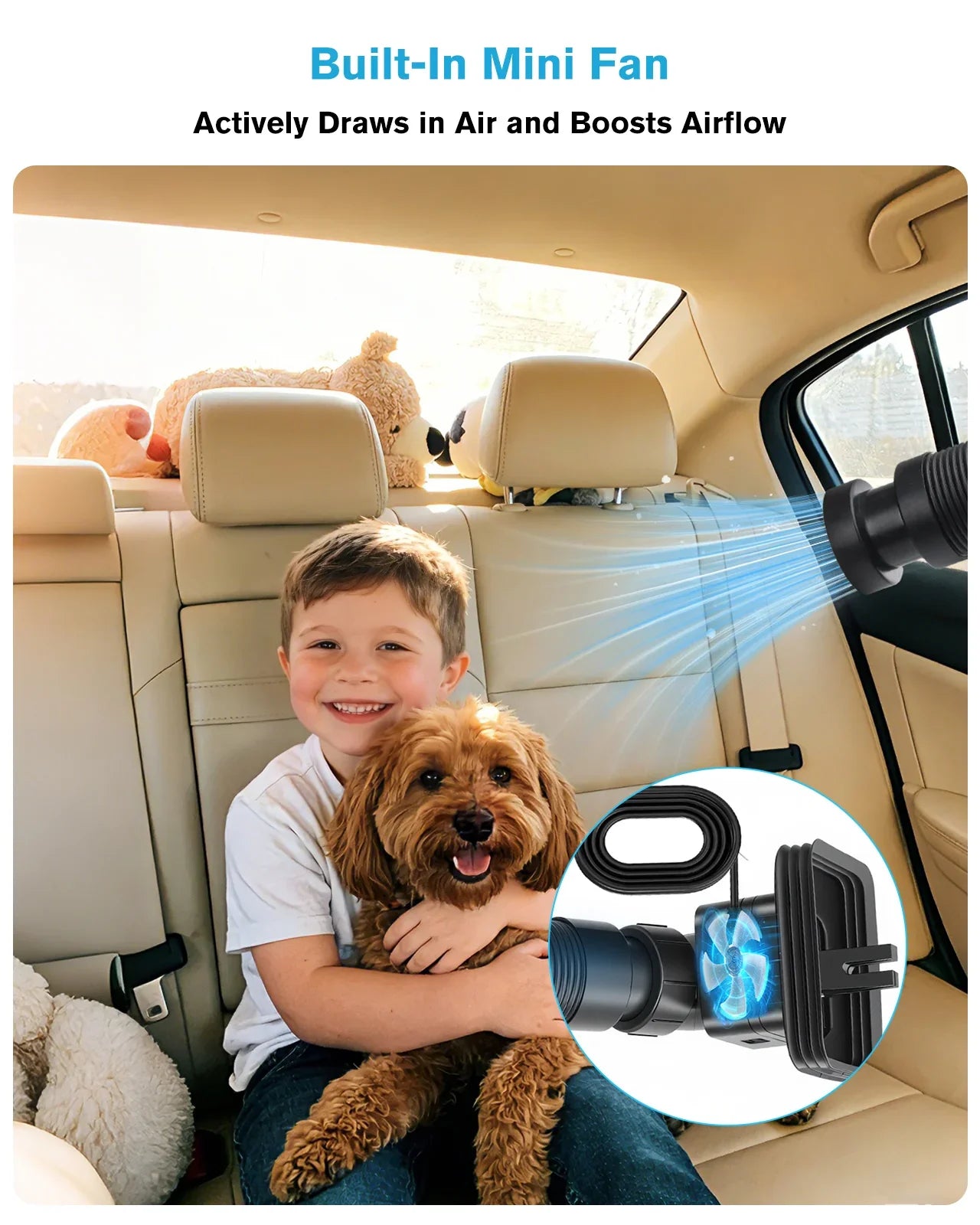
The Forgyronis Car Air Vent Extender solves this problem by acting as a high-efficiency ac extender for back seat passengers. This tool-free, flexible car air vent hose attaches firmly to your front dashboard panel, creating a reliable channel that redirects continuous cool air to back seat spaces where children and pets need it most.
Why Is the Back Seat Always Hotter Than the Front?
If you have ever wondered why your children are still hot in the back seat even with the AC turned on, the issue comes down to three structural vehicle design flaws:
-
Front-Heavy Vent Distribution: Most standard passenger cars, sedans, and compact SUVs centralize their primary cooling power on the front dashboard. Rear console vents, if a vehicle has them, are often smaller and lack the blower pressure to force air through a packed cabin.
-
Radiant Window Heat: Children sitting in forward-facing booster seats or rear-facing carriers sit higher and closer to the large side windows. This places them directly in the path of intense solar heat radiating through the glass.
-
Trapped Air Obstacles: Thick front bucket seats, tall center consoles, and large headrests act as physical walls. They trap heavy, humid air in the back row and block the front climate control system from naturally circulating air to the rear.
Best Ways to Keep Kids Cool in the Car During Summer
When planning long family trips in hot weather, relying on just one method isn't always enough. Combining a few smart habits creates a much safer, more comfortable environment for your children:
-
Use High-Quality Sun Shades: Mesh or static-cling window shades block direct sunlight and reduce radiant heat from warming up your child's skin and safety seat fabric.
-
Pre-Cool the Cabin Before Loading: Turn on your vehicle's engine and let the air conditioning run for 5 to 10 minutes before bucking your kids into their seats to clear out initial heat traps.
-
Bring Chilled Drinks: Keep insulated water bottles packed with ice water in the back row so kids can regulate their core body temperature from the inside out.
-
Redirect AC Air Directly to the Back Seat: Instead of waiting for the entire cabin to slowly exchange air, use a mechanical channel to bring instant, focused dashboard air straight into the rear seat pocket.
Why Portable Car Fans Don't Really Cool the Back Seat
When looking for a dependable rear seat cooling solution, parents often compare traditional electric fans against a dedicated air vent extension tube. Understanding how these options handle cabin heat helps you choose the safest setup for your family.
| Cooling Method | Keeps Kids Cool? | Noise Level | Safety Profile |
| Clip-On Electric Fan | ❌ No (Only moves hot air) | ❌ High (Annoying mechanical buzz) | ❌ Low (Exposed blades & battery heat) |
| USB Dashboard Fan | ❌ No (Airflow is too weak) | ⚠️ Medium (Constant motor hum) | ❌ Low (Dangling power cords) |
| Window Mesh Shade | ⚠️ Partial (Blocks sunlight only) | ✅ None (Completely silent) | ✅ High (No moving parts) |
| Forgyronis Vent Extender | ✅ Yes (Delivers actual AC air) | ✅ None (Uses factory insulation) | ✅ High (Blade-free & passive design) |
How to Customize Your Backseat Air Conditioner Setup
The Forgyronis system uses a 5.91-foot flexible tube to easily reach across multiple rows, allowing you to customize your cabin layout based on your specific travel needs.
Overhead Ventilation for Forward-Facing Booster Seats
To eliminate intense radiant window heat during family road trips, route the hose along the center console and secure it to the rear window grab handle. This layout creates a refreshing overhead curtain of descending cold air that flows naturally over your child's shoulders, serving as an exceptional backseat air conditioner upgrade that does not blow harshly into their eyes.
Safe Airflow Rerouting for Rear-Facing Infants
Rear-facing infant child safety seats are notorious heat traps because their thick protective plastic shells completely shield babies from front cabin airflow. Positioning the adjustable nozzle near the infant carrier flushes out trapped humidity instantly. The blade-free design ensures absolute safety around curious toddlers, removing the finger-pinch hazards common with traditional open-cage electric fans.
Floor-Level Climate Relief for Traveling With Dogs
Because warm air naturally rises, lower footwells and rear SUV cargo beds stay incredibly stuffy on hot afternoons. Directing the adjustable nozzle straight at the floor mats breaks up these stubborn thermal pockets. This setup ensures your family pets stay perfectly chilled, making it a highly reliable way of cooling kids in hot car cabins and keeping pets safe from heat fatigue.
Frequently Asked Questions (FAQ)
Does it work in larger vehicles like multi-row SUVs and minivans?
Yes. The 5.91-foot flexible hose is specifically designed to stretch across multiple seating rows. It can easily reach from a front dashboard vent to the second-row headrests or down into the third-row footwells of larger family vehicles and SUVs.
Will this car air vent extender reduce the cold air available for the driver?
Not at all. Modern automotive climate systems utilize multiple front outlets. Redirecting one driver-side vent simply shifts the air distribution pattern without reducing your system's overall cooling capacity. Leaving the remaining three front vents completely unobstructed keeps the driver perfectly comfortable while the rear row receives its dedicated cold air line.
Is it safe for babies and curious toddlers?
Yes. Unlike traditional electric car fans for backseat for kids that feature spinning blades or exposed wires, this system is completely passive and blade-free. There are no moving parts, electrical components, or small pieces that can pinch fingers or create a safety hazard for children.
How long is the hose, and can it be adjusted?
The corrugated silicone hose extends up to 5.91 feet (1.8 meters) to reach the rear seats easily. Because it features a flexible, compressible design, you can compress or bend the line to match the exact distance you need without restricting the internal cold airflow.
Will the mounting clip scratch or damage my car's vent blades?
No. The high-tension mounting clip is lined with soft, protective rubber padding designed for sensitive automotive interiors. It distributes pressure evenly across the vent blade to prevent surface scratches or structural bending, allowing for a tight air seal without tools.
Can I use this extension system during winter driving?
Yes. The heavy-duty silicone composition is fully rated for both hot and cold environments, handling interior temperatures from -20°C to 80°C (-4°F to 176°F). During the winter months, you can seamlessly route warm air from your front heater straight to the rear seats to keep your family warm and cozy.
Is it easy to remove when I don't have backseat passengers?
Yes, removal takes less than 10 seconds. The adapter features a quick-release mechanism that unclips easily from your dash panel. The flexible hose can be coiled up into a neat circle and slid right under the front seat or inside the trunk, instantly returning your dashboard to its original factory look.
Reclaim Your Family Summer Adventures
If your car's AC doesn't reach the back seat effectively, redirecting cold air directly to where your children sit can make summer road trips significantly more comfortable. Achieving a perfectly balanced cabin temperature shouldn't mean dealing with weak cooling gadgets, noisy electric motors, or tangled charging cords that clutter your interior.
Investing in a proper climate channel optimizes your vehicle's existing loop to provide uniform, reliable, and whisper-quiet cooling across every single row. Protect your passengers, secure your pets, and keep your vehicle interior looking clean, organized, and professional all year round.