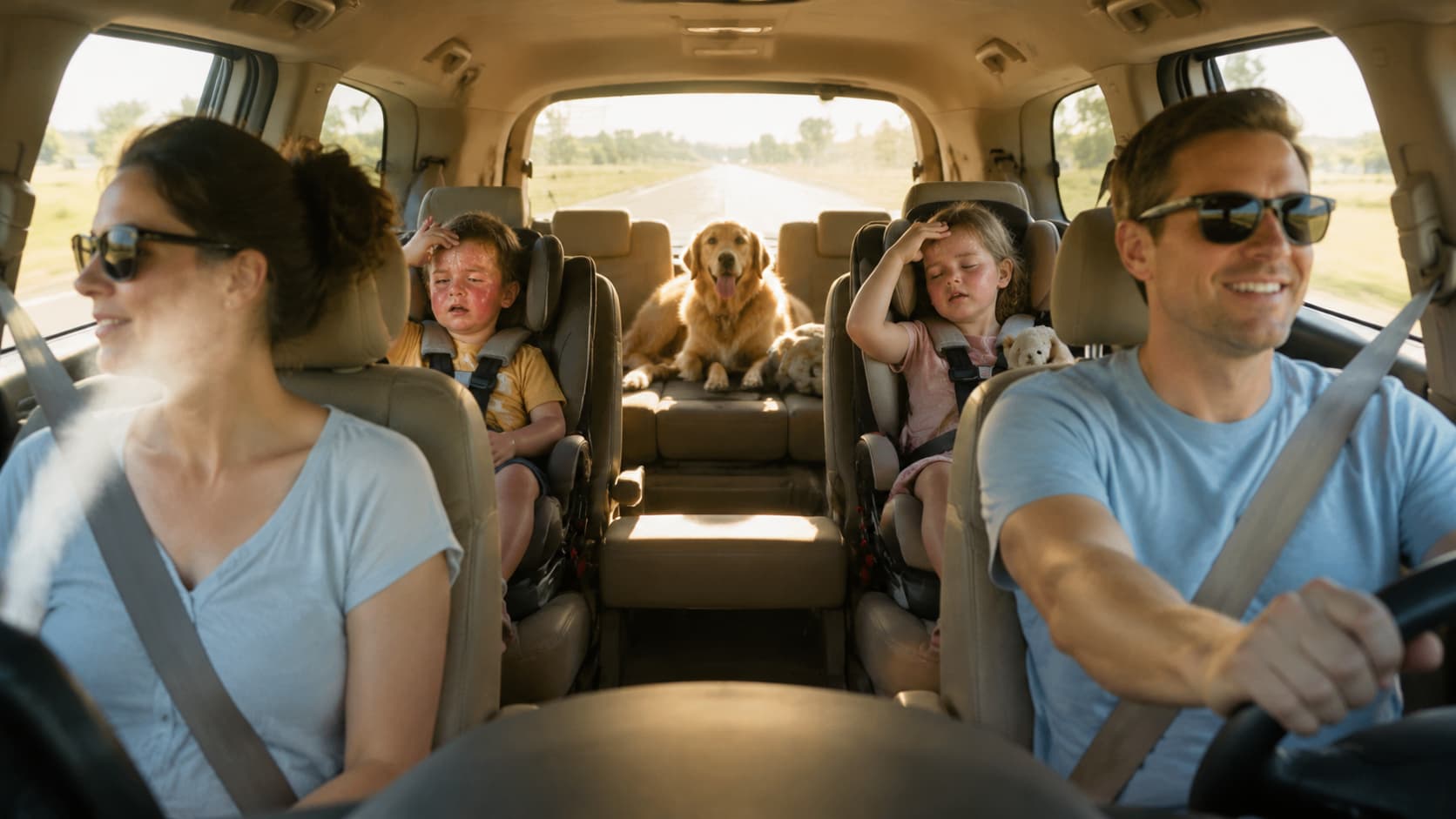
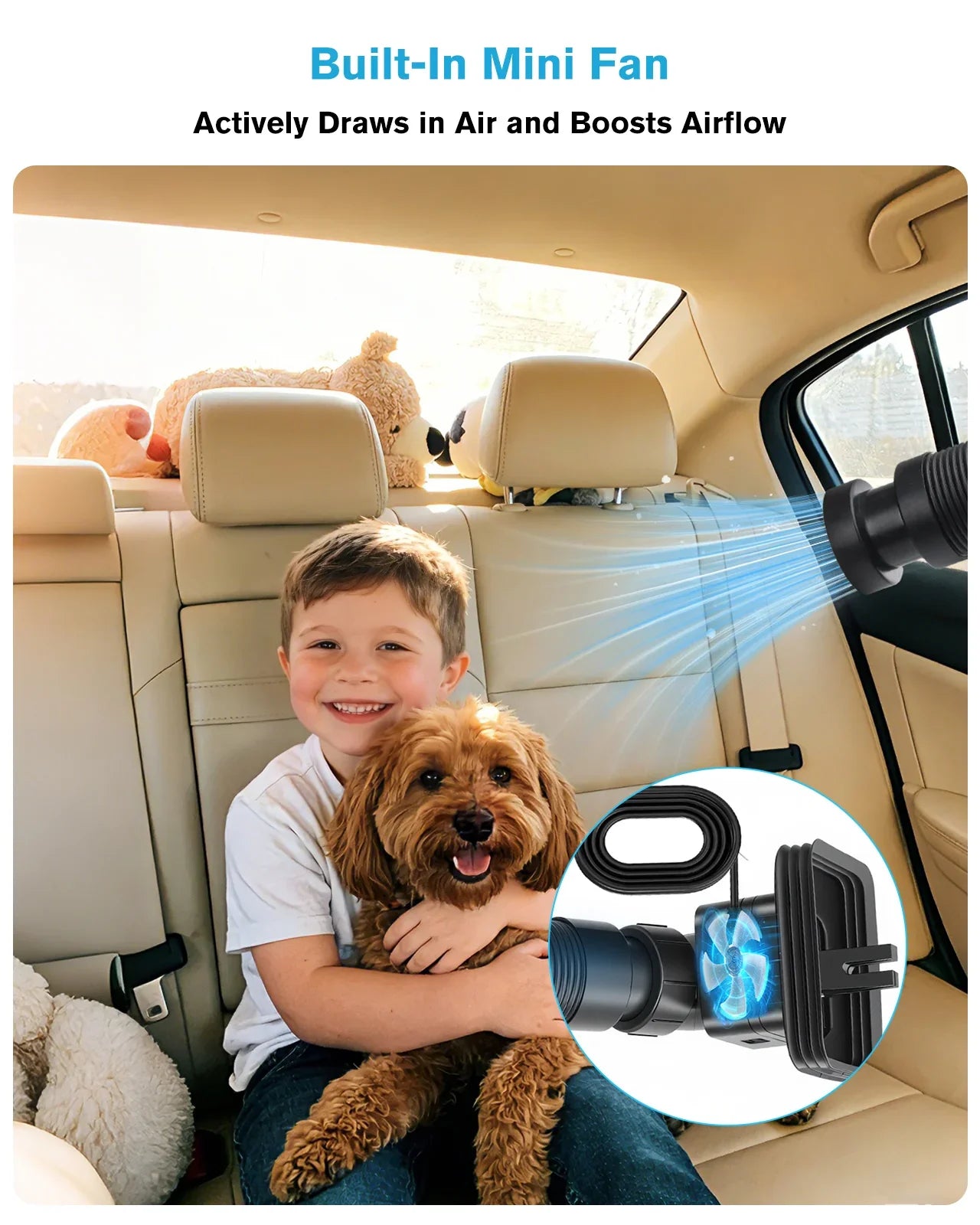
Keeping dogs cool in the car during summer road trips is far more difficult than many pet owners realize. If you have ever taken a warm-weather drive with your pets, you have probably noticed a worrying trend. While the driver and front passenger remain perfectly comfortable, the dogs in the far back are constantly panting, restless, and overheating. Despite setting your dashboard climate controls to maximum, refreshing air rarely makes it past the first row because your front vents cannot clear the stagnant air trapped in the rear.
Ensuring consistent airflow for pets becomes one of the biggest challenges during summer road trips. Whether you are running quick weekend errands, waiting in park parking lots, or heading out on a long-distance drive, a stagnant, car too hot for dogs puts heavy-coated breeds at serious risk. It is a structural vehicle design flaw that leaves pet owners constantly searching for a dependable way to ensure proper pet cooling in car cabins, especially inside rear cargo decks and packed travel crates.
To handle the intense interior heat, many pet parents buy a basic clip-on fan or a battery-powered ventilator to attach to a pet carrier. From a practical standpoint, these low-powered gadgets fail to provide real safety. They do not lower the local temperature; they simply spin the trapped, humid air inside an enclosed space. To truly protect your dog, you must find a way to channel real, conditioned air directly from the dashboard straight to your pet's travel zone.
Why Rear Cargo Areas and Dog Crates Turn Into Heat Traps
If your vehicle's front cabin feels like an icebox but your dogs are still struggling in the back, three common automotive design factors are usually to blame:
-
Blocked Airflow Pathways: Tall front bucket seats, solid center consoles, and stacked luggage act as physical walls. They prevent the dashboard climate system from naturally circulating air past the front row.
-
Lack of Rear Outlets: Most standard sedans, crossovers, and mid-sized SUVs do not feature dedicated AC vents in the third row or trunk deck, leaving the furthest rear cargo area cooling zones completely unventilated.
-
Greenhouse Effect in the Trunk: Large rear windshields and side cargo windows absorb massive amounts of solar energy, trapping heat in the rear section long after the vehicle engine starts.
Signs Your Dog May Be Overheating During Car Travel
Because dogs cannot sweat like humans, they rely on panting to exchange heat. When the cabin air is too warm, their ability to cool themselves drops rapidly. Many owners search for why their dog is panting in car with AC on; usually, it means the cold air simply isn't reaching them. Watch for these critical signs of dog overheating in car spaces:
-
Excessive, Heavy Panting: Wide-mouthed, rapid panting where the tongue is fully extended and wide at the tip.
-
Hypersalivation (Drooling): Thick, ropy saliva pooling around the mouth or dripping heavily onto the floorboard.
-
Bright Red Gums and Tongue: A deep red or purple hue in the mouth tissues, indicating the dog's vascular system is working in overdrive to shed heat.
-
Extreme Restlessness: Constant pacing, shifting positions, or whining inside the crate as they try to escape localized hot pockets.
-
Lethargy or Delayed Responses: A dog that appears dazed, weak, or unresponsive when you call their name during travel breaks.
Veterinary Recommendations for Traveling With Dogs in Hot Weather
Most veterinarians emphasize that proactive climate management is the core foundation of dog car travel safety. To ensure a risk-free journey, canine health professionals recommend the following guidelines:
-
Never Leave Dogs Unattended: Even with windows cracked, a vehicle's interior can reach dangerous levels within 10 minutes.
-
Provide Constant Fresh Water: Keep a spill-proof travel bowl accessible so your dog can stay hydrated and naturally regulate its internal temperature.
-
Schedule Frequent Rest Breaks: Stop every 2 hours to allow your dog to rest in the shade, stretch, and get fresh air outside the enclosed vehicle cabin.
-
Ensure Adequate Airflow Reaches the Pet: Blower settings up front rarely tell the whole story. Always verify that actual, freezing AC air is moving into the specific space where your dog rides.
Why Portable Car Fans Fail to Protect Traveling Pets
When looking for an effective dog crate ventilation setup, it helps to compare standard electric fans against a dedicated dashboard vent extension tube.
| Cooling Method | Lowers Local Temp? | Noise Level | Safety Profile |
| Clip-On Electric Fan | ❌ No (Only moves warm air) | ❌ High (Annoying mechanical buzzing) | ❌ Low (Exposed wire & chew hazards) |
| USB Travel Fan | ❌ No (Airflow is too weak) | ⚠️ Medium (Constant motor hum) | ❌ Low (Dangling cords trip hazards) |
| Window Solar Shades | ⚠️ Partial (Blocks sunlight only) | ✅ None (Completely silent) | ✅ High (No moving parts) |
| Passive Vent Extender | ✅ Yes (Delivers actual AC air) | ✅ None (Uses factory insulation) | ✅ High (Blade-free & passive design) |
Efficient Solutions for Cooling a Dog Crate in an SUV
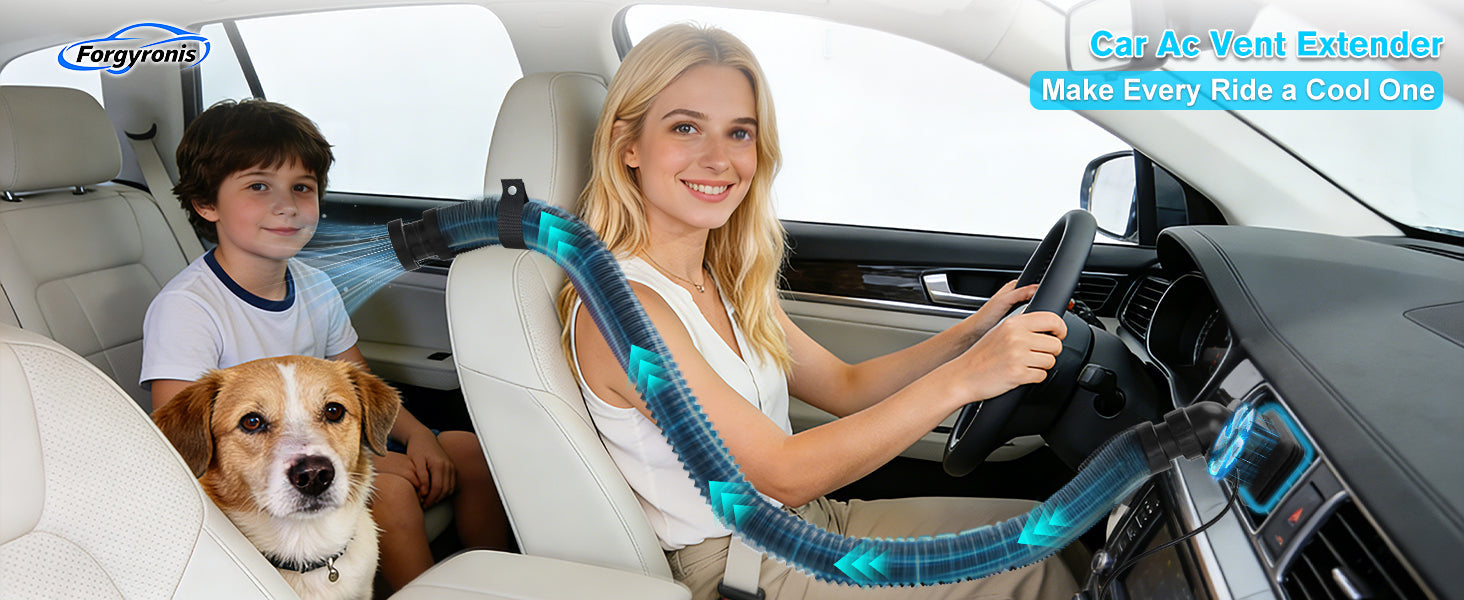
Bypassing the cabin's natural airflow barriers requires a mechanical conduit that delivers direct thermal relief to the back row. The Forgyronis Car Air Vent Extender bridges this climate gap by acting as a high-efficiency passive air delivery system.
This tool-free, flexible hose clips firmly onto your front dashboard panel, creating a reliable, direct pipeline that delivers continuous cold air straight to your pet's travel zone. The 5.91-foot flexible tube stretches easily across multiple rows, allowing you to quickly reconfigure your climate setup to match your current passenger layout.
Direct Ventilation for Travel Crates and Barriers
If your dogs travel inside a hard-sided plastic crate or behind a wire barrier gate, simply slide the adjustable nozzle through the mesh openings. This layout ensures maximum cooling dog crate in SUV setups by flooding the interior with fresh air. The completely blade-free design ensures absolute safety around curious paws and noses, completely removing the wire-chewing hazards common with traditional open-cage electric fans.
Floor-Level Climate Relief for Deep Footwells
Because hot air naturally rises, lower footwells trap a significant amount of heavy humidity on summer afternoons. Pointing the nozzle straight at your floor mats clears these stubborn hot zones instantly, providing a reliable way of keeping dogs comfortable in hot vehicles and keeping floor-resting pets perfectly chilled.
Frequently Asked Questions (FAQ)
Can dogs overheat even when the car AC is turned on?
Yes. If your vehicle lacks rear console vents, the front seats and cargo barriers block the cold air from moving backward. The front cabin may feel comfortable to the driver while the rear cargo area remains dangerously warm, causing heat fatigue for pets riding in the back.
Is a portable fan enough to keep a dog cool in the car?
No. Standard electric fans do not lower the air temperature; they only circulate the air that is already inside the space. If the rear cabin is hot and humid, the fan will simply blow hot air across your dog, which can accelerate overheating instead of preventing it.
How hot does an SUV cargo area get during summer trips?
Under direct sunlight, an unventilated SUV cargo area can sit up to 20°F to 30°F warmer than the front row. The large glass windows create a greenhouse effect, trapping heat against the plastic panels and cargo mats.
What is the safest way to cool a dog crate during travel?
The safest method is to route real, refrigerated air from the front dashboard vents directly into the crate using a passive, blade-free extension hose. This provides actual temperature reduction without exposing your pet to electrical cords, battery heat, or spinning fan blades.
Are SUV cargo areas hotter than second-row passenger seats?
Yes, usually. Second-row seats benefit slightly from front vent spillover and occasionally have small console vents. The cargo bay, however, is completely isolated behind the rear seats and is surrounded by three large panels of glass, making it the hottest zone in the vehicle.
Can dogs get heatstroke inside a moving car?
Yes. If a dog is restricted inside a travel crate in the back row with no direct airflow, heat buildup can outpace their ability to pant. Even with the vehicle moving and the front AC running, a trapped pet can experience heat stress or heatstroke if the rear air remains stagnant.
What temperature is too hot for dogs in a vehicle?
Any cabin temperature over 75°F (24°C) can cause heavy coated or short-nosed breeds to struggle with heat regulation. Ideally, the area where your dog rests should be kept under 72°F (22°C) to ensure safe, comfortable respiration.
Should dogs ride in the back seat or the cargo area?
Both can be safe, provided they are properly secured in a travel harness or crash-tested crate. However, from a climate perspective, the back seat receives slightly better airflow than the cargo area unless a direct vent extension hose is installed to bridge the gap.
Will this air vent extender reduce the cold air available for the driver?
Not at all. Automotive climate control systems utilize multiple independent front outlets. Redirecting one driver-side vent simply shifts your internal air distribution pattern without lowering your system's overall cooling capacity, keeping the front row comfortable while the back row receives a dedicated cold air line.
Is the hose easy to remove and store when my dog isn't traveling with me?
Yes, removal takes less than 10 seconds. The adapter features a quick-release mechanism that unclips easily from your dash panel. The flexible hose can be coiled up into a neat circle and slid right under the front seat, instantly returning your dashboard to its original factory look.
Reclaim Your Family Summer Adventures
The most effective way to keep dogs comfortable during summer travel is ensuring cool air actually reaches the space where they ride. Whether your dog travels in the back seat, cargo area, or a travel crate, improving rear airflow can significantly reduce heat buildup and make every road trip safer.
Investing in a proper climate channel optimizes your vehicle's existing loop to provide uniform, reliable, and whisper-quiet cooling across every single row. Prioritizing proper dog car travel safety
(If you are preparing your vehicle for a summer road trip with dogs, check out our companion articles on Best Ways to Keep Dogs Cool in the Car, How to Prevent Dog Overheating During Road Trips, and SUV Cargo Area Cooling Tips for Dog Owners to build your ultimate pet travel plan.)
👉 [Explore the Forgyronis Car Air Vent Extender and Upgrade Your Dog's Travel Comfort Today!]