If your back seat gets hot in summer, chances are you’ve already thought about one of these two things:
A small car seat fan
Or a vent-mounted fan attachment
They’re everywhere online.
And at first glance, they both seem like easy fixes.
Just plug it in, turn it on, and hope the back seat feels better.
But once you actually use them in a real SUV or family car… things feel a little different.
A Real Driving Reality Most People Don’t Talk About
I’ve tried both.
On paper, they should work fine.
But in real driving situations?
Not so much.
The car seat fan mostly just circulates air in a small circle.
You feel it if you’re sitting right in front of it, but anyone slightly off to the side barely notices it.
The vent fan is similar — it redirects airflow, but it doesn’t really increase how far that air travels.
So in the back seat, especially in longer SUVs or minivans, the result is usually the same:
front feels okay
rear still feels warm
and nothing really balances out
And honestly, on a long drive, you start noticing it pretty quickly.
Kids still complain.
Pets still look uncomfortable.
And you end up wondering why it didn’t really help.
Why These Fans Don’t Fully Solve the Problem
Here’s the simple truth most drivers realize later:
Both car seat fans and vent fans move air — but they don’t fix airflow distance.
So what actually happens is:
air gets pushed around locally
but doesn’t consistently reach the back seat area
and cooling becomes uneven inside the cabin
In larger vehicles like SUVs and minivans, this limitation becomes even more obvious.
Because the real issue isn’t airflow movement.
It’s airflow delivery.
The Key Difference Most People Miss
A fan can only do so much.
It either:
moves air in a small zone (seat fan)
or redirects existing airflow (vent fan)
But neither system actively delivers cold air deeper into the cabin.
That’s where things start to change when you look at a full airflow extension system instead.
Unlike basic fans, it doesn’t just push air around.
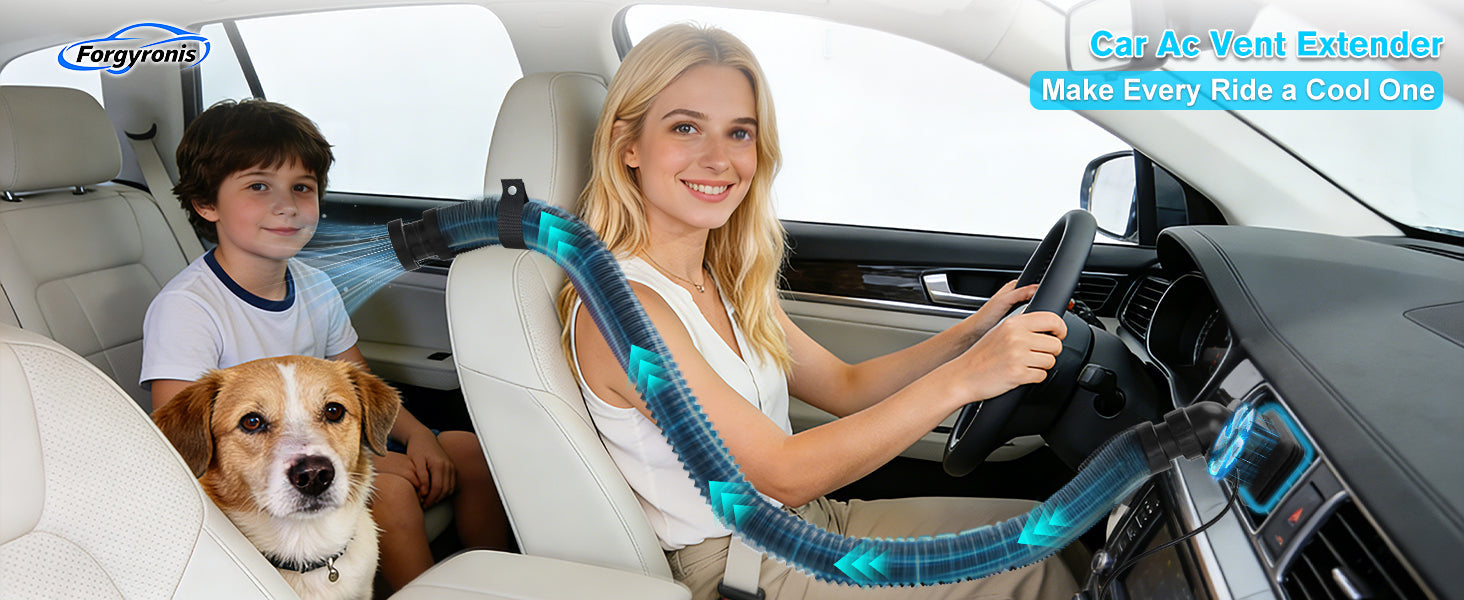
It actually extends cold air reach toward backseat riders.
Why Airflow Extension Works Better in Real Life
Instead of relying on weak air circulation inside the cabin, an airflow extension system uses a different approach:
It physically guides cooled air further back.
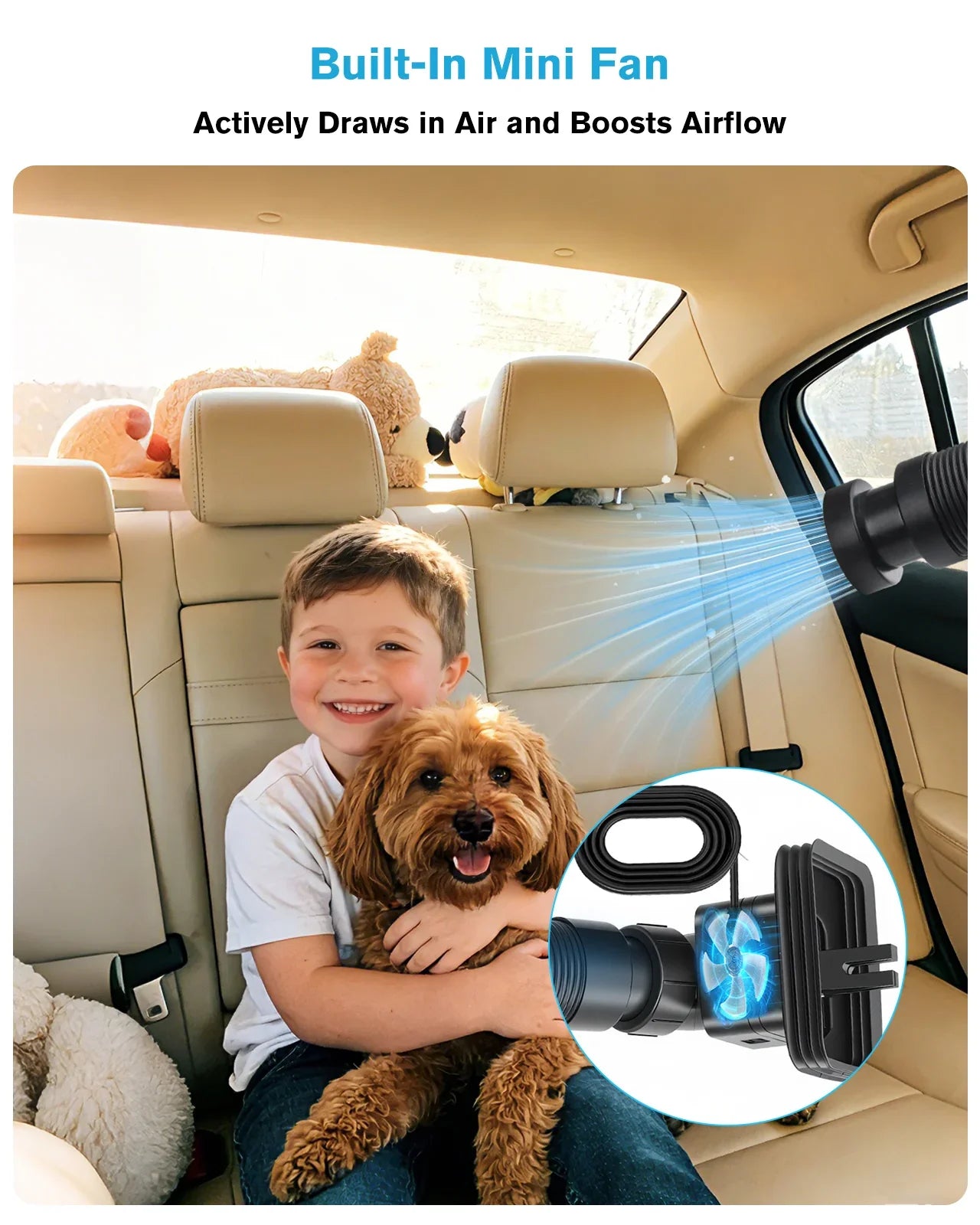
With a USB-powered booster fan, it actively pushes air through a duct instead of waiting for natural airflow pressure.
At the same time:
- vent-mounted systems reduce air leakage at the connection point
- flexible tubes help direct airflow toward second and third rows
- secure clips keep everything stable during driving
So instead of scattered airflow, you get a more direct cooling path to rear passengers.
What You Actually Notice While Driving
It’s not a dramatic “night and day” change.
But it’s noticeable in daily use.
The back seat stops feeling like an afterthought.
Kids settle faster without constantly adjusting their position.
Pets stop pacing around trying to find cool spots.
And the whole cabin feels more evenly balanced.
Don’t expect magic, but the difference in rear seat comfort is definitely there.
FAQ
Do car seat fans actually work for back seat cooling?
They can help locally, but only in a very limited area. They don’t improve overall airflow distribution inside the car.
Are vent fans better than car seat fans?
They are slightly more effective in directing airflow, but they still rely on existing weak air pressure and don’t extend cooling reach.
Why do both fans struggle in SUVs and minivans?
Because larger cabins require longer airflow travel distance, which small fan systems are not designed to handle.
What makes an airflow extension system different?
It actively pushes and guides cold air deeper into the cabin using a duct system and booster airflow support, improving rear seat cold air coverage.
Will it actually improve comfort for kids and pets?
Yes, because it helps deliver more consistent cooling to rear seating areas instead of relying on indirect airflow.
Is it better than just using multiple fans?
Yes. Multiple fans still circulate air locally, while an airflow extension system focuses on directing cold air to where it’s needed most.
SEO Summary
Car seat fans and vent fans provide limited improvement for back seat cooling in SUVs and family cars. Airflow extension systems offer better results by actively delivering cold air deeper into the cabin, improving comfort for rear passengers during daily driving and long trips.