If you’ve ever tried to fix hot back seats in summer, you’ve probably seen those small air vent deflectors online or in stores.
They look simple enough — just clip it on, redirect airflow, and hope the back seat gets cooler.
But in real driving, especially in SUVs or family cars, things don’t always work that smoothly.
The front seats feel fine… sometimes even too cold.
But the back seat still feels like it’s getting leftovers from the AC system.
And that’s usually when people realize: redirecting airflow is not the same as extending airflow.
A Common Family Car Situation You Might Recognize
On a typical weekend drive, everything seems okay at first.
You turn on the AC, adjust the vents, maybe clip on a deflector.
Front seat? Perfect.
But in the back, it’s a different story.
Kids start leaning forward, trying to feel the cold air.
Someone keeps asking “is the AC even on back here?”
And pets usually end up lying on the floor or pressed against the door just trying to stay cool.
Honestly, we’ve all been there.
You try adjusting vents mid-drive, but it doesn’t really change much.
Because the problem isn’t direction anymore — it’s distance.
Why Basic Air Vent Deflectors Often Don’t Solve the Problem
Here’s the thing most people don’t realize.
Air vent deflectors only redirect air at the source.
They don’t increase how far that air actually travels.
So in larger vehicles:
cold air still fades before reaching the back seats
air pressure drops inside long cabins
rear passengers get weak, uneven cooling
And if you’ve ever used cheap plastic duct extensions before, you might’ve noticed another issue:
they often leak air at the connection point
they fall loose on bumpy roads
and the airflow usually dies halfway through the cabin
That’s why many drivers feel like these accessories “kind of work… but not really.”
What Actually Works Better Than a Basic Vent Deflector
This is where a more complete airflow system comes in.
Instead of only redirecting air, a proper solution needs to:
extend airflow reach
reduce air leakage
actively push air forward
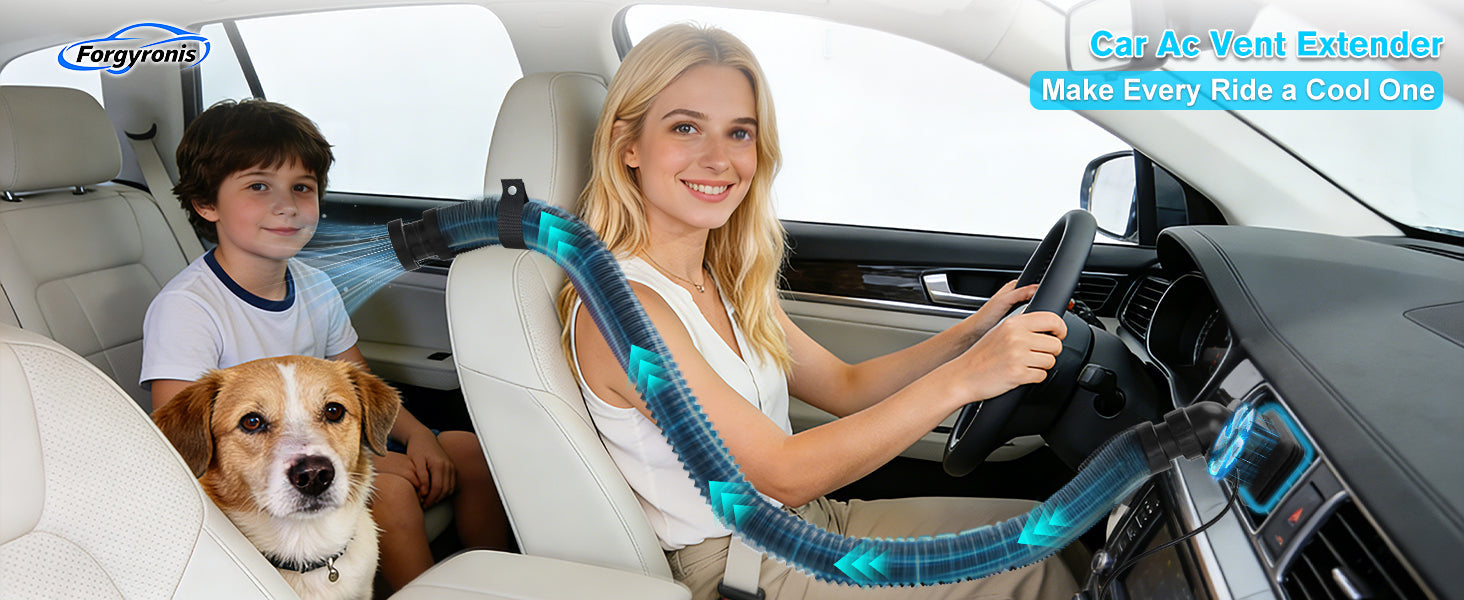
That’s exactly what a USB-powered car AC vent extension tube system is designed for.
Unlike passive deflectors, it doesn’t just “aim” air — it actually moves it further into the cabin.
How It Improves Real Back Seat Cooling
Most basic vent deflectors rely entirely on your car’s natural air pressure.
That’s where airflow usually dies off.
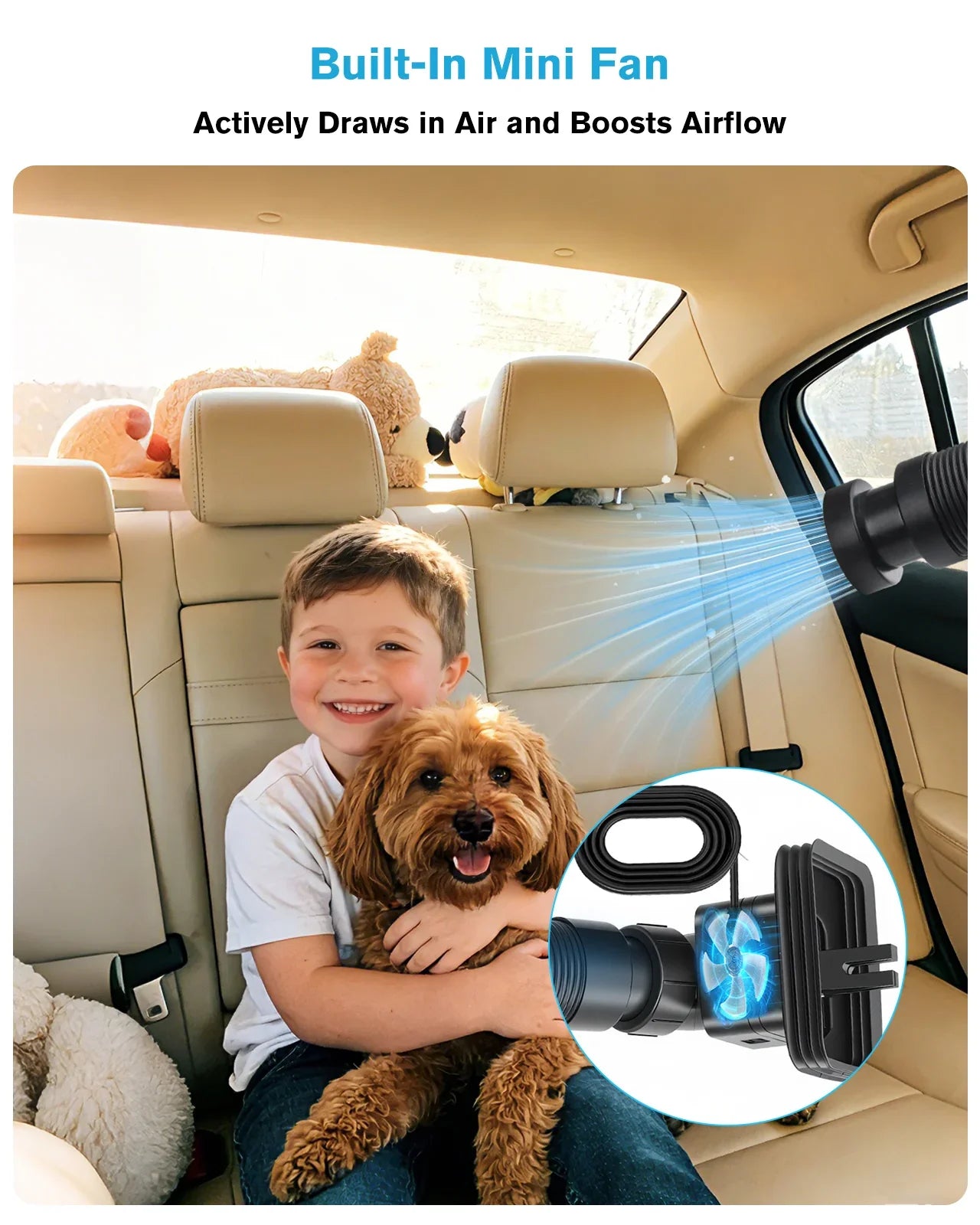
A better system adds a USB booster fan, which actively pushes air through the duct instead of waiting for it to drift naturally.
At the same time:
- a silicone-sealed connector reduces air leakage at the vent joint
- a reinforced vent clip keeps it stable even on rough roads
- a flexible extendable tube helps guide airflow to second and third-row seats
So instead of losing cold air halfway, more of it actually reaches backseat riders.
Why This Feels Different in Daily Driving
It’s not a dramatic “instant transformation.”
But you notice it in small ways.
The back seat doesn’t feel like it’s lagging behind anymore.
Kids stop constantly adjusting their position.
Pets settle down faster instead of pacing or panting.
And you don’t find yourself constantly tweaking vents while driving.
Don’t expect an overnight extreme change, but the difference in cold air coverage is hard to ignore once you experience it.
FAQ
Do air vent deflectors actually improve back seat cooling?
They can slightly redirect airflow, but they don’t extend how far cold air travels inside the car, which limits their effectiveness in larger vehicles.
What’s the main problem with basic vent deflectors?
They only change direction, not airflow distance. In SUVs and minivans, air still weakens before reaching rear passengers.
How is a USB airflow extension system different?
It actively pushes air through a duct system using a booster fan, helping cold air reach further into the back seat instead of fading out.
Will it stay stable while driving?
Yes, the upgraded vent clip grips tightly onto standard vents, and the silicone sealing helps prevent loosening or air leaks during travel.
Is it better than just increasing AC fan speed?
Yes, because fan speed doesn’t solve airflow distance. Rear seat cooling depends on how far air can actually travel.
Can it improve comfort for kids and pets?
SEO Summary
Air vent deflectors alone are often not enough to solve rear seat cooling problems in SUVs and family cars. A USB-powered car AC vent extension system improves airflow reach, reduces air leakage, and helps deliver more consistent cooling to backseat riders during daily driving and long trips.