If your front seats feel cool but the back seat stays warm, that’s actually a very common issue in most vehicles. Car air conditioning systems are usually designed to prioritize the front cabin, which means rear passengers often receive weaker and slower airflow.
This becomes especially noticeable during summer driving, long road trips, or when the car is fully loaded with passengers. Kids, pets, and anyone sitting in the back often feel the difference within just a few minutes.
A car back seat air vent extender helps improve this situation by guiding airflow more directly toward the rear seats, helping the entire cabin feel more evenly cooled without relying solely on the original AC system.
Why the Back Seat Gets Less Airflow
In most factory-built vehicles, the air conditioning system is designed with the front seats in mind. The airflow starts strong at the dashboard vents but naturally loses pressure as it travels through long internal ducts.
By the time the air reaches the rear seats, the cooling effect is noticeably weaker. This isn’t a malfunction—it’s just how most standard car ventilation systems are engineered.
The problem becomes more obvious in real-world driving situations, especially when the car is fully occupied. Rear passengers are physically farther away from the main air source, so they experience slower and less direct cooling.
Over time, this leads to a consistent pattern: the front feels comfortable, while the back often feels slightly warm or stuffy.
Why SUVs and Family Cars Feel the Heat More
Larger vehicles like SUVs, minivans, and trucks tend to show this issue more clearly. The reason is simple—bigger cabin space means air has to travel a longer distance before reaching the rear rows.
In three-row SUVs, passengers in the third row are sitting farthest from the dashboard vents. Even if the AC is running normally, the airflow weakens significantly before reaching them.
When the vehicle is fully loaded with passengers or luggage, air circulation becomes even more restricted. This is why many families notice that rear-seat comfort is one of the weakest points in larger vehicles.
The Real Impact on Kids, Pets, and Long Drives
For many drivers, this issue becomes most noticeable during family trips.
Children sitting in the back seat are often the first to feel uncomfortable in warm conditions. They may start moving around more, asking for adjustments, or simply becoming restless after a short time in the car.
Pet owners experience a similar situation. Dogs and other pets sitting in the rear area are more exposed to trapped heat, especially during summer when cabin temperature builds up quickly.
On longer drives, this uneven cooling can affect the overall travel experience. Instead of a relaxed and comfortable ride, the driver often has to constantly adjust AC settings or respond to passenger discomfort.
What Most People Try (But Why It Doesn’t Fully Work)
When rear airflow feels weak, most drivers try simple adjustments first.
Some increase the AC strength or lower the temperature, hoping it will push more cold air throughout the cabin. Others try opening windows slightly to balance airflow.
While these methods may offer short-term relief, they don’t address the core issue: airflow distribution inside the car. The system is still front-focused, so the back seat continues to receive less direct cooling.
As a result, the temperature difference between the front and rear often remains noticeable.
How a Car Back Seat Air Vent Extender Works
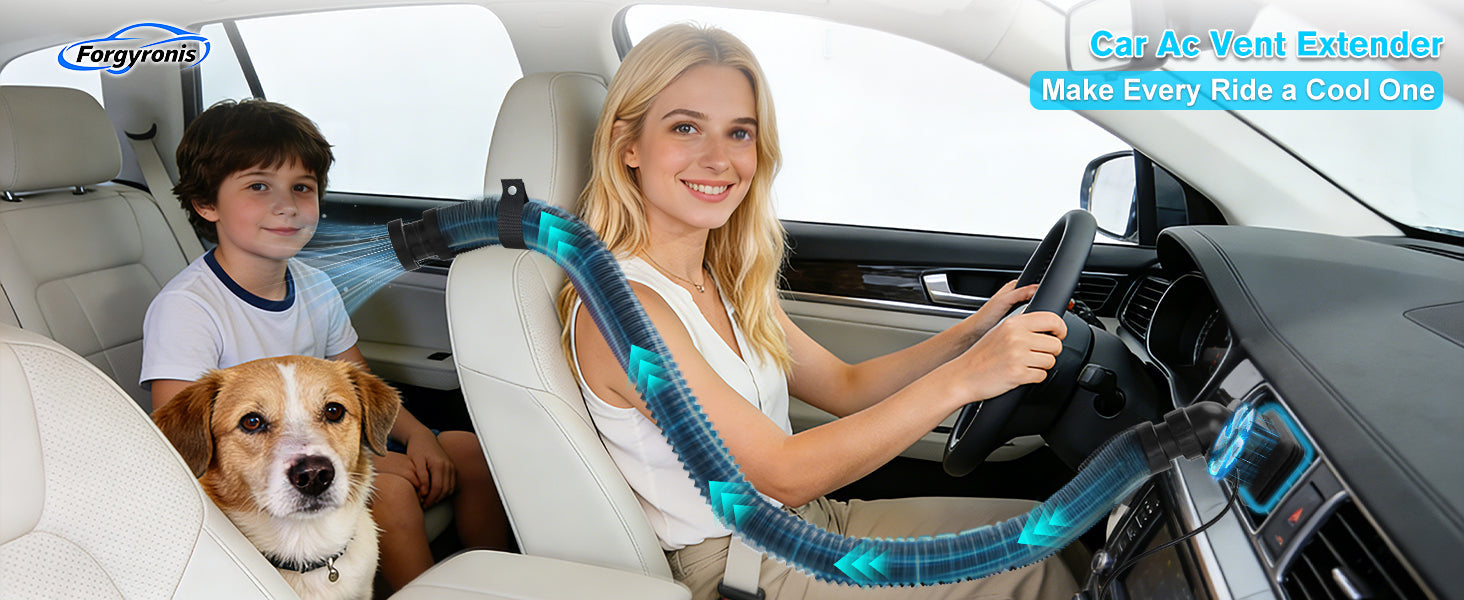
A car back seat air vent extender is designed to extend and redirect airflow from the front vents toward the rear seating area.
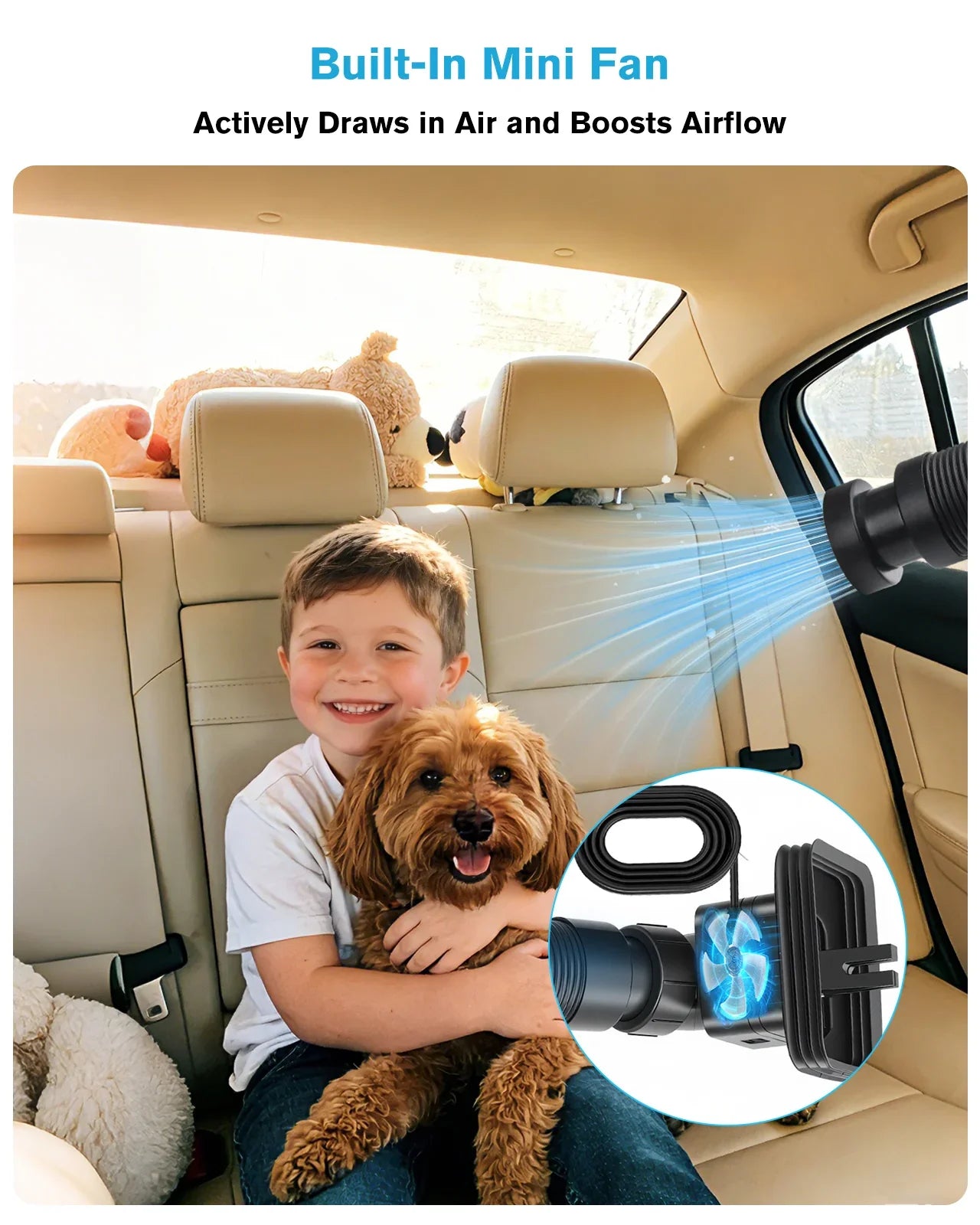
It connects directly to the existing air vent and uses a flexible hose structure to guide air through a longer path. Some designs also include a small USB-powered fan that helps actively move air through the tube, improving reach and consistency.
Instead of waiting for air pressure to naturally travel through the cabin, the system helps direct airflow more efficiently to where it is needed most.
The result is a more balanced cooling experience throughout the entire vehicle.
Key Benefits You Can Feel During Daily Driving
One of the most noticeable improvements is the way air reaches the rear seats more consistently. Instead of relying on weak indirect airflow, passengers begin to feel cooling effects sooner after the AC is turned on.
This makes a difference not just in temperature, but also in overall comfort during travel. Rear passengers no longer feel like they are sitting in a separate climate zone from the front.
Families often find this especially useful during everyday driving routines such as school drop-offs, commuting, and weekend outings. Pets also tend to stay calmer when the cabin temperature feels more stable.
Another practical advantage is flexibility. The system is compatible with most vehicles, including sedans, SUVs, and larger family cars, and does not require permanent modification.
When This Type of Solution Makes Sense
You’ll usually notice the need for improved airflow if the back seat consistently feels warmer than the front, even when the AC is running normally.
It becomes even more relevant if you frequently travel with children or pets, or if you spend long hours driving with passengers in the rear seats.
For SUV and minivan owners, the difference is often more noticeable simply due to cabin size and airflow distance.
In these cases, improving airflow direction can make daily driving noticeably more comfortable.
FAQ
Does a car vent extender actually improve airflow?
Yes, it helps improve how air is directed inside the vehicle. Instead of relying only on natural circulation, it guides airflow closer to the rear seats, making temperature distribution more balanced.
Is it effective in SUVs and larger vehicles?
Yes, it tends to be more noticeable in SUVs and minivans because of the longer distance between the front vents and rear seats.
Is installation complicated?
No. It connects directly to the air vent and uses USB power. Most users can set it up in a few minutes without tools.
Does it require continuous maintenance?
Not really. Once installed, it usually stays in place for daily use with minimal adjustment needed.
Is it helpful for kids and pets?
Yes. Rear-seat comfort is especially important for children and pets during warm weather, and improving airflow distribution helps create a more stable environment for them.