Long summer drives with overheated kids in rear seats turn happy trips into frustrating chaos. We have all experienced this exact scenario during a summer drive: you start the engine, turn the climate control system to maximum, and within about five minutes, the driver and front passenger are perfectly comfortable. Up front, the air feels crisp and icy.
However, when you look in the rearview mirror or check on passengers in the rear bench, they are flushing, sweating, and complaining that it feels like the air conditioning isn't even turned on.
This dramatic contrast between a freezing front row and a sweltering rear row points directly to an uneven car air conditioning issue. When your car AC is not reaching the back seat, family road trips quickly turn into a stressful battle over the temperature settings.
Understanding why the back seat is hotter than the front comes down to basic physics and automotive engineering limitations rather than a broken compressor.
The Flaw in Car Airflow Design
Most people assume that turning on the vehicle dashboard blowers forces a uniform sheet of cold air to glide evenly across the entire vehicle cabin. In reality, automotive ventilation loops are heavily front-focused.
Standard passenger vehicles push up to 80% of their total climate volume out of the four primary dashboard registers. This layout works perfectly for the driver, but it creates an immediate roadblock for your rear passengers.
To make matters worse, cold air is naturally denser and heavier than warm ambient air. When the dashboard vents blast freezing air, that heavy air sinks down into the front floor mats long before it has the velocity to travel into the back row.
Without a physical helper to draw that airflow backward, your vehicle's interior remains split into two completely separate climate zones: an icebox up front and a stagnant hot pocket in the rear.
Why Your AC Never Reaches the Rear Seats
Even if your vehicle features those tiny, circular auxiliary vents on the back of the center console, you have probably noticed that the wind volume and pressure are significantly weaker than the front dashboard registers. There are three structural walls inside your cabin causing this poor circulation:
-
The Front Seat Bulkhead: Tall, thick front bucket seats and wide headrests act as physical barrier walls. They trap heavy rising humidity in the rear row and block the direct path of moving air.
-
Direct Side-Window Heat Workload: Backseat passengers sit much higher up and closer to the glass panels. They absorb intense radiant solar energy through the side windows without the protection of front-row sun visors.
-
Stagnant Air Pockets: Because warm air naturally rises and gets trapped by the low rear headliner, the back row develops a heavy thermal blanket that simple ambient air drift cannot break up.
For parents, this airflow blockage introduces a genuine safety concern. Achieving reliable backseat cooling for kids or keeping toddlers safe from summer heat exhaustion is incredibly difficult when the primary climate loop stops right at the driver's shoulder blades.
Why SUVs and Crossovers Are Worse Than Sedans
Many families upgrade from a standard compact sedan to a larger mid-sized SUV or crossover, assuming that a larger vehicle will provide better comfort for family road trips. However, from an HVAC perspective, SUVs actually experience much worse rear cabin heat buildup due to their open interior architecture.
In a traditional sedan, the hot trunk space is physically sealed off by sheet metal and heavy rear seat backs. In an SUV, crossover, or minivan, the cargo bay is completely open to the main passenger cabin.
The massive rear windshield and side cargo windows act as a giant greenhouse, constantly collecting heat and pushing warm humidity forward onto the passenger rows.
Because the interior air volume is significantly larger, a standard front dashboard blower system simply lacks enough airflow pressure to push cold air all the way to third-row passengers. A Forgyronis AC extender for back seat solves this greenhouse heat issue without bulky fans.
The Simple Airflow Extension Solution
To bypass these physical cabin barriers, you do not need expensive climate tool installations, noisy secondary electric fans, or messy wiring modifications. Standalone clip-on fans are highly ineffective because they only circulate the pre-existing warm air around your children's safety seats. To solve a car AC not reaching back seat zones, you need to alter how your vehicle's factory air is distributed.
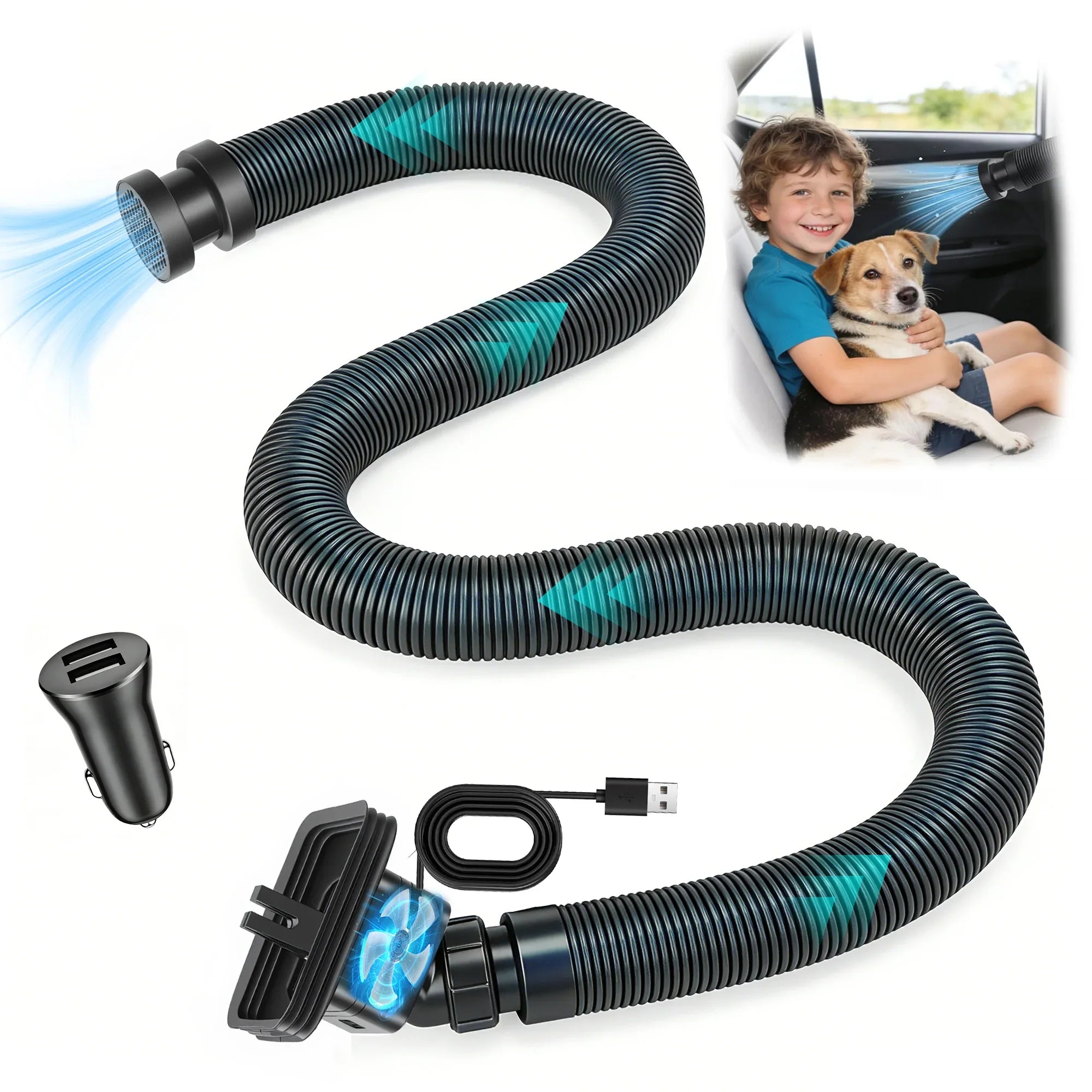
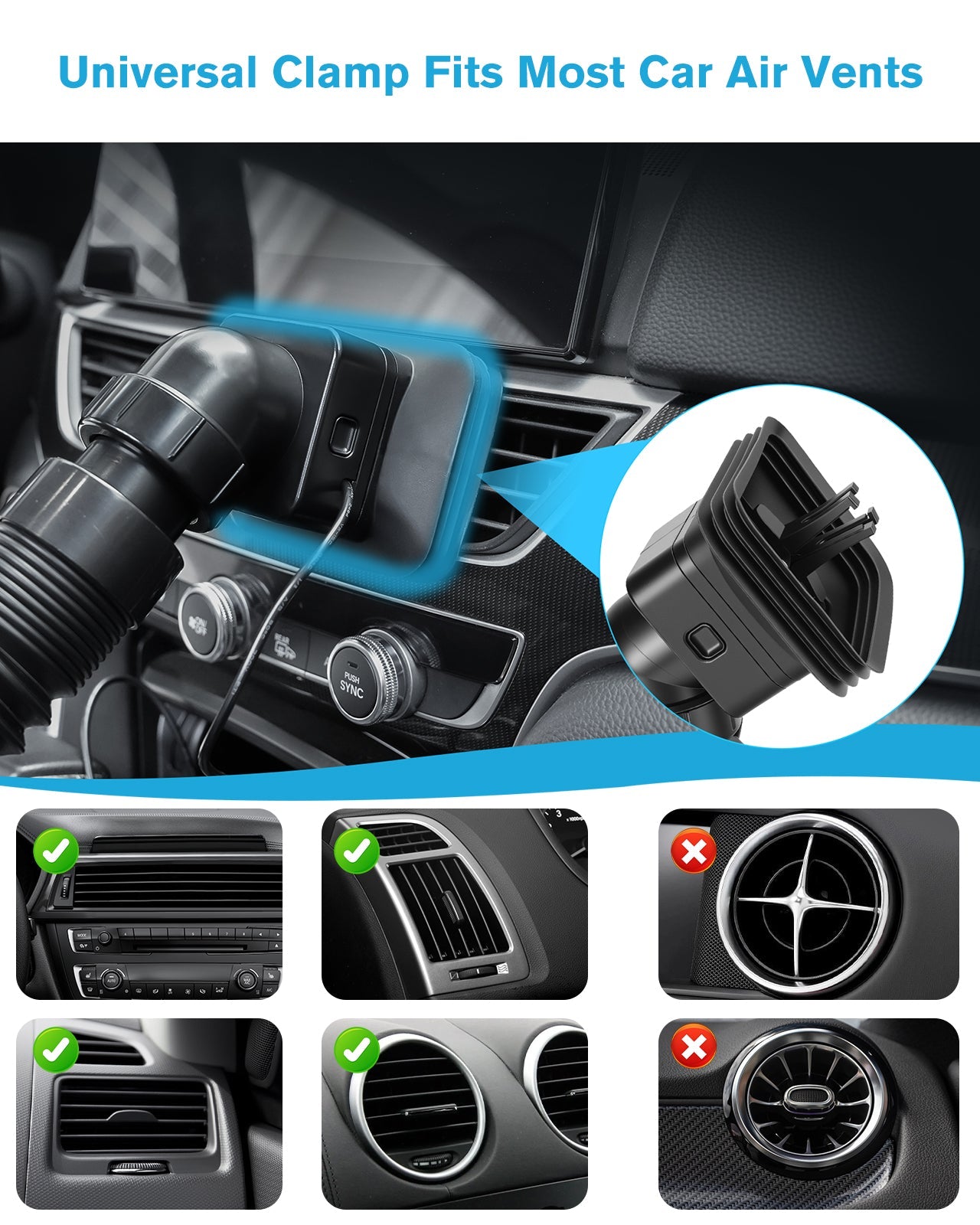
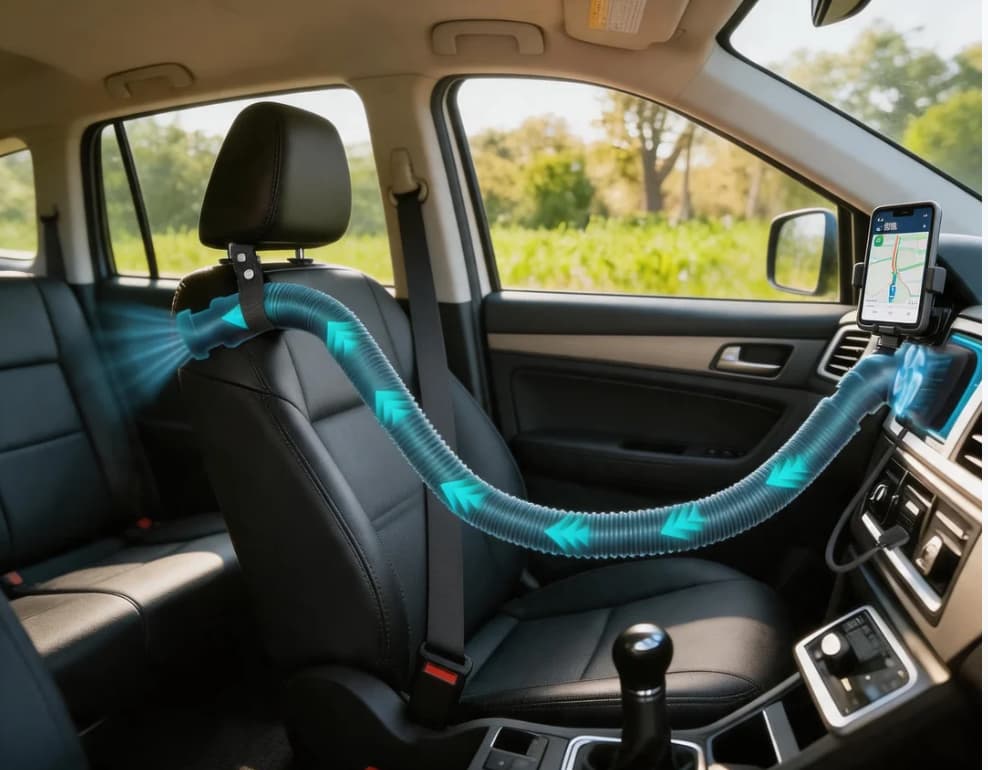
The Forgyronis Car Air Vent Extender provides a high-performance airflow redistribution tool that balances your interior climate in under 60 seconds. This tool-free, flexible 5.91 ft car air vent hose attaches firmly to your front passenger dashboard vent, acting as a dedicated, direct-route AC extender for back seat positions.
[Front Dashboard Vent] ──> (Forgyronis Flexible Hose) ──> [Direct Cold Air to Rear Seat]
By sealing directly over your factory vent blade, this passive silicone tube captures high-velocity refrigerated air before it sinks into the front floor mats. It routes that steady stream of cold air directly past the front seats, flushing out trapped backseat humidity instantly.
It is an energy-free, whisper-quiet method to keep kids cool in car environments, handle extreme summer commutes, and ensure every passenger receives an equal share of comfort.
Product Comparison: Vent Extenders vs. Standalone Fans
Frequently Asked Questions (FAQ)
Why does the front seat feel so cold while the back seat feels like an oven?
This happens because car AC systems are front-heavy. Cold air is heavy and drops into the front floorboards quickly. Front seats and center consoles act as solid physical walls, blocking that cold air from moving backward while the rear windows trap rising heat.
Will this airflow redistribution tool reduce the cold air available for the driver?
Not at all. Modern vehicle climate control loops rely on multiple independent front registers. Covering one passenger-side outlet simply redistributes your system's existing air path without reducing the overall cooling power, keeping the driver perfectly comfortable while the back row receives a dedicated line.
Is a standard car seat fan enough to cool down the back row?
No. Standard electric fans do not lower the air temperature. If your rear cabin is trapped in a stagnant heat zone, a small fan will simply blow hot, humid air across your passengers, which can speed up dehydration instead of cooling them down.
Can this extension system be left inside the car during freezing winter weather?
Yes. The heavy-duty, corrugated extension pipeline is molded from high-density automotive silicone rated for severe temperatures from -4°F to 176°F (-20°C to 80°C). This durable silicone Forgyronis car air vent hose works year-round for heating and cooling child passengers.
Optimize Your Car's Internal Comfort Today
You do not have to accept uneven cabin temperatures as an unfixable part of summer travel. If your car AC fails to reach the back seat effectively, using a mechanical channel to guide that cold air directly to where your passengers sit will make every road trip significantly safer and more relaxing.
Eliminate weak, noisy electric modifications that clutter your console layout. A premium passive air vent extender optimizes your vehicle's factory output, providing uniform, whisper-quiet, and reliable cooling across every single row.
If you are preparing for a summer road trip with your family, check out our related guides: Best Ways to Keep Dogs Cool in the Car, How to Prevent Rear Cabin Overheating, and Summer Road Trip Essentials for Multi-Row Vehicles to optimize your travel layout.
[Grab the Forgyronis car air vent hose to deliver steady cold AC air to kids in the back seat during all summer road trips. Shop our vent extender now for balanced, safe cabin cooling.]