Long summer drives or sitting in a boiling, sun-drenched parking lot can turn a routine family errand into a hazardous situation. Every parent knows how fast a vehicle interior heats up, but the real danger lurks on the rear bench. While the front dash blasts icy air directly onto the driver, the back row remains stagnant, heavy, and hot.
Finding a dependable way to keep kids cool in car summer commutes is more than just a matter of passenger comfort. It is a critical element of protecting young passengers from heat illness. Even short 5-minute runs to the supermarket or daycare leave toddlers sweating through their onesies locked inside the insulated car seat.
When your front car AC fails to circulate air to the back seat efficiently, the cabin split leaves children vulnerable to extreme conditions. Understanding how to eliminate these rear thermal pockets is the first step toward practicing proactive child safety hot car habits during peak summer heat waves.
Why Children Overheat Faster Than Adults
A child’s body is not just a smaller version of an adult’s. Their thermoregulatory system operates completely differently. According to pediatric healthcare guidelines, a child’s core body temperature increases three to five times faster than an adult’s.
Children have a smaller surface-area-to-mass ratio and less developed sweat glands. This severely limits their natural ability to cool themselves down via evaporation. Because they cannot efficiently dump internal heat, being trapped inside a stagnant, humid rear cabin places infants and toddlers at an elevated risk for sudden heat exhaustion or dehydration.
Worse yet, standard child safety seats compound this thermal load. Thick foam padding, heavy nylon fabrics, and protective deep-molded plastic shells are excellent for crash survival, but they act as heavy insulation blankets. This insulating effect blocks airflow from reaching the child's back and torso, creating an immediate localized heat trap even when the front of the vehicle feels completely fine to the driver.
The Car AC Limitation for Rear Seats
Many drivers assume that cranking the front climate dials to maximum will eventually force cold air to drift into the rear rows. However, standard vehicle HVAC layout design features an unyielding front-row bias:
-
The Front Seat Blockade: Large front bucket seat backs act as solid insulation panels, capturing front air and leaving the rear row stranded with zero direct wind velocity.
-
Dense, Heavy Cold Air: Cold air is naturally heavy and dense. When forced out of the dashboard registers, it immediately sinks into the driver and passenger footwells rather than traveling back toward the rear bench.
-
Stagnant Humidity Pockets: Without active mechanical help to pull the air backward, the rear passenger compartment experiences zero air exchange, turning the space around the car seat into a humid dead zone.
High Temperatures and Safety Risks of Heat Exposure
It takes less than ten minutes for a vehicle parked under direct summer sunlight to experience a dramatic interior heat spike. Under direct sunlight, on a 90°F (32°C) day, a vehicle's interior can climb to a staggering 120°F (49°C) in just 10 minutes. A mere 15 minutes of exposure to these severe temperatures can cause rapid-onset, life-threatening heatstroke in young children.
When a child's body core begins to overheat, they cannot clearly articulate their discomfort; instead, they experience:
-
Extreme Irritability and Crying: An early behavioral sign that the child's core temperature is rising and their clothing is soaked in trapped sweat.
-
Lethargy or Flushed Cheeks: Deep red skin coloring along the face and neck, paired with sudden sleepiness, indicates their cardiovascular system is working overtime to shed heat.
-
Rapid Heart Rate and Headaches: Advanced signs of heat stress that require immediate shade, hydration, and emergency cooling ventilation.
A Better Airflow Solution for Safety Seats
To solve a baby car seat overheating crisis, you do not need noisy, vibrating clip-on fans or complicated electrical wiring setups. Traditional electric car fans do not drop the localized air temperature; they merely spin the hot, heavy moisture that is already trapped around your child. True protection requires bringing fresh, chilled AC air directly to the safety seat level.
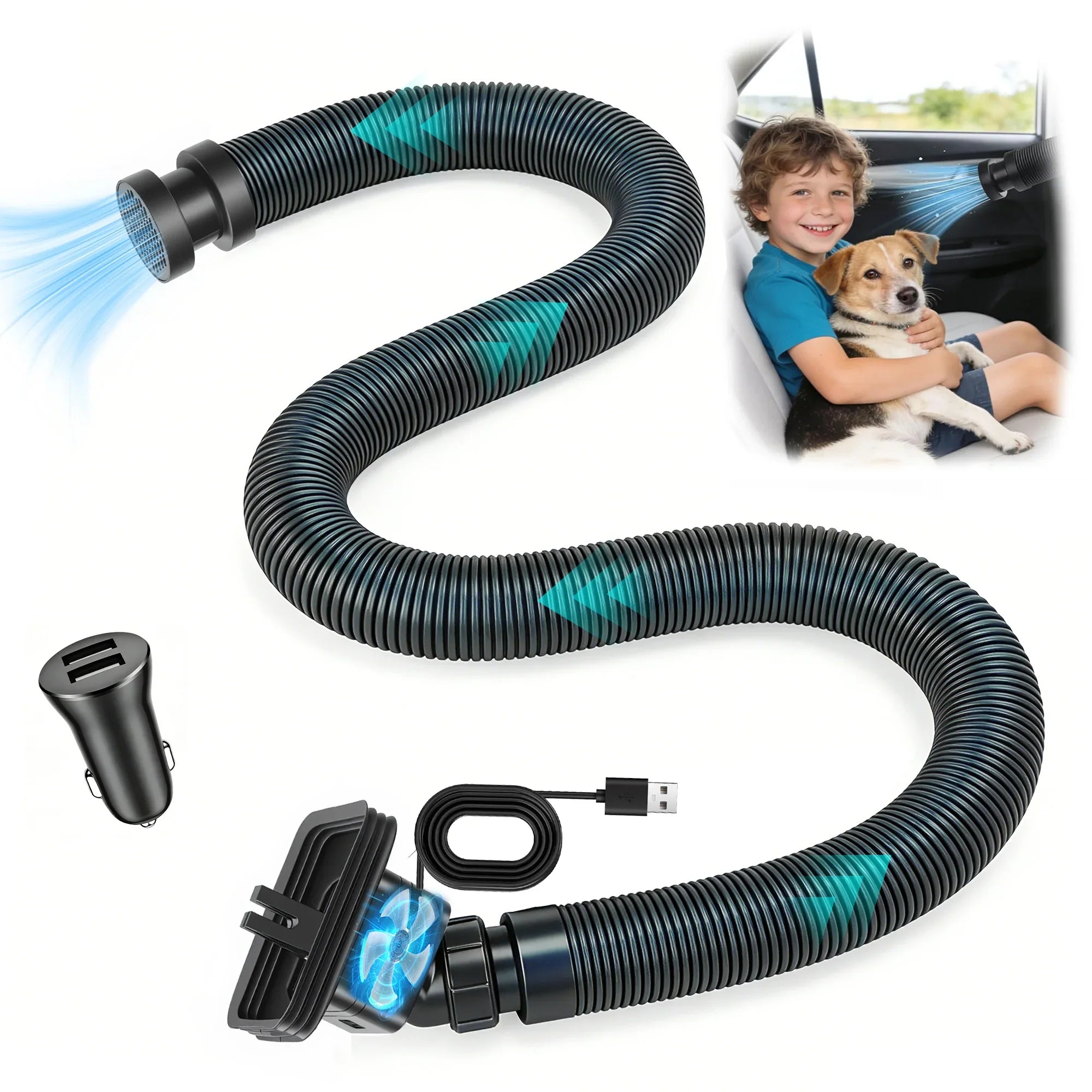
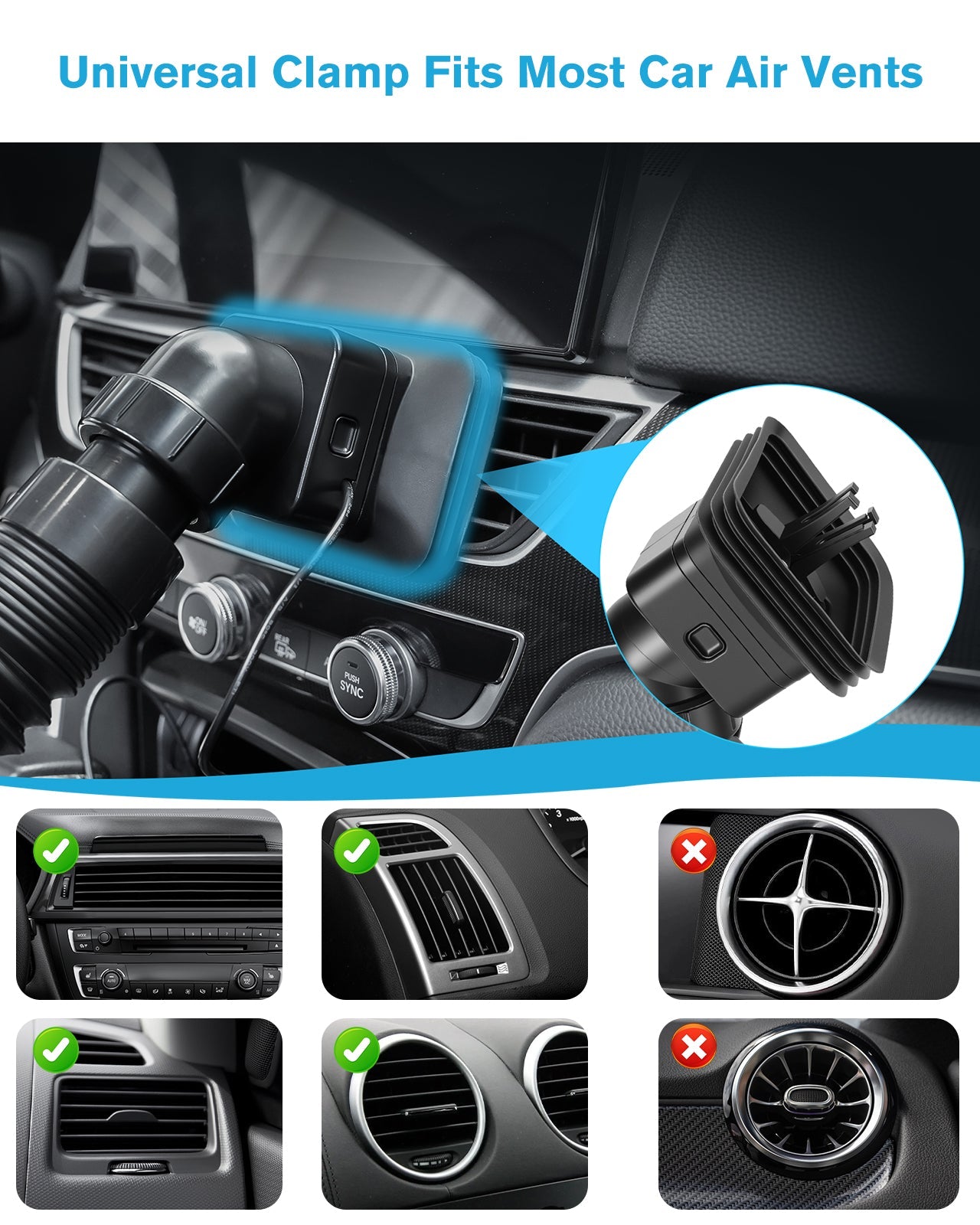
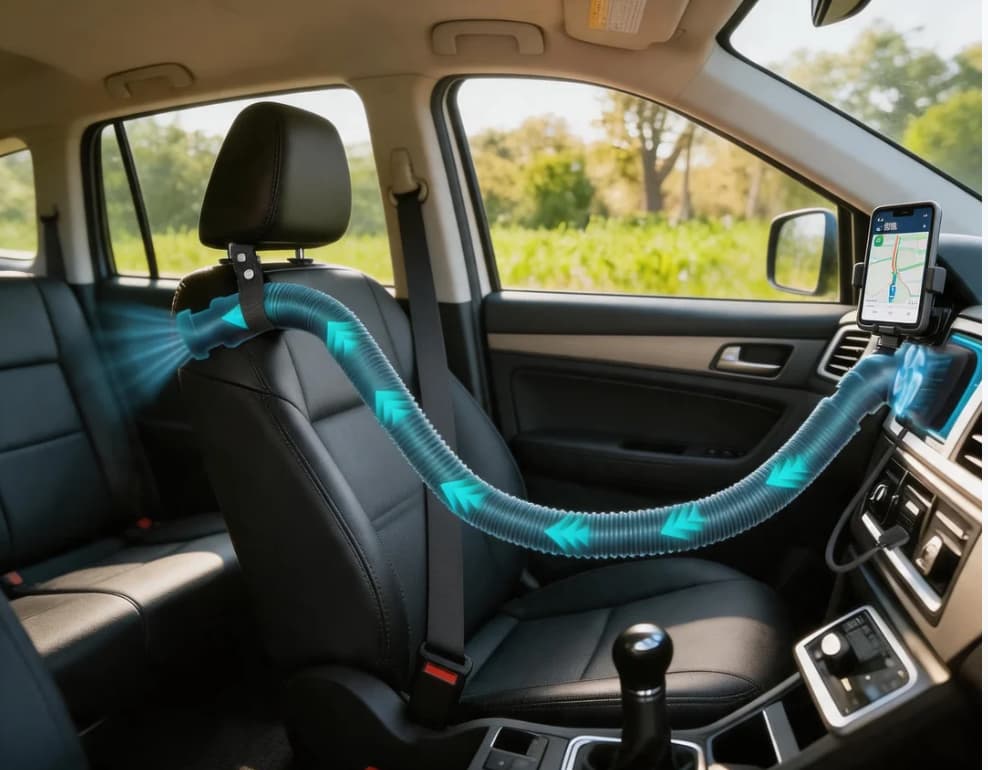
The Forgyronis Car Air Vent Extender bridges this layout gap without extra batteries or energy draw. This tool-free, flexible 5.91 ft (1.8 meters) car air vent hose attaches firmly to your vehicle's ventilation layout in three simple, tool-free steps:
-
Snap the silicone adapter onto any standard front air vent.
-
Extend the 5.91 ft hose back to the car seat position.
-
Bend the flexible tubing freely to aim cold air directly at your child’s torso or legs, with no tape or permanent brackets needed.
[Dashboard AC Register] ──> (Forgyronis Silicone Hose) ──> [Direct Cold Air at
 Car Seat Level]
By establishing a physical conduit, this high-velocity car AC extender for back seat passengers flushes out trapped humidity around deep-molded child carriers instantly. It is fully compatible with rear-facing infant carriers, forward-facing booster seats, and third-row benches in larger SUVs or minivans.
The passive, blade-free design gives parents total peace of mind, completely removing the finger-pinch risks, battery hazards, and dangling electrical cords common with aftermarket electric fans. It is a safe, quiet, and reliable way to maximize your vehicle's factory climate system to provide exceptional backseat cooling for kids all summer long. If you struggle with sweltering back seats on every family trip, this silicone AC hose eliminates child heat risk without messy electronics.
Product Comparison: Vent Extenders vs. Standalone Fans
Understanding the long-term trade-offs and performance limits of popular accessories helps parents make the safest choice:
| Cooling Solution | Lowers Car Seat Temp? | Noise Level | Safety Profile | Long-Term Cost | Primary Best Use |
| Clip-On Electric Fan | ❌ No (Circulates hot air only) | ❌ Loud | ❌ Low (Exposed blades & battery heat) | ⚠️ Low upfront; replace batteries/fans yearly | Strollers & desks only |
| USB Dashboard Fan | ❌ No (Airflow is too weak) | ⚠️ Moderate | ❌ Low (Hanging cord hazards) | ⚠️ Low upfront; frequent cord & motor failure | Front-row dashboard use |
| Window Solar Shades | ⚠️ Partial (Blocks sunlight only) | ✅ Silent | ✅ High (No moving parts) | ✅ One-time cheap purchase; only blocks sun | Static sun blocking |
| Passive Vent Extender | ✅ Yes (Delivers cool AC air) | ✅ Silent | ✅ High (No blades or wires) | ✅ One-time purchase; no power/consumables, multi-year reuse | Multi-row vehicle cooling |
Frequently Asked Questions (FAQ)
Can a baby overheat even when the car AC is turned on high?
Yes. If your vehicle lacks active rear console vents, the front bucket seats block the cold air from moving backward. The front cabin will feel perfectly cold to the driver while a rear-facing infant carrier remains trapped in a stagnant heat pocket.
Why is a standard car seat fan ineffective for protecting toddlers?
Standard electric fans do not drop the air temperature; they only circulate the air that is already inside the car. Blowing hot, humid backseat air across an overheated child can actually accelerate dehydration instead of cooling them down.
Will using this air vent extender reduce the cold air available for the driver?
Not at all. Modern automotive climate systems rely on multiple independent front registers. Covering one passenger-side outlet simply redistributes your system's existing air path without reducing overall cooling power, keeping the driver perfectly comfortable while the back row receives a dedicated line.
Is the hose material safe for children who try to touch it?
Yes. The durable, flexible Forgyronis car air vent hose is molded from high-density, medical-grade automotive silicone that works reliably in extreme temperatures ranging from -20°C (-4°F) up to 80°C (176°F). It is completely non-toxic, blade-free, and contains no small parts that can create a choking hazard.
Optimize Your Family's Summer Travel Safety
The most effective way to protect your children from backseat heat traps is ensuring cool air actually reaches the space where they sit. Whether your child uses a rear-facing infant seat, forward-facing booster, or third-row bench, improved rear airflow cuts down heat risks and makes summer trips safer.
Skip flimsy, unsafe clip fans that only blow hot air. Grab the Forgyronis car air vent extender today to deliver consistent chilled AC airflow to your infant or toddler’s car seat all summer long — protect your little ones from dangerous backseat heat traps on every road trip. Shop our vent hose now for safe, silent full-row cooling.
If you are preparing for summer road trips with your family, check out our related guides: Best Ways to Keep Dogs Cool in the Car, How to Prevent Rear Cabin Overheating, and Summer Road Trip Essentials for Multi-Row Vehicles to optimize your travel layout.
[Shop Forgyronis Car Air Vent Extender Now — Keep Your Family Safe & Cool on Every Trip]