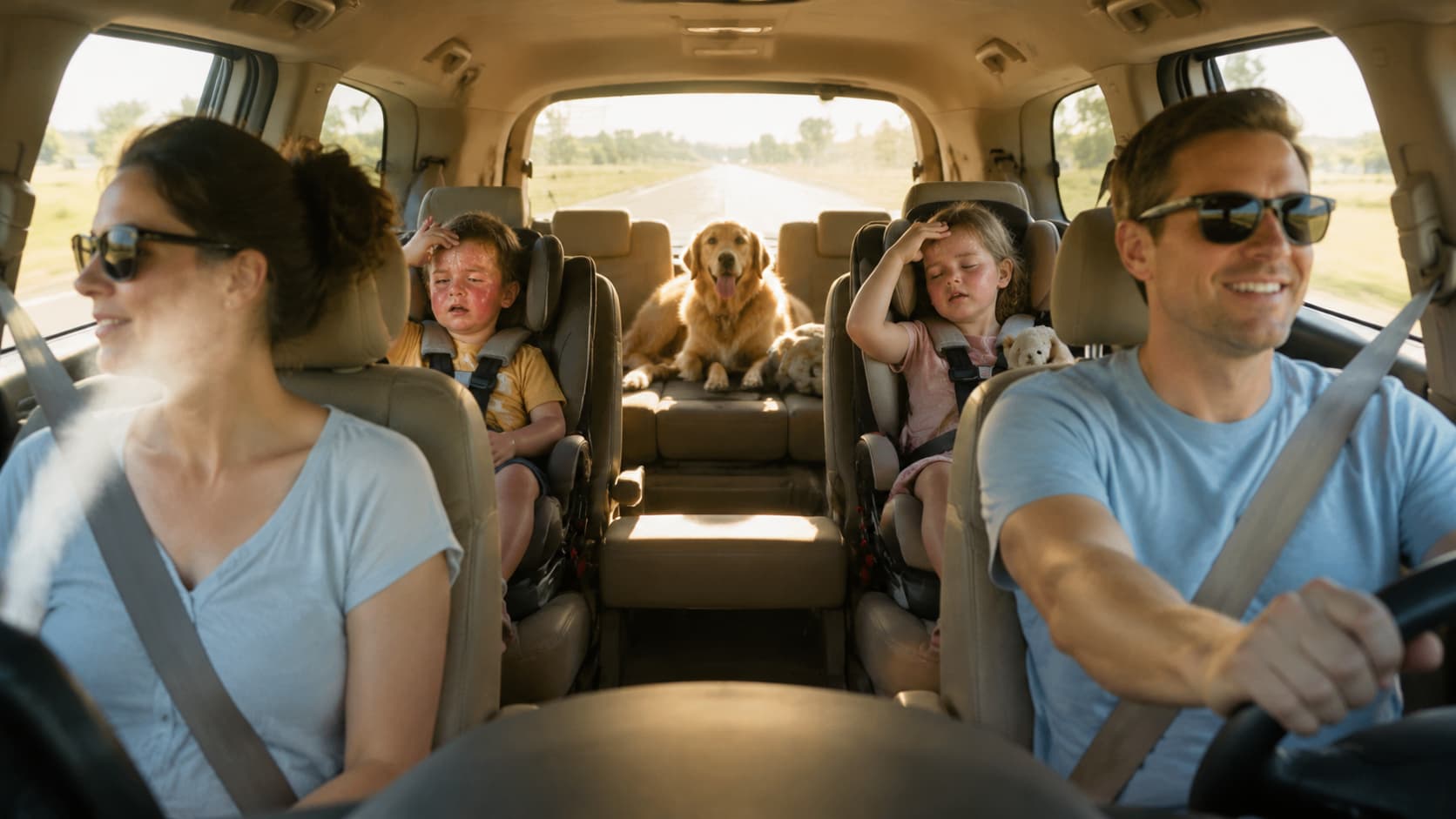
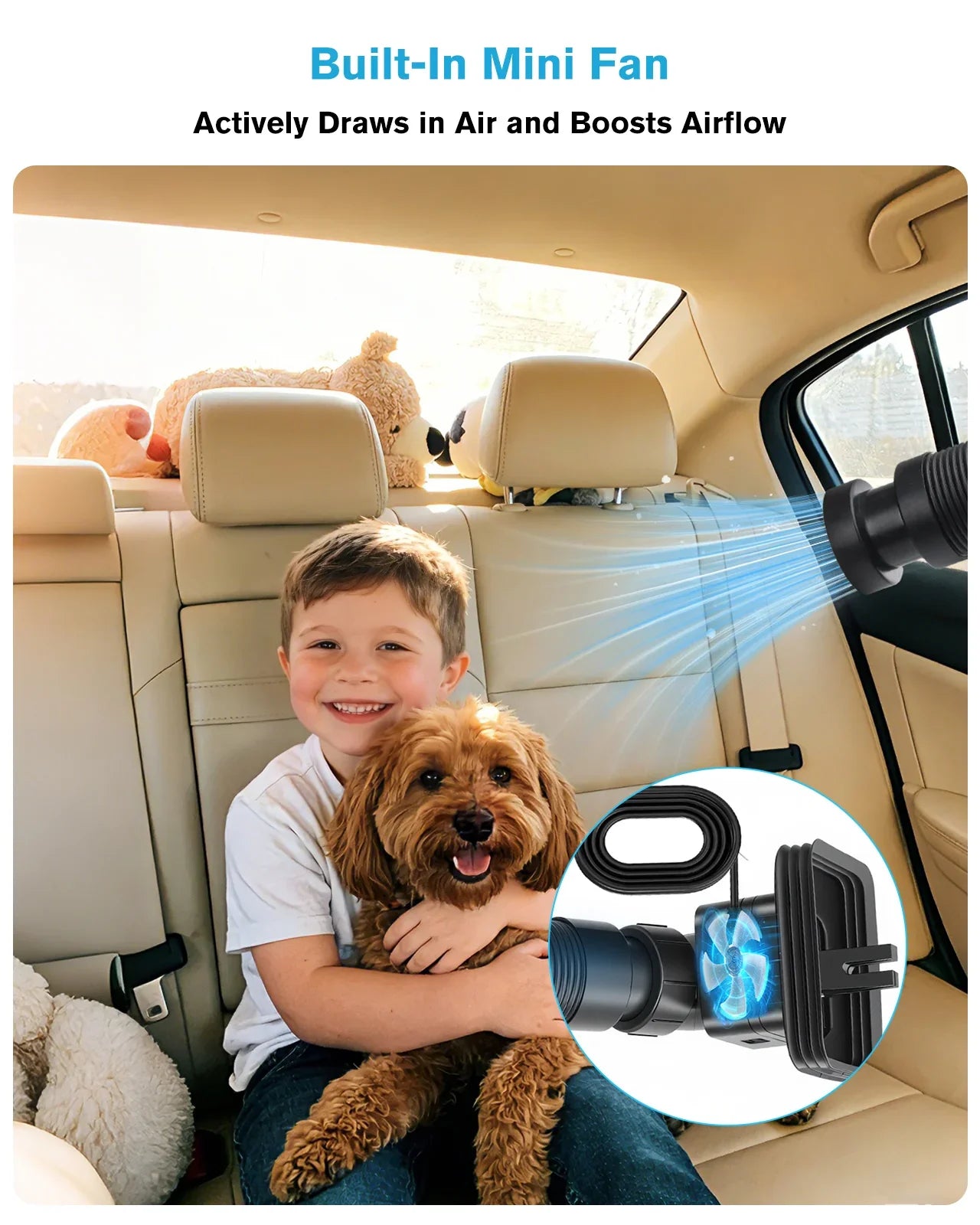
Keeping dogs cool in the car during hot summer drives is a common headache for owners of sedans, hatchbacks, and compact crossovers. Whether you are heading to the vet, the local dog park, or a weekend getaway, your pet usually stays in the back seat. Unfortunately, even with your car AC turned to max, you may notice your dog panting heavily, pacing restlessly, or pressing its nose against the window glass.
This dangerous situation happens because smaller passenger vehicles frequently suffer from poor rear cabin ventilation. While the driver and front passenger enjoy direct, freezing airflow, the back row stays heavy and stagnant. If your car AC fails to circulate air to the back seat, your pet is left stranded in a hot zone. For responsible pet parents, finding a practical fix is the most critical part of practicing real dog car travel safety.
To combat intense heat waves, many drivers try installing a basic car seat fan or clipping a battery-powered baby fan for stroller and car seat onto the front headrest posts. In reality, these small accessories do not offer real safety inside a car too hot for dogs. They cannot lower the localized temperature; they merely spin the warm, humid air that is already trapped in the rear. To establish effective pet cooling in car cabins, you need a physical channel that pulls cold air directly from your dashboard vents.
Why Car Back Seats Turn Into Heat Traps
Even if your front dashboard climate system feels icy cold, the rear passenger bench operates under a completely different micro-climate due to three standard vehicle design factors:
-
The Front Seat Air Blocker: Thick front bucket seats and wide headrests act as physical insulation walls. They block the front climate control system from naturally pushing refreshing air to the rear.
-
Direct Side-Window Exposure: While front passengers are shielded by the roof line and sun visors, a dog sitting on the rear bench absorbs intense solar energy radiating directly through the large side windows.
-
Lack of Center Console Vents: Most compact cars, entry-level sedans, and small hatchbacks do not include active climate vents on the back of the center console, leaving rear rows with zero dedicated air delivery.
Key Signs of Dog Overheating in the Car
Because dogs cannot sweat through their skin, they rely completely on panting to exchange internal body heat. When the surrounding air is stagnant, their ability to cool themselves drops rapidly. If you find yourself searching online for why your dog is panting in car with AC on, it is a clear warning sign that the cold air isn't reaching them. Watch closely for these progressive symptoms of a dog overheating in car environments:
-
Wide-Mouthed, Rapid Panting: Breathing becomes exceptionally fast, shallow, and raspy. The tongue fully extends, widening at the tip as they struggle to catch their breath.
-
Sticky or Foamy Drool: Normal thin saliva transforms into thick, ropy foam that coats their lips, muzzle, or the car seat cover.
-
Flushed, Deep-Red Gums: A quick check of their mouth reveals bright red, dry, or purple gums, showing that their body is working in overdrive to shed heat.
-
Frantic Shifting or Whining: The dog will pace across the seat, claw at the floorboards, or whine continuously as they try to escape localized hot pockets.
Veterinary Recommendations for Summer Commutes with Pets
Emergency veterinarians emphasize that active, direct ventilation is the most reliable way to prevent heatstroke during summer travel. To ensure a comfortable ride, vet clinics recommend these four steps:
-
Never Leave Pets Unattended: Even with windows cracked on a 75°F (24°C) day, a vehicle's interior can climb to lethal temperatures within minutes.
-
Keep Fresh Water Available: Always use a spill-proof travel bowl filled with cool water to help your dog regulate its core temperature from the inside out.
-
Pre-Cool the Vehicle Layout: Run your car AC at full blast for 5 minutes before bringing your dog out to the driveway to clear out initial heat traps.
-
Route Cold Air Directly to the Pet: Do not rely on ambient air drift. Use a mechanical channel to bring fresh, chilled air from the front vents directly into your pet's immediate resting zone.
Product Comparison: Air Extenders vs. Standalone Fans
Understanding the mechanical limits of popular summer accessories helps you invest in a setup that truly protects your dog.
| Cooling Solution | Lowers Rear Temperature? | Noise Level | Safety Profile |
| Clip-On Electric Fan | ❌ No (Only circulates hot air) | ❌ Loud (Annoying mechanical buzz) | ❌ Low (Exposed blades & wire hazards) |
| USB Dashboard Fan | ❌ No (Weak airflow) | ⚠️ Moderate (Constant motor hum) | ❌ Low (Hanging cord risks) |
| Window Solar Shades | ⚠️ Partial (Blocks sunlight only) | ✅ Silent | ✅ High (No moving parts) |
| Passive Vent Extender | ✅ Yes (Delivers cool AC air) | ✅ Silent (Uses factory insulation) | ✅ High (No blades or wires) |
How to Set Up Focused Backseat Cooling for Your Dog
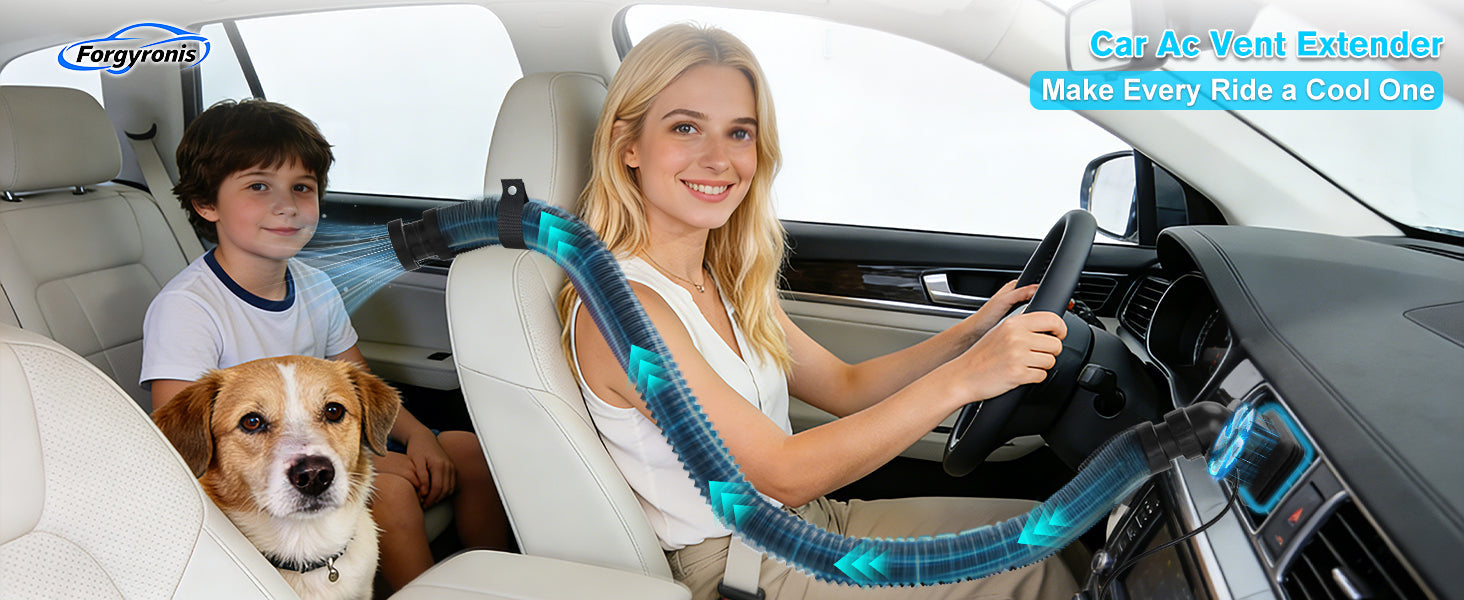
Bypassing your vehicle's physical air barriers requires a dedicated, non-electrical conduit. The Forgyronis Car Air Vent Extender bridges this layout gap by functioning as a high-velocity passive air delivery line.
This tool-free, flexible hose attaches firmly to your front dashboard panel, redirecting a continuous stream of chilling air straight to the rear passenger bench. The 5.91-foot flexible tube stretches easily over your center console, allowing you to quickly secure the line exactly where your dog rests.
Creating an Overhead Sinking Air Curtain
To eliminate intense radiant window heat during hot afternoon drives, route the hose along the center console and secure the nozzle to the rear window grab handle. This layout creates an overhead curtain of descending cold air that flows naturally down over your dog's back, acting as an exceptional alternative to traditional car fans that blow cold air from a fixed front position.
Floor-Level Relief for Floor-Resting Dogs
Many medium and large dogs prefer to curl up on the floorboards behind the front seats rather than sitting on the actual cushions. Directing the adjustable nozzle straight toward the floor mats breaks up these stubborn thermal pockets instantly. This provides a highly reliable method for keeping dogs comfortable in hot vehicles and ensures they stay perfectly chilled throughout the entire drive.
Frequently Asked Questions (FAQ)
Can dogs get heatstroke inside a moving car with the AC turned on?
Yes. If your car lacks rear console vents, the front bucket seats block the cold air from moving backward. The front cabin can feel comfortably cold to the driver while the back seat remains stuck in a dangerous heat pocket, putting a panting pet at risk.
Is a standard car seat fan enough to keep a dog cool in the back seat?
No. Standard electric fans do not lower the actual air temperature; they only circulate the air that is already inside the car. Blowing hot, humid backseat air across a dog's fur can actually interfere with their natural respiration and accelerate heat fatigue.
What temperature is too hot for dogs inside a vehicle?
Any cabin temperature over 75°F (24°C) can cause heavy-coated or short-nosed breeds to struggle with heat regulation. Ideally, the area where your dog rests should be kept under 72°F (22°C) to ensure safe, comfortable respiration.
What is the safest way to cool a dog crate or rear seat during long drives?
The safest method is to use a passive, blade-free extension hose to channel real cold air directly from your dashboard vents to the rear seat. This provides an actual, steady drop in temperature without introducing dangerous electrical components, loose wires, or battery heat near your pet.
Will using this air vent extender reduce the cold air available for the driver?
Not at all. Modern automotive climate systems use multiple independent front outlets. Redirecting one passenger-side dashboard vent simply shifts your internal air distribution pattern without cutting your system's overall cooling capacity. This keeps the driver completely comfortable while your dog receives a dedicated cold air line.
Is the hose easy to pack away when my dog isn't in the car?
Yes, removal takes less than 10 seconds. The adapter uses a quick-release mechanism that unclips easily from your dash panel. The flexible silicone hose can be coiled into a tight circle and stored away underneath a front seat, instantly returning your dashboard to its clean factory look.
Can this extension system be used during winter travel?
Yes. The high-density silicone pipeline handles severe temperatures from -4°F to 176°F (-20°C to 80°C). In cold weather, you can route warm air from your front heater directly to the back seats to keep your dog warm and cozy after an outdoor winter walk.
Protect Your Four-Legged Traveling Companions
The most effective way to keep dogs comfortable during summer travel is ensuring cool air actually reaches the space where they ride. Whether your dog travels in the back seat, cargo area, or a travel crate, improving rear airflow can significantly reduce heat buildup and make every road trip safer.
Prioritizing proper dog car travel safety means you can head out on daily errands and summer drives knowing your companion is completely safe from summer heat waves. Avoid weak cooling accessories or noisy electric motors that fail to lower cabin temperatures.
If you are preparing for summer road trips with your furry friend, check out our related guides: Best Ways to Keep Dogs Cool in the Car, How to Prevent Dog Overheating During Road Trips, and SUV Cargo Area Cooling Tips for Dog Owners to optimize your travel setup.
[Shop Forgyronis Car Air Vent Extender Now — Keep Your Dog Safe & Cool on Every Trip]