If you have ever driven a large SUV or minivan in summer, you probably know the problem: the front seats feel freezing, but passengers in the second or third row are still asking for more air.
Many vehicle owners try a simple solution — adding an AC vent hose to move air toward the back. But once the hose gets longer, especially in large SUVs, another question appears:
Does a passive vent tube actually deliver enough airflow, or is a fan-powered AC vent extender a better choice?
I’ve tested both passive tubes and fan-boosted extenders on a 3-row SUV, and the airflow gap becomes impossible to ignore during long summer drives. The difference is not about creating colder air — it is about how effectively that air reaches passengers sitting far away from the dashboard.
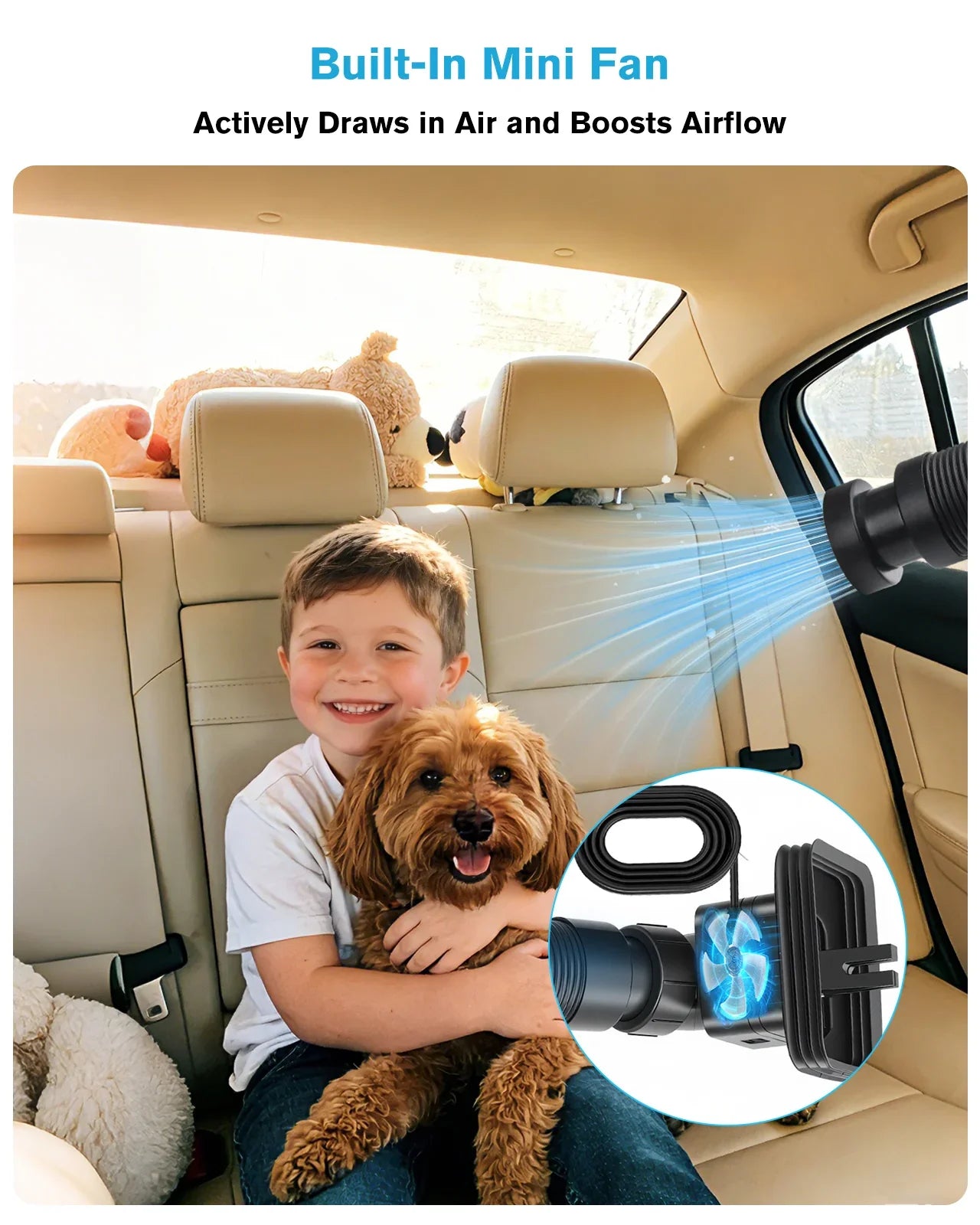
A car AC vent extender with fan uses a built-in airflow boosting fan to help move factory AC air through a longer hose, making it a practical option for SUVs, third-row passengers, rear-facing car seats, and even pet travel setups.
How a Passive AC Vent Extender Works
A traditional passive AC vent extender is a simple tube connected to an existing dashboard vent.
The idea is straightforward:
The vehicle’s factory AC creates airflow, and the hose redirects that air toward the rear seats.
For smaller vehicles or short-distance airflow needs, this design can work reasonably well. A short tube with minimal bends usually allows air to travel without major losses.
However, problems appear when the distance increases.
Large SUVs, trucks, and minivans have much larger cabins. When a non-powered vent tube stretches several feet from the dashboard to the rear area, airflow naturally becomes weaker because it relies completely on the vehicle’s original vent pressure.
The longer the route, the more resistance the air faces.
This is especially noticeable when the hose needs to:
- reach third-row passengers
- run around seats and center consoles
- extend toward a rear cargo dog crate
- deliver air around bulky child safety seats
I once relied on a cheap passive hose during a dog crate trip, and barely any cold air made it all the way to the cargo area. The hose technically worked, but the airflow was too weak where my dog actually needed it.
For short-distance use, a passive tube may be enough. But for larger vehicles and longer routing, many drivers start looking for a stronger solution.
How a Built-In Booster Fan Improves Rear Seat Airflow
A car AC hose with booster fan takes a different approach.
Instead of depending only on the vehicle’s existing airflow pressure, the built-in fan helps push the conditioned air through the extended tube.
The booster fan does not create cold air or warm air by itself.
Your vehicle’s AC system still provides the temperature control.
The fan simply helps move that air farther through the hose, making the airflow path more effective.
This design is especially useful when you need to send air from the dashboard to areas that normally receive weak airflow, such as:
- SUV third-row seats
- minivan rear passengers
- children sitting in rear-facing car seats
- pets inside rear cargo dog crates
Our upgraded fan-powered extender combines several practical features designed for family vehicles:
- 2–6.6 ft adjustable corrugated hose for different vehicle layouts
- built-in USB-powered airflow boosting fan
- flexible silicone sealing base to reduce air leakage
- reinforced vent clip for a secure dashboard connection
- adjustable rear mounting straps
- compact foldable design for easy storage
It also comes with a complimentary dual-port cigarette lighter USB adapter, so you can power the fan while keeping your original charging ports available.
Why Fan-Powered Extenders Work Better for SUVs, Minivans and Trucks
Vehicle size plays a huge role in airflow performance.
A compact sedan may only need air redirected a short distance. But larger family vehicles create a bigger challenge.
SUVs and 3-Row Vehicles
Three-row SUVs are one of the biggest problem areas.
The third row is usually the farthest point from the dashboard AC vents, which means passengers often receive weaker airflow.
For families, this becomes even more noticeable when children are sitting in safety seats.
Thick infant car seat padding traps heat easily, and regular dashboard vents cannot bypass the front seats to deliver gentle airflow where children are sitting.
A fan-powered extender helps create a direct airflow route toward the rear seating area.
During winter, the same setup can also help move warm heater air toward colder rear rows during freezing morning commutes.
I was surprised how much warmer the back seats felt in winter after switching to a fan-powered model. The same airflow problem exists with heat — the rear cabin often takes much longer to become comfortable.
Minivans and Family Road Trips
Minivans are designed for families, but their long cabins create uneven temperature zones.
During long road trips, passengers in the back may feel uncomfortable while the driver enjoys perfect AC conditions.
A longer adjustable hose allows airflow to reach:
- second-row passengers
- third-row passengers
- rear-facing child seats
- family members who need extra comfort
Pet Travel and Dog Crates
For pet owners, airflow distance is even more important.
A dog crate placed in the rear cargo area can be several feet away from the dashboard vents.
A 6.6 ft extendable hose provides more flexibility for routing air toward that space.
Another advantage is cable placement.
Many cheap powered accessories leave loose wires near the rear seats, creating a tempting chewing target for dogs.
This front-mounted power design keeps the USB cable near the dashboard area, away from paws and teeth.
Power, Noise and Cable Safety: What Buyers Should Know
One common question about active airflow products is whether adding a fan creates extra complexity.
The answer depends on the design.
A well-designed car AC vent extender with fan should remain simple to install.
This type of system typically uses USB power, allowing it to connect directly to:
- factory USB ports
- USB adapters
- car charging outlets
The fan only operates when connected to power, so users can turn it on or off depending on their needs.
Cable management is also important.
For the cleanest setup:
- keep the USB cable near the dashboard
- avoid loose cable sections near passengers
- secure extra cable length with clips or wraps
The reinforced vent clip should hold the intake section securely during normal driving, while the flexible hose can be supported along the console or floor area instead of putting all weight on the dashboard vent.
When the trip is over, the lightweight hose can be collapsed and stored in a glove box, cargo bag, or storage compartment.
Which AC Vent Extender Should You Choose?
The right choice depends on your vehicle size and how far you need to move airflow.
A passive vent tube may be suitable for small cars and short-distance airflow needs.
But for larger vehicles, long road trips, pets, and rear passengers, a fan-powered extender offers more consistent airflow delivery.
Car AC Vent Extender Comparison

| Feature | Passive Vent Tube | Fan-Powered AC Vent Extender |
|---|---|---|
| Power Required | No power needed | USB powered |
| Airflow Support | Depends on factory vent pressure | Built-in airflow boosting fan |
| Long Distance Air Delivery | Airflow may weaken over longer tubes | Better suited for 6.6 ft extended routing |
| Best For | Small vehicles, short distances | SUVs, minivans, trucks, third-row seating |
| Dog Crate Use | Limited airflow at far distances | Better for rear cargo areas |
| Rear-Facing Car Seat Support | Depends on vehicle airflow | More effective for directing airflow |
| Included Accessories | Usually no extras | Complimentary dual-port USB car adapter |
| Storage | Simple tube storage | Flexible hose collapses for compact storage |
FAQ
Does a car AC vent extender with fan make the air colder?
No. The vehicle AC system still controls the temperature. The built-in fan helps move existing cool or warm air through the hose more effectively.
Is a fan-powered AC extender better for SUVs?
Yes, especially for large SUVs, third-row passengers, and rear cargo areas where airflow distance is a challenge.
Can this work with a rear-facing car seat?
Yes. Directing airflow toward the rear seating area can help improve comfort for children sitting in bulky safety seats.
Does the extender work for dog crates?
Yes. The adjustable 2–6.6 ft hose provides flexibility for routing airflow toward rear cargo dog crates in SUVs.
Does the package include a USB car charger?
Yes. The fan-powered kit includes a complimentary dual-port cigarette lighter USB adapter, allowing you to power the fan and charge another device at the same time.
Will the hose stay in place on bumpy roads?
The reinforced adjustable vent clip helps keep the intake securely attached during normal driving conditions. Proper hose support and routing also help prevent movement.
Final Thoughts
Choosing between a passive vent tube and a car AC vent extender with fan comes down to one simple question:
How far does the air need to travel?
For short distances, a basic tube may be enough. But if you drive an SUV, minivan, or truck and need reliable airflow for children, seniors, passengers, or pets, a fan-powered solution provides a more practical way to deliver comfortable air throughout the cabin.
Whether it is a hot summer road trip, a winter morning commute, or a long drive with your dog in the back, improving airflow distribution can make the entire vehicle feel more comfortable.
👉 Explore our fan-powered AC vent extender and create a more balanced cabin environment for every passenger.