Imagine this: You’re on a long summer road trip. The driver is freezing, but in the rear, your toddler is red-faced and fussy. Traditional cooling methods often fall short because they simply move the existing warm air around without introducing fresh, chilled relief. This is the "comfort gap" that many families face during the hottest months of the year.

Why a Standard Car Seat Fan Might Not Be Enough
When parents look for solutions, they often start with a small baby fan for strollers and car seats. While these are portable, they have a major limitation: they don't generate cold air; they only circulate the air already inside the cabin. On a 90°F day, a vent fan attached to the headrest is just blowing warm air onto your child’s skin.
To achieve real relief, you need a way to bridge the distance between the powerful front AC vent and the passengers in the back. This is where a dedicated redirection system outperforms any standalone car seat fan.
The Power of Direct Airflow Redirection
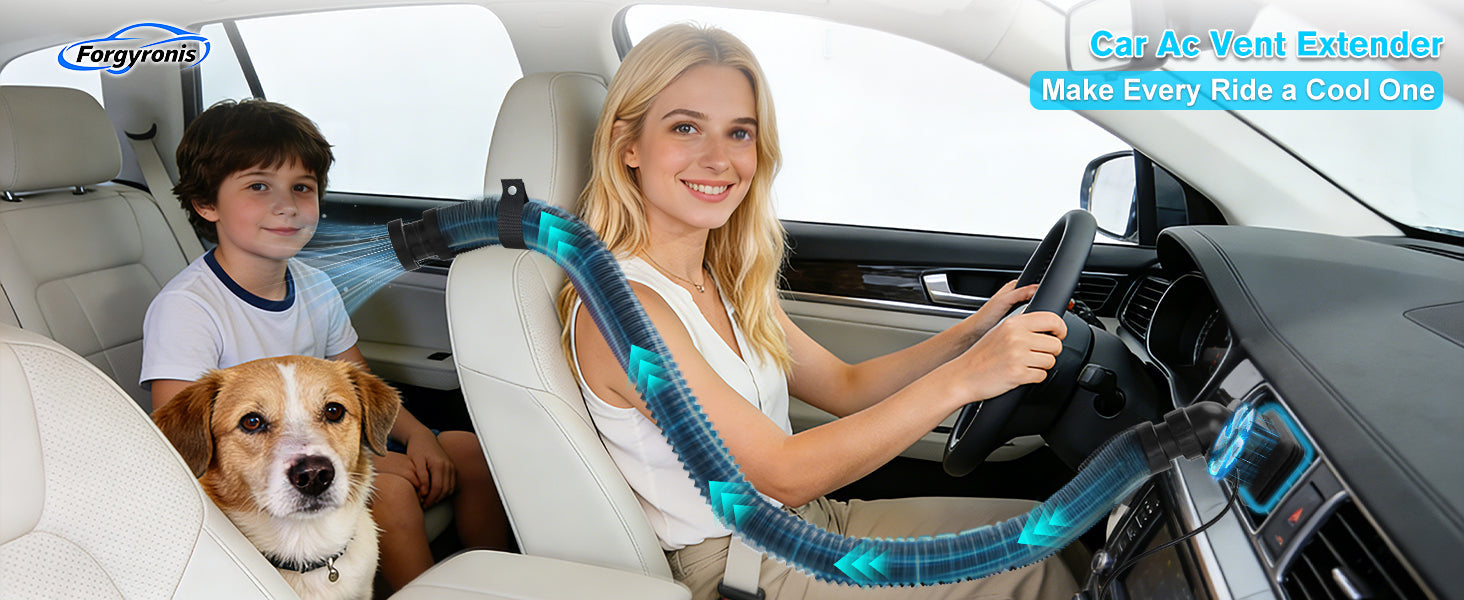
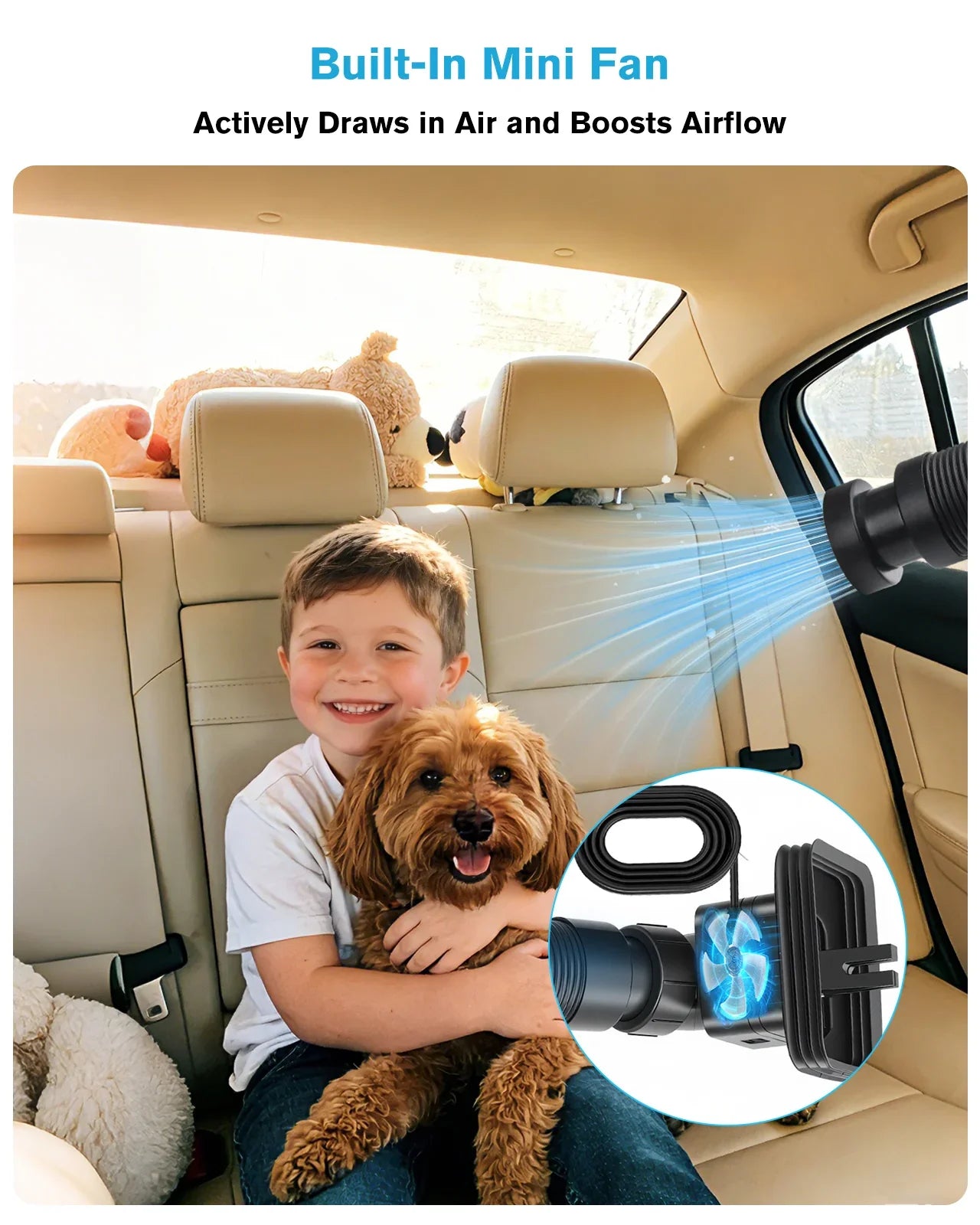
Instead of relying on battery-operated gadgets, our professional extender hooks directly into the primary source of cooling. By capturing the blast from the front, it works like a portable AC for your car—no extra power or bulky machinery required.
Versatile Installation for Maximum Cooling Efficiency
One of the reasons this solution is preferred by long-haul drivers is its incredible flexibility. Unlike fixed backseat fans for kids that only point in one direction, this extender can be routed based on your specific seating arrangement.
Option 1: The Window-Side Route
By mounting the nozzle near the side window, you create an overhead stream of cool air. This is particularly effective for older children or adult passengers who want a refreshing breeze, similar to car fans that blow cold air directly onto their face and upper body.
Option 2: The Direct-to-Seat Route
For those traveling with infants, the hose can be routed along the center console and clipped directly to the front seat’s headrest. This ensures that the cool air from the AC vent reaches the deep "pocket" of a rear-facing safety seat—a spot that usually gets zero circulation.
Why This System Beats Traditional Back Seat Car Fans
When you’re driving, every inch of space and every decibel of noise matters. Traditional backseat fans for kids can be noisy and take up precious window space.
• True Cooling: It delivers actual chilled air, not just moving ambient air.
• No Batteries Required: It uses the vehicle's existing climate control system.
• Quiet Operation: It leverages your car’s built-in AC system, so there’s no extra buzzing near the baby’s ears.
For professional drivers, providing a cabin that feels like it has portable AC performance in every row is the key to 5-star feedback.
Simple 30-Second Setup Guide

You don't need to be a mechanic to install this. The process is as intuitive as plugging in a phone charger:
• Step 1: Secure the universal adapter to your strongest front dashboard vent.
• Step 2: Route the flexible, high-durability hose toward the rear.
• Step 3: Choose your mounting point—either the window grab handle or the seat frame.
By the time you’ve pulled out of the driveway, your car will have a fully optimized ventilation path.
Frequently Asked Questions (FAQ)
Q: Will this adapter fit my specific vehicle vents?
A: Yes. The universal connector uses an adjustable tension clip designed to fit 99% of standard horizontal and vertical vent blades found in any modern car.
Q: Does the air lose its "coolness" as it travels through the hose?
A: Our hose is made of high-density, insulated materials to minimize thermal loss, ensuring the air reaching the backseat is nearly as cold as the air at the dashboard.
Q: Is it safe for a baby’s car seat?
A: Absolutely. Unlike a high-speed vent fan, this allows for gentle, indirect cooling. You can position the nozzle to circulate air around the car seat rather than blowing it directly on the infant.
Q: Can I still move my front seats freely?
A: Yes. The hose is designed with enough flexibility to accommodate power seat adjustments without pinching or disconnecting.